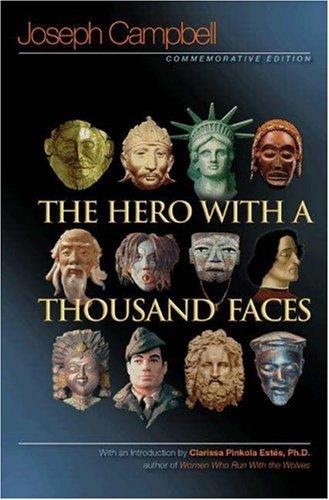
Every culture tells stories in the same shape: an ordinary person crosses a threshold and comes back changed. The fix for marketing is to stop casting your brand as the hero.
From:The Story Craft Mega-CardAuthor:Campbell + the craft canonDate:Aug 16, 2027Pages:4 works
Every culture that ever existed told stories in roughly the same shape. An ordinary person is minding their own business when a call comes. They hesitate, they cross a threshold anyway, they meet trials and a mentor and a low point that looks like the end, and then they come back changed and carrying something the whole village needs. Joseph Campbell spent a career tracing that shape across continents and centuries and gave it a name: the monomyth. Strip away the masks, the gods, the deserts and the forests, and it is the same skeleton every time.
Marketing's most common mistake is to build the brand deck as if the brand were the one on that journey. The founder's story, the company's mission, the product's origin, all staged center stage while the customer stands in the audience clapping politely and reaching for their phone. Donald Miller looked at that mistake and named the fix in one sentence: the customer is the hero of the story, and the brand is the guide. Yoda does not go blow up the Death Star. Luke does. Yoda hands him a sword, some hard truths, and a plan, then steps back and lets the hero act.
That flip changes everything downstream. The hero has a problem and a want, the guide shows empathy and authority, hands over a plan, calls the hero to action, and paints the stakes of success and failure plainly enough that sitting still stops feeling safe. Robert McKee would add the piece Miller assumes: none of it moves without conflict, because a story with no obstacle is not a story, it is a press release. Kindra Hall would add the piece both of them assume: the story only works if it is told with enough specific, human detail that another person can feel it, not just read it.
Grab something that is not coffee. We are going to build the map and hand over the sword.
◆ ◆ ◆
◆ Audio Overview
Prefer to listen?
The chapter as a listen: the monomyth and the message. Campbell's journey meets Miller's framework, your customer as hero.
Story Craft · Audio Overview
0:00/13:54
The Thesis
Story is the oldest and most reliable conversion technology available to a marketer, and it works when the customer is cast as the hero and the brand plays the guide, using conflict, stakes, and a clear arc from ordinary world to changed person to move someone from watching to acting.
Cite the Story Craft Mega-Card for brand stories, about pages, launches, pitches, and any narrative that needs to move someone from reading to acting.
◆ ◆ ◆
02The Architecture
Ten frameworks. The hero, the guide, and the arc that converts.
Framework 01
The Hero's Journey (Campbell: the monomyth)
What it is
Campbell's finding, drawn from myths across every culture he studied. An ordinary person receives a call to adventure, crosses a threshold into the unknown, faces trials with the help of allies and a mentor, hits a low point, and returns transformed, carrying something of value back to the world they left. He called the underlying pattern the monomyth because it repeats everywhere, not because any one culture invented it.
Marketing use
Map your customer's actual before-and-after onto this shape before you write a word of copy. Ordinary world, the problem that calls them, the threshold of trying your product, the trial of learning it, the changed person on the other side. If you cannot name the transformation, you do not have a story yet, you have a feature list.
"Per Campbell's monomyth, a story that moves people follows the same arc across cultures: an ordinary person is called, crosses a threshold, and returns transformed."
Framework 02
The Customer Is the Hero, You Are the Guide (Miller, StoryBrand)
What it is
Miller's core correction to brand storytelling. The brand is never the hero. The brand is Yoda, Haymitch, the guide who has already survived the customer's struggle and shows up with empathy plus authority to hand over a plan. Cast your own logo as the hero and the customer quietly exits the theater.
Marketing use
Rewrite your about page, your homepage, your pitch, with the customer's name in the hero slot and your brand's name in the guide slot. Every sentence that starts with we should get checked for whether it secretly belongs to the customer instead.
"Per Miller's StoryBrand framework, a brand that casts itself as the hero loses the customer, because the customer only leans in when they see themselves in the hero's seat."
Framework 03
The Story Spine (situation, disruption, quest, resolution)
What it is
The compressed shape underneath almost any usable story. A stable situation gets disrupted, the disruption forces a quest to restore or improve on what was lost, and a resolution shows the new stable state on the other side. It is the monomyth stripped down to four beats short enough to fit in an email.
Marketing use
Use the four beats as a checklist for any piece of narrative copy: what was the situation before the problem, what disrupted it, what is the quest to fix it, what does resolved actually look like. Missing beats are usually where the copy goes flat.
"Per the story-spine structure, a usable story compresses to four beats: situation, disruption, quest, resolution, and copy that skips a beat reads as flat."
Framework 04
Conflict Is the Engine (McKee: no conflict, no story)
What it is
McKee's blunt law from Story: nothing happens in a story worth telling until something stands in the hero's way. A character who wants something and gets it instantly has no story. The obstacle, internal or external, is what forces the choice that reveals who the character actually is.
Marketing use
Find the real obstacle your customer is fighting, not a manufactured inconvenience. Time, money, confusion, a competitor, their own doubt. Name it honestly in your copy instead of skipping straight from problem to happy customer, because the skip is exactly where trust leaks out.
"Per McKee, a story with no conflict is not a story, it is a report, so copy that skips the obstacle skips the part that earns belief."
Framework 05
The Gap (McKee: expectation vs result drives the next action)
What it is
McKee's mechanism for why a story keeps pulling a reader forward. A character expects one result from an action and gets a different one, and the gap between expectation and reality is what forces the next decision. Story is a chain of these gaps, each one closing only to open a new one.
Marketing use
Build your narrative copy, launch sequence, or case study around at least one honest gap: what the customer expected to happen when they tried the obvious fix, and what actually happened instead. That gap is what makes your product's entrance feel earned rather than convenient.
"Per McKee's gap, a story advances when what a character expects and what actually happens diverge, and copy without a gap has nowhere to pull the reader."
Framework 06
Character and Desire (what the hero wants and why we care)
What it is
A story only works if the hero wants something specific enough to root for. Vague desire produces vague stakes. McKee and the broader craft tradition agree that a want stated in concrete terms, this job, this relationship, this number on the scoreboard, is what lets an audience feel the story instead of just following it.
Marketing use
State your customer's want in one plain sentence with no marketing softness in it. Not improve efficiency. Get home by six with the report already done. The sharper the want, the sharper the stakes, the sharper the story.
"Per the craft tradition's character-and-desire principle, a vaguely stated want produces vaguely felt stakes, so the sharper the desire, the sharper the story."
Framework 07
The Call and the Refusal (the threshold moment)
What it is
Campbell's hero almost always hesitates before crossing the threshold. The call to adventure arrives, and the ordinary person's first instinct is to decline it, because the old world, however painful, is at least familiar. The refusal is not weakness in the story, it is what makes the eventual crossing believable.
Marketing use
Do not skip the hesitation in your copy. Name the reason your customer has not acted yet, the fear, the past disappointment, the sunk cost, before you hand them the reason to cross anyway. Naming the refusal out loud is what makes the call feel heard rather than pushy.
"Per Campbell's call-and-refusal beat, the hero's hesitation at the threshold is what makes the eventual crossing believable, so copy that skips the hesitation feels pushy instead of true."
Framework 08
Stakes and Transformation (what is won or lost)
What it is
A story needs the audience to feel what happens if the hero fails, not just what happens if they succeed. Campbell's returning hero carries something of value back. McKee's stakes are what is genuinely at risk along the way. Together they say a story without a real cost of inaction is a story nobody remembers.
Marketing use
State plainly what your customer loses by staying in the ordinary world, alongside what they gain by crossing. Both sides of the ledger need to be real and specific, or the stakes read as manufactured urgency instead of an honest account of the choice in front of them.
"Per the stakes-and-transformation principle, an audience needs to feel both what is won and what is lost, and a story that only shows the upside reads as manufactured urgency."
Framework 09
Specificity and Sensory Detail (concrete beats abstract)
What it is
Kindra Hall's craft insight, shared across the storytelling canon: a story only activates a listener's brain when it is told in concrete, sensory, specific detail. Once upon a time a customer had a problem activates nothing. The Tuesday morning she opened the invoice and felt her stomach drop activates a great deal.
Marketing use
Replace every abstraction in your narrative copy with a specific image, a name, a place, a time of day, a number. The reader's brain does not respond to a category. It responds to a picture it can actually see.
"Per Hall's specificity principle, a story only activates feeling in concrete, sensory detail, and an abstraction, however accurate, activates nothing at all."
Framework 10
The Controlling Idea (one truth the story proves)
What it is
McKee's term for the single sentence a well-built story proves through its events, the one truth the ending demonstrates that the beginning did not yet believe. A story without a controlling idea drifts. A story with one lands on a point the audience can carry out of the room.
Marketing use
Write the one sentence your brand story is actually proving before you draft a word of it. Not a tagline, a belief the story demonstrates through what happens. If you cannot state the one truth, the story has no spine yet, only events.
"Per McKee's controlling idea, a story proves a single truth through its events, and a story without that spine drifts from scene to scene with nothing for the audience to carry out."
◆ ◆ ◆
03Lexicon
Named terms a marketer should recognize on sight.
Monomyth
Campbell's term for the hero's journey shape that recurs across cultures. Map your customer's arc onto it before you write.
Hero and guide
The customer is the hero, the brand is the guide who hands over the plan. Check every we sentence for who it really belongs to.
Story spine
Situation, disruption, quest, resolution. Use it as a four-beat checklist.
Conflict
The obstacle that forces the hero's choice. Name the real one, do not skip it.
The gap
The divergence between expectation and result that pulls the story forward. Build at least one honest gap into the copy.
Desire
The hero's specific, concrete want. State it in one plain sentence, no softness.
Call to adventure
The threshold moment, including the hesitation before crossing. Name the refusal before the ask.
Stakes
What is genuinely won or lost. State both sides of the ledger honestly.
Controlling idea
The single truth the story proves through its events. Write it before you draft the story.
Transformation
The changed state the hero carries back. If you cannot name it, you have a feature list, not a story.
◆ ◆ ◆
04Tactical Recipes
Plays you can run this week.
The Hero Flip. Take your homepage or pitch and swap every sentence starring your brand for one starring the customer. Read it back and see how much better it lands.
The Guide Positioning. Write one line of empathy (we know this problem) and one line of authority (here is how we have solved it before) to open your next pitch or landing page.
The Story-Spine Draft. Write your customer's situation, disruption, quest, and resolution in four plain sentences before drafting any full narrative copy.
The Conflict Insert. Find the real obstacle your customer is fighting and state it honestly in the copy instead of skipping from problem straight to happy ending.
The Stakes Raise. Write one sentence on what is lost by staying put and one sentence on what is gained by crossing, both specific and both true.
The Desire Line. Rewrite your customer's want in one plain sentence with the marketing softness removed. Not improve efficiency. Get home by six.
The Threshold Moment. Name the hesitation your customer is feeling right now, out loud in the copy, before you ask them to act.
The Sensory Detail. Find one abstraction in your story and replace it with a specific time, place, name, or number the reader can actually picture.
The One-Truth Test. Write the single sentence your brand story is proving. If you cannot state it, the story has no spine yet.
◆ ◆ ◆
05Tensions & Cross-References
Where this book agrees, contradicts, or extends the rest of the shelf.
Extends
Made to Stick (Q2). Heath and Heath's sticky-idea principles are the delivery mechanism for the story Campbell and Miller say to build. A concrete, emotional, story-shaped idea is what actually survives being repeated down the hall.
Pairs with
Sutherland (Q3). Sutherland's case that meaning outperforms function is the reason story converts at all. A well-built hero's journey is meaning, engineered on purpose, not left to chance.
Extends
Godin (Q4). Godin's telling the story the customer already believes about themselves is the hero half of this week's flip. Miller supplies the guide half. Put them together and you get the whole conversation.
Grounds in
Bernays (Foundations). Bernays engineered symbols and public narrative at scale decades before this week's canon had the vocabulary for it. Story craft is Bernays's instinct for narrative, formalized into a repeatable structure.
Pairs with
Pink (Q3). Pink's purpose and autonomy are what the transformation at the end of the hero's journey actually delivers. The story supplies the shape, Drive supplies the reason the ending matters to the person living it.
Tension with
brand-as-hero vanity storytelling. A founder narrative told for the founder's benefit, all origin story and no customer arc, is exactly the mistake Miller is correcting. It may feel good in the boardroom and it converts nobody, because the audience never finds themselves in it.
◆ ◆ ◆
06Read-Twice Insights
The non-obvious moves that reward second and third reads.
The brand deck is usually staged backward. Most companies cast themselves as the hero and the customer as a spectator, then wonder why nobody feels moved. Miller's flip is not a copywriting trick, it is a correction to a staging mistake made in nearly every conference room.
The refusal at the threshold is not an objection to overcome, it is a beat to include. Copy that skips the customer's hesitation and rushes straight to the ask reads as pushy. Naming the hesitation out loud is what makes the eventual ask feel earned.
A story with no conflict is a press release wearing a story's clothes. McKee's law explains why so much brand content feels hollow. It reports an outcome without ever showing the obstacle that made the outcome worth telling.
Vague desire is the quiet killer of stakes. Improve efficiency cannot generate real stakes because nobody's stomach drops over efficiency. Get home by six can, because it is a picture, not a category.
The controlling idea is the thing most brand stories never write down. Teams draft events, an origin, a milestone, a customer win, without ever stating the one truth those events are supposed to prove. The story drifts because nobody wrote the spine first.
Specificity is not decoration, it is the mechanism. Hall's insight is that sensory detail is not what makes a story nicer, it is what makes a story work at all. An abstraction never reaches the part of the brain that actually feels something.
◆ ◆ ◆
07Citation-Grade Quotes
Pull-able lines for output. Click any quote to copy it formatted for social.
"The customer is the hero, not your brand."
Donald Miller, Building a StoryBrand
"A hero ventures forth from the world of common day into a region of supernatural wonder."
Joseph Campbell, The Hero with a Thousand Faces
"Storytelling is the most powerful way to put ideas into the world."
Robert McKee, Story
"True character is revealed in the choices a human being makes under pressure."
Robert McKee, Story
"A story is the only way to activate parts of the brain so that a listener turns the story into their own idea and experience."
Kindra Hall, Stories That Stick
◆ Apply This Week
One hero. One honest guide.
Pull up the piece of brand narrative you are proudest of, the about page, the pitch deck, the launch story.
Answer these three questions in plain language before you touch another word of copy.
The hero: Who is actually cast as the hero right now, your customer or your brand? Read the sentences back and count who they are really about.
The guide: What is the guide role you play, the empathy line and the authority line that earn you the right to hand over a plan?
The conflict: What is the real obstacle your story turns on, named honestly, instead of skipped on the way to the happy ending?
Fix the flip first if it is backward. Everything else, the conflict, the stakes, the sensory detail, only matters once the hero is standing in the right seat.
That is week fifty-one. One hero, one honest guide, and the oldest technology in marketing put back to work. See you Monday.
◆ Going Deeper
The source: The Story Craft Mega-Card
CAMPBELL + MILLER + McKEE + HALL · STORY AS CONVERSION
The Hero with a Thousand Faces gives you the shape underneath every story ever told. Building a StoryBrand gives you the flip that makes the shape work in marketing. Story gives you the engine, conflict and the gap, that keeps a reader moving. Stories That Stick gives you the specificity that makes any of it land. Four books, one operating manual for the oldest conversion technology there is.
Affiliate links. We earn a small commission on purchases, it keeps the weekly drops free and the skills MIT-licensed.
◆ Get The Skill
Want the Hero Flip done for you?
The Story Craft skill checks who is cast as the hero in your copy, drafts the guide's empathy and authority lines, names the real conflict your story turns on, and raises the stakes on both sides of the ledger honestly. Free. MIT licensed.
Write (the hero flip, the story spine, the sensory-detail sweep), Hook (the call-to-adventure open, naming the threshold hesitation), Launch (the stakes raise and the controlling-idea test for a launch narrative).
Pairs with
Made to Stick (the delivery mechanism for a story-shaped idea); Sutherland (the psychology of why meaning converts); Godin (the belief the customer already holds, from the hero's side); Bernays (engineering narrative at scale, decades earlier); Pink (the purpose the transformation actually delivers).
Output shape
When the skill leans on the Story Craft Mega-Card, it should check who is cast as the hero first, then draft the guide's empathy and authority lines, then name the real conflict, then raise the stakes on both sides, and only then sweep for sensory specificity. Diagnose in that order.
The Silent DiagnosticIs the customer standing in the hero's seat with a real obstacle in front of them, or have we cast the brand as the hero and mistaken a press release for a story?