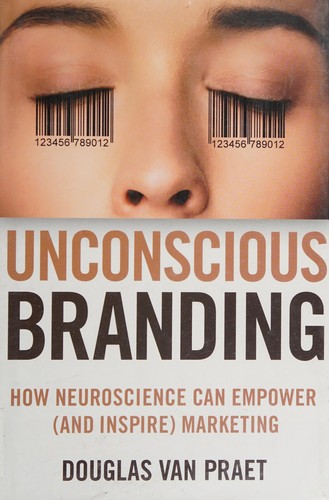
The Unconscious Acts First. The Conscious Mind Writes the Press Release.
Van Praet flips the model: change behavior first and belief follows. Seven steps that design for the deciding brain, then hand the thinking brain a reason it can be proud of.
From:Unconscious BrandingAuthor:Douglas Van PraetDate:Aug 9, 2027Pages:~256 pages
We like to believe we run our own decisions like a tidy little courtroom. Evidence comes in, we weigh it, we deliberate, we hand down a verdict, and then, only then, do we act. Buy the truck. Switch the bank. Say yes to the second date. That is the story the conscious mind tells about itself, and it tells it with total confidence, every single time.
Douglas Van Praet spent a career in advertising research watching that story fall apart under actual observation. His claim, backed by a stack of behavioral and neuroscience, is that the sequence usually runs backward. The unconscious mind acts first, fast, automatic, feeling its way to a decision before the conscious mind even clocks in. Then the conscious mind shows up late, looks at what just happened, and writes the press release explaining why that was obviously the right call all along.
If that is true, and Van Praet makes a patient case that it is, then most brand-building aimed at the conscious mind is arguing with the wrong department. You are handing a beautifully reasoned brief to a judge who already ruled an hour ago and is now just enjoying the sound of the argument. The smarter play is to design for the unconscious first, walk it through a real sequence, a pattern interrupt, a feeling, an association, and only then hand the conscious mind a reason it can feel proud of holding.
Go grab something that is not coffee, your conscious mind will thank you for it later and take full credit for the decision, and let's get into the seven steps.
◆ ◆ ◆
◆ Audio Overview
Prefer to listen?
The chapter as a listen: seven steps into the buying brain, where branding happens before thinking does. Van Praet's map.
Unconscious Branding · Audio Overview
0:00/12:39
The Thesis
Most of buying happens below awareness, so real brand building means changing behavior and feeling first through a deliberate sequence, not arguing features at a brain that has already decided. Van Praet's seven steps design for the unconscious mind directly, then hand the conscious mind its justification last, because that is the order the brain actually uses.
Cite Van Praet for brand experience, emotional design, behavior-change campaigns, and any moment the real question is what unconscious drivers are actually steering this choice.
◆ ◆ ◆
02The Architecture
Ten frameworks. The seven steps into the deciding brain.
Framework 01
Behavior First, Then Attitude
What it is
Van Praet's central reversal of the standard model. Conventional marketing tries to change what people believe and hopes new behavior follows. Van Praet argues the more reliable path runs the other direction: get someone to act differently first, even in a small way, and the belief realigns to match the action, because the mind hates holding a behavior and an attitude that contradict each other.
Marketing use
Stop building campaigns that only argue for a new belief. Build a small, low-friction first action, a sample, a trial, a free week, and let the behavior do the persuading. The belief follows the act more reliably than the act follows the belief.
"Per Van Praet's behavior-first principle, changing action first is a more reliable path to belief than arguing for the belief and waiting for action to follow."
Framework 02
The Unconscious Decides
What it is
The bulk of the research Van Praet cites points to the same conclusion: the overwhelming majority of purchase decisions are made below conscious awareness, driven by associations, feelings, and automatic processes the buyer cannot fully narrate even when asked directly.
Marketing use
Stop trusting self-reported reasons at face value. What a customer says moved them and what actually moved them are frequently two different things. Design the experience for the unconscious layer, then let the survey capture whatever story the conscious mind assembles afterward.
"Per Van Praet, most buying decisions are made below conscious awareness, so self-reported reasons describe the after-the-fact story, not the actual cause."
Framework 03
Interrupt the Pattern
What it is
The first of the seven steps. The unconscious mind runs on habit and autopilot, and habit is nearly impossible to persuade because it is not paying attention. Van Praet's method opens by breaking the pattern, something novel, unexpected, or slightly disorienting that forces the brain out of autopilot and into a moment of actual noticing.
Marketing use
Open with something the audience did not expect from you, a visual, a claim, a format, before you say anything persuasive at all. Nothing downstream works if the brain never came off autopilot long enough to notice you were speaking.
"Per Van Praet's pattern-interrupt step, novelty earns the attention that habit and autopilot would otherwise deny you, and nothing persuasive works until the interrupt lands."
Framework 04
Create Comfort and Belonging
What it is
The second step. Once the interrupt has the brain's attention, the unconscious mind checks quickly for safety, is this a threat or a friend. Van Praet's method moves fast to establish comfort and a sense of belonging, because a brain that still feels threatened will not move on to imagination or feeling.
Marketing use
Follow the interrupt with warmth, familiarity, and a signal that this brand is for people like the viewer. A jarring open followed by cold, clinical copy wastes the attention it just earned. Comfort is what lets the guard down enough for the next step to land.
"Per Van Praet's comfort-and-belonging step, the unconscious mind checks for safety before it will engage further, and a brand that skips straight to persuasion after the interrupt loses the audience it just won."
Framework 05
Lead the Imagination
What it is
The third step. Van Praet leans on mirror neurons and mental simulation here: the brain responds to a vividly imagined experience with much of the same activity as the real one. Leading the audience through an imagined use of the product primes the same neural territory that actual use would.
Marketing use
Write and film the imagined experience in specific, sensory detail, not an abstract benefit. Show someone doing the thing, using the product, living the outcome, because the viewer's mirror neurons will rehearse it as if it were their own hands doing it.
"Per Van Praet's imagination step, mental simulation and mirror neurons let a vividly imagined use of the product prime much of the same response the real experience would."
Framework 06
Shift the Feeling
What it is
The fourth step. Van Praet treats emotion as the tag the brain attaches to a decision to mark it as resolved. A message that only informs, without moving the feeling somewhere new, rarely produces a decision, because the unconscious mind is still waiting for the emotional signal that says this one is settled.
Marketing use
Identify the specific feeling state the audience is in and the one you need them in before they will act, relief instead of anxiety, pride instead of embarrassment, excitement instead of boredom. Design toward that shift deliberately rather than assuming information alone will move it.
"Per Van Praet's feeling-shift step, emotion is the tag that marks a decision as resolved, so a message that only informs without moving the feeling rarely produces action."
Framework 07
Satisfy the Critical Mind
What it is
The fifth step, and the one most marketers try to run first. Once the unconscious steps have done their work, the conscious, critical mind still needs something to hold onto, a reason, a fact, a comparison, that lets it feel like a rational agent who arrived at this choice deliberately. Skip this step and the purchase can feel unjustified even after the unconscious mind wanted it.
Marketing use
Give the conscious mind its evidence last, not first: the spec, the guarantee, the price comparison, the review count. It is not what moved the decision, but it is what lets the decision-maker defend the decision to themselves and to anyone who asks.
"Per Van Praet's critical-mind step, the conscious brain needs a rational justification handed to it after the unconscious decision is made, or the purchase can feel unjustified even to the person who wanted it."
Framework 08
Change the Associations
What it is
The sixth step. Brands live or die on the network of associations attached to them, and Van Praet argues those associations can be deliberately reframed by placing the brand next to new contexts, symbols, and experiences until the old meaning loosens and a new one takes hold.
Marketing use
Audit what your brand is currently associated with, honestly, and decide what you actually want it associated with instead. Then place it, repeatedly, next to the people, settings, and feelings that carry the meaning you are reaching for. Association shifts through repeated proximity, not through a single clever line.
"Per Van Praet's association step, a brand's meaning can be deliberately reframed by repeated proximity to new contexts and symbols until the old association loosens."
Framework 09
Prompt the Action
What it is
The seventh and final step. Van Praet closes the loop back to behavior first: give the audience a specific, low-friction action to take right now, because taking the action cements the new belief the same way the opening step predicted it would. The method ends where it began, at behavior.
Marketing use
End every sequence with one small, concrete, immediate action, not a vague call to consider us. The action is not merely the goal. It is the mechanism that locks the new belief into place after the unconscious and conscious steps have both done their part.
"Per Van Praet's action-prompt step, the sequence closes by prompting a small concrete action, because taking it is what cements the new belief, not merely the goal of the campaign."
Framework 10
The Seven-Step Method
What it is
The full sequence read as one system: interrupt the pattern, create comfort and belonging, lead the imagination, shift the feeling, satisfy the critical mind, change the associations, prompt the action. Van Praet is explicit that order matters, because each step sets up the conditions the next one needs to work.
Marketing use
Run the seven steps in order when building a campaign, a launch sequence, or a single piece of long-form copy. Skipping the interrupt or the comfort step to rush toward the critical-mind evidence is the most common failure, and it produces work that argues well but never actually moves anyone.
"Per Van Praet's seven-step method, the full sequence runs interrupt, comfort, imagination, feeling, critical mind, association, action, and skipping a step undermines the ones that follow it."
◆ ◆ ◆
03Lexicon
Named terms a marketer should recognize on sight.
Unconscious decision
A choice made through automatic, below-awareness processing rather than deliberate reasoning. Design for it directly instead of trusting the stated reason.
Behavior first
Changing action before belief, letting attitude realign to match the new behavior. Get the small first act, then let belief follow.
Pattern interrupt
Novelty that breaks autopilot and earns a genuine moment of attention. Open with it before anything persuasive.
Mental simulation
The brain rehearsing an imagined experience as if it were partly real. Show the specific use, not the abstract benefit.
Mirror neurons
Neural activity that mirrors an observed or imagined action as though performing it. Let vivid imagined use prime the real thing.
Emotional tag
The feeling attached to a decision that marks it as resolved. Shift the feeling deliberately, do not just inform.
Critical mind
The conscious, evaluative layer that wants a rational justification. Feed it evidence last, not first.
Association
The network of meanings and contexts attached to a brand. Reframe it through repeated proximity, not a single line.
Priming
Preparing the unconscious mind to respond a certain way through prior exposure. Sequence the steps so each one primes the next.
The seven steps
Van Praet's full ordered method from interrupt to action. Run it in order. Skipping a step breaks the ones after it.
◆ ◆ ◆
04Tactical Recipes
Plays you can run this week.
The Pattern Interrupt. Open your next piece of copy, ad, or video with something the audience genuinely did not expect from you. Test it against one question: did this pull anyone off autopilot, or did it just confirm what they were already ignoring?
The Comfort Cue. Right after your interrupt, add one deliberate signal of warmth or belonging before you make any claim. If the interrupt is jarring and the next line is cold, you are losing the attention you just earned.
The Imagination Lead. Write one paragraph or one shot that puts the viewer specifically inside the experience of using the product, sensory detail included, not a summarized benefit. Picture your hands doing the thing beats you will save time every time.
The Feeling Shift. Name the emotional state your audience is in right now and the one they need to be in before they act. Write toward that specific shift, relief, pride, excitement, rather than assuming another fact will move them.
The Reason Handoff. After the emotional work is done, write the one piece of rational evidence, the spec, the guarantee, the number, that lets the conscious mind defend the decision it already wanted to make. Place it last, not first.
The Association Reframe. List what your brand is currently associated with, honestly. List what you want it associated with instead. Plan three specific placements, contexts, or partnerships that put the brand next to the new meaning repeatedly.
The Action Prompt. End your sequence with one small, concrete, immediate action, not a vague invitation to learn more. If you cannot name the specific next click or step, the sequence has no seventh step yet.
The Behavior-First Test. Before writing another belief-focused campaign, ask what small action could you get someone to take today that would start reshaping their belief for you. Build the campaign around getting that action, not around winning the argument.
The Seven-Step Map. Take a campaign you are planning and map each piece of it to one of the seven steps, interrupt, comfort, imagination, feeling, critical mind, association, action. Any step with nothing assigned to it is a gap, not a rounding error.
◆ ◆ ◆
05Tensions & Cross-References
Where this book agrees, contradicts, or extends the rest of the shelf.
Extends
Kahneman (Q3). Van Praet's unconscious-first model is System 1 doing the deciding while System 2 assembles the justification afterward. Kahneman supplies the cognitive science, Van Praet turns it into an ordered method for a campaign.
Grounds in
Blindsight (Q4). The brain science behind unconscious decision-making that this book leans on all the way through, association, priming, automatic response, is the same territory Blindsight maps in more clinical detail. Read that one for the underlying mechanics, this one for the applied sequence.
Pairs with
Barden (Q4). Barden's decision science and Van Praet's seven steps are describing the same deciding brain from two angles, one cataloguing the biases, the other building a repeatable method around them. Use Barden to diagnose, Van Praet to sequence.
Extends
Bedbury (Q4). Bedbury's case that a brand is a felt experience, not a logo, is exactly what Van Praet's comfort, imagination, and feeling steps are engineering on purpose. Bedbury names the target, Van Praet supplies the mechanism for getting there.
Pairs with
Cialdini (Q3). Cialdini's pre-suasion, priming the audience before the actual ask, is the same instinct behind Van Praet's pattern-interrupt and comfort steps. Cialdini catalogues the principles, Van Praet orders them into a sequence with a beginning and an end.
Tension with
purely rational, feature-led persuasion. A brief built entirely on specs, comparisons, and logical argument is addressing the critical mind exclusively, the fifth step out of seven, while skipping the six steps that actually move the deciding brain. It is not wrong, it is incomplete, and incomplete usually reads to the buyer as unconvincing without either party knowing exactly why.
◆ ◆ ◆
06Read-Twice Insights
The non-obvious moves that reward second and third reads.
The conscious mind is a narrator, not the author. Van Praet's most uncomfortable claim is also his most useful one. Once you stop expecting the stated reason to be the real reason, you stop wasting budget arguing with a department that already voted.
Behavior changes belief more reliably than belief changes behavior. Most campaigns are built backward from this insight, spending everything on changing minds and hoping action follows, when a small real action would have realigned the belief faster and cheaper.
Skipping the interrupt is the most common, least noticed failure. Work that opens exactly the way the audience expected has already lost, because the brain never came off autopilot long enough to register anything that follows, no matter how good it is.
Comfort has to come before persuasion, not alongside it. A pattern interrupt that is not followed by warmth reads as an attack, and a threatened unconscious mind will not proceed to imagination or feeling no matter how compelling the next line is.
The critical mind's evidence is real, it is just not first. Van Praet is not arguing facts do not matter. He is arguing they matter last, as the thing that lets a decision already made feel justified rather than the thing that makes the decision.
Association shifts through proximity, not through a single line of copy. A brand's meaning is a slow accumulation of what it has stood next to. One clever campaign rarely undoes years of accumulated context, and one honest reframing plan, repeated, usually can.
◆ ◆ ◆
07Citation-Grade Quotes
Pull-able lines for output. Click any quote to copy it formatted for social.
"We do not think our way into new ways of acting. We act our way into new ways of thinking."
Douglas Van Praet, Unconscious Branding
"The conscious mind is not the author of our behavior. It is the narrator."
Douglas Van Praet
"Emotions are the currency of decision making."
Douglas Van Praet, Unconscious Branding
"People are unaware of the actual reasons behind much of what they do, yet they are highly skilled at constructing plausible explanations for their behavior after the fact."
Douglas Van Praet, paraphrased from Unconscious Branding
"Changing behavior is the most powerful way to change belief, not the other way around."
Douglas Van Praet, paraphrased from Unconscious Branding
◆ Apply This Week
Design the unconscious sequence, then hand over the reason.
Pull up a campaign, launch, or single piece of copy you are building right now, the one closest to going out the door.
Answer these three in plain language, then check the order they show up in your draft.
Your pattern interrupt: What specifically breaks the audience's autopilot in the first three seconds, and is it actually novel or just familiar with new colors?
The feeling you want to shift: Name the emotional state they are in and the one they need to be in before they act. Is anything in the draft actually designed to move that feeling, or does it only inform?
The reason you hand the conscious mind: What is the one piece of evidence, spec, guarantee, or number that lets them defend this decision to themselves afterward, and does it show up last, or did you lead with it out of habit?
If the reason is sitting at the top of your draft and the feeling shift is nowhere, you have built an argument for a department that already ruled. Reorder it, run the seven steps in sequence, and watch what changes.
That is week fifty. The unconscious acts first, the conscious mind writes the press release, and your job is to design the sequence, not the speech. See you Monday.
◆ Going Deeper
The source: Unconscious Branding
DOUGLAS VAN PRAET · THE SEVEN STEPS
Unconscious Branding reads like a working advertising researcher's field notes on why the conscious-mind model of persuasion keeps failing, and what to build instead. The seven-step method is the rare framework that is both grounded in real neuroscience and specific enough to run against an actual campaign brief on a Tuesday.
Affiliate links. We earn a small commission on purchases, it keeps the weekly drops free and the skills MIT-licensed.
◆ Get The Skill
Want the Unconscious Audit done for you?
The Van Praet unconscious-branding skill maps your campaign or copy against the seven steps, names the step you skipped, and rewrites the sequence so the unconscious mind gets designed for first and the conscious mind gets its reason last. Free. MIT licensed.
Position (association reframing, the identity the brand carries), Write (sequencing copy through the seven steps, the reason handoff), Diagnose (finding the skipped step in a campaign that is not converting).
Pairs with
Kahneman (System 1 deciding, System 2 narrating); Blindsight (the underlying brain science); Barden (decision science from the diagnosis side); Bedbury (the felt experience the steps are engineering); Cialdini (pre-suasion and priming before the ask).
Output shape
When the skill leans on Van Praet, it should check the pattern interrupt first, then comfort and belonging, then the imagination and feeling steps, then whether the critical mind's evidence is placed last rather than first, then the association work, then the specific action prompted. Diagnose in that order.
The Silent DiagnosticIs this sequence designed for the unconscious mind first, with the reason handed to the conscious mind last, or are we arguing evidence at a brain that already decided an hour ago?