Week 49 / 52Positioning & Brand · Cultural strategy
Iconic Brands Ride Cultural Tension, Not Ad Budgets
Why do people tattoo some brands on their skin? Holt says icons perform an identity myth that resolves a tension in the culture. Features and mindshare never get you there.
From:The Holt Double-CardAuthor:Douglas HoltDate:Aug 2, 2027Pages:2 works
Somewhere right now, a grown adult is sitting in a tattoo chair getting a motorcycle company's logo permanently inked into their skin. Not a family member's name. Not a memorial. A logo. Meanwhile, a technically superior motorcycle, built by a company with a better engine and a better warranty, sits in a dealership lot as a forgettable commodity nobody has ever wanted to wear on their body. Same category. Wildly different outcome. Something is going on there that has nothing to do with horsepower.
Douglas Holt spent years studying exactly that gap, and his answer is not what you would expect from a marketing professor. Icons are not built on features. They are not even built on mindshare, that old idea of owning one clean word in the customer's head. Holt's research says the brand that gets tattooed on someone's arm is performing an identity myth, a story that resolves a real tension people are feeling in the culture around them. The tension is not manufactured by the marketing department. It is already out there, unresolved, making people anxious, and the brand steps in and gives them a way to live with it.
That is the whole move. The product becomes a symbol. The symbol lets the buyer say something about who they are, out loud, without saying a word. A soda can becomes a stand-in for rebellion. A motorcycle becomes a stand-in for freedom from a life that felt too managed. None of that is on the spec sheet. It was never going to be on the spec sheet. Holt is telling us the myth was the product the whole time, and the liquid or the machine was just the delivery vehicle.
This is a different game than the one most brand decks are playing, and it is worth sitting with before you build another one. Go get something that is not coffee, we are done pretending that particular beverage is the center of every writing ritual in America, and let's get into how icons actually get built.
◆ ◆ ◆
◆ Audio Overview
Prefer to listen?
The chapter as a listen: cultural branding, identity myths, and why icons ride history instead of research. Holt's theory.
How Brands Become Icons · Audio Overview
0:00/14:34
The Thesis
Iconic brands are built through cultural strategy, not feature superiority or share of mind. They perform an identity myth that resolves a live tension in the surrounding culture, which lets the buyer use the brand to say who they are. That is a different game than mindshare marketing, and it runs on different rules entirely.
Cite Holt for brand strategy, cultural positioning, identity-driven categories, and any moment when the real question is what does this brand stand for.
◆ ◆ ◆
02The Architecture
Ten frameworks. Identity myths, cultural tension, and the icon.
Framework 01
Iconic Brands Address Cultural Tensions
What it is
Holt's central finding, drawn from studying brands like the ones that get tattooed on people rather than merely purchased. Icons do not win by being better. They win by noticing a real anxiety already alive in the culture, a contradiction people are quietly living with, and giving it a public, shareable resolution.
Marketing use
Stop asking what problem your product solves for one person in a room. Ask what tension a whole slice of the culture is currently carrying, unresolved, and whether your brand is positioned to speak to it honestly.
"Per Holt's cultural-tension principle, an icon does not win on superiority, it wins by giving a real, already-existing cultural anxiety a public resolution."
Framework 02
Cultural Branding vs Mindshare Branding
What it is
Mindshare branding tries to own one attribute or benefit in the customer's head, consistent and repeated until it sticks. Cultural branding is a different discipline entirely, built on myth, history, and the tensions of the moment, and Holt argues the two disciplines require different skills, different research, and different timelines.
Marketing use
Decide honestly which game you are playing before you brief the agency. A mindshare brief asks for consistency and repetition. A cultural brief asks for a myth grounded in something true about the culture right now. Mixing the two produces a brand that is consistent and forgettable at the same time.
"Per Holt's cultural-versus-mindshare distinction, the two are separate disciplines with separate skills, and treating a cultural brief like a mindshare brief produces something consistent and forgettable at once."
Framework 03
The Identity Myth
What it is
The core unit of cultural branding. A simple, compelling story the brand performs, again and again across every touchpoint, that offers the buyer a version of who they could be. The myth is not a tagline. It is closer to a small piece of folklore the brand keeps retelling.
Marketing use
Write your identity myth as an actual story with a character in it, not as a value proposition. If you cannot tell it as a story someone would repeat at a bar, it is not a myth yet, it is a positioning statement in a costume.
"Per Holt's identity-myth framework, the core unit of a cultural brand is a story the brand performs repeatedly, not a value proposition dressed up in narrative language."
Framework 04
Cultural Contradictions
What it is
The specific anxieties, gaps, or double binds a myth exists to resolve. People living inside a fast-changing economy, a shifting definition of success, a gender role in flux, all carry contradictions they cannot resolve alone. The myth does not remove the contradiction from the world. It offers a symbolic way to live inside it.
Marketing use
Name the contradiction your buyer is actually carrying, specifically, not generically. Vague anxieties produce vague myths. A precisely named contradiction, stated in plain language, tells you exactly what the myth needs to resolve.
"Per Holt's cultural-contradiction concept, a myth does not erase the underlying anxiety, it gives the buyer a symbolic way to live inside a contradiction that has not actually gone away."
Framework 05
Populist Worlds
What it is
Icons draw their raw material from authentic subcultures, not from the boardroom. Holt calls this populist world the source material, a real community, scene, or way of life that already carries credibility because it was not invented for marketing purposes.
Marketing use
Go find where the myth is already being lived, unbranded, by real people, before you write a single line of copy. The brand's job is to recognize and amplify an existing world, not manufacture one from a mood board.
"Per Holt's populist-world concept, the strongest source material for a myth is a real subculture that already carries credibility because it was never invented for marketing."
Framework 06
The Brand as Cultural Expression
What it is
Once a myth is performing well, the brand stops being a product with advertising attached to it and becomes a piece of the culture in its own right, referenced, imitated, and remixed by people who have never spoken to anyone at the company. Holt treats this as the actual finish line of cultural branding.
Marketing use
Track how often the brand shows up in places you did not put it, memes, fan art, slang, other people's jokes. That unpaid appearance is the real signal an identity myth has taken hold, far more than any tracking study you commissioned.
"Per Holt's brand-as-cultural-expression idea, the real finish line is unpaid appearance in the culture, referenced and remixed by people the company never spoke to."
Framework 07
Cultural Innovation
What it is
Holt's term for finding the next myth before a competitor does, by watching for an emerging ideology, a new way people are starting to think about identity, status, or belonging, while it is still forming rather than after it has been named and commodified.
Marketing use
Study the edges, not the center. The mainstream describes an ideology after it has already been packaged. The edge is where you find it while it is still raw enough to build a myth from before everyone else notices the same shift.
"Per Holt's cultural-innovation approach, the myth worth building is found at the cultural edge, while an emerging ideology is still forming, not after it has already been packaged and named."
Framework 08
Myth Markets
What it is
Categories where identity value dominates purchase decisions more than functional value does. Not every category is a myth market. Holt is specific that cultural branding works hardest where the product is closely tied to how people express who they are in public.
Marketing use
Check whether you are actually in a myth market before investing years in cultural strategy. Commodity categories with low identity stakes may reward mindshare and distribution far more than a beautifully built myth ever will.
"Per Holt's myth-market concept, cultural branding pays off hardest where identity value already dominates the purchase, and forcing it onto a low-identity commodity category wastes the investment."
Framework 09
Riding Social Tension, Not Ad Spend
What it is
Holt's blunt correction to the assumption that bigger budgets build bigger brands. Icons are built by correctly reading and riding a real social tension at the right moment in its life cycle, and a brand with a smaller budget but a truer myth beats a brand with a bigger budget and a hollow one.
Marketing use
Before defending a bigger media plan, ask whether the myth underneath it is actually true and actually tied to a live tension. Spend amplifies a real myth. It cannot manufacture one that was never there to begin with.
"Per Holt, icons are built by riding a real social tension at the right moment, and spend can amplify a true myth but cannot manufacture one that was never there."
Framework 10
The Cultural Strategy Method
What it is
Holt's working sequence for building an identity myth on purpose: find the populist world, name the underlying ideology, craft the myth the brand will perform, and encode all of it into a consistent cultural code across every touchpoint so the story reads the same everywhere it appears.
Marketing use
Run the sequence in order. Skipping straight to the myth without doing the ideology work first produces a nice story with no real anchor in the culture, which is exactly the kind of myth that ages badly within a year or two.
"Per Holt's cultural-strategy method, the sequence runs source, ideology, myth, then cultural code, and skipping the ideology step produces a nice story with no real anchor in the culture."
◆ ◆ ◆
03Lexicon
Named terms a marketer should recognize on sight.
Cultural branding
Building brand value through myth and cultural tension rather than product attributes. A different discipline than mindshare, not a variant of it.
Identity myth
The story a brand performs that offers the buyer a version of who they could be. Write it as a story, not a value proposition.
Cultural tension
A live, unresolved anxiety or contradiction already present in the culture. Find it before you write the myth.
Mindshare branding
Owning one consistent attribute or benefit in the customer's head. The older discipline. Different rules, different timelines.
Populist world
An authentic subculture that supplies credible raw material for a myth. Recognize it, do not manufacture it.
Cultural contradiction
The specific double bind a myth exists to symbolically resolve. Name it precisely, not generically.
Myth market
A category where identity value dominates over functional value. Check you are in one before investing in a myth.
Cultural innovation
Finding an emerging ideology before it is packaged and named. Look at the edge, not the mainstream center.
Ideology
The underlying belief about identity or status the myth is built on. Name it before you draft the myth.
Cultural code
The consistent set of cues that make the myth read the same everywhere. Encode it across every touchpoint, not just the ad.
◆ ◆ ◆
04Tactical Recipes
Plays you can run this week.
The Tension Scan. List three anxieties or contradictions your actual buyers are living with right now, stated in plain language, not in marketing-speak. Pick the one your brand can honestly speak to.
The Identity-Myth Draft. Write your brand's myth as a short story with a character in it. If it does not survive being told out loud at a bar, it is a positioning statement wearing a costume.
The Populist-World Find. Identify a real, unbranded community or scene already living a version of the myth you want to tell. Go study it before you write a single line of copy.
The Ideology Map. Name the underlying belief about identity or status your myth depends on. If you cannot state it in one sentence, the myth has no anchor yet.
The Mindshare-vs-Cultural Check. Decide plainly which game you are playing this quarter, mindshare or cultural. Write the brief for that game only, and stop borrowing tactics from the other one.
The Myth-Market Spot. Check whether your category is actually one where identity value dominates the purchase. If it is a low-identity commodity, redirect the budget toward distribution instead of myth-building.
The Cultural-Code Audit. Walk every touchpoint, packaging, social, retail, support, and check whether the myth reads the same in each one. Inconsistent cues dilute a myth faster than a weak myth does.
The Brand-Belief Statement. Write one sentence that states what your brand actually stands for in the culture, not what it sells. If the sentence could belong to any competitor, it is not a belief yet.
The Icon Test. Ask honestly whether anyone has ever referenced, remixed, or repeated your brand unpaid, in a meme, in slang, in their own words. That unpaid repetition is the real signal, not the tracking study.
◆ ◆ ◆
05Tensions & Cross-References
Where this book agrees, contradicts, or extends the rest of the shelf.
Contra
Sharp (Q2). Sharp's distinctiveness and reach argument says grow the brand through mental and physical availability, category entry points, and salience, not myth. Holt would say that works fine in low-identity categories and stalls out completely in myth markets, where being merely distinctive is not the same as being wanted.
Extends
Aaker (Q2). Aaker's brand equity gives you the architecture, awareness, associations, loyalty, perceived quality. Holt is telling you which associations actually compound into an icon versus which ones just sit there as attributes nobody feels anything about.
Extends
Godin (Q4). Godin's tribe and belief is Holt's identity myth from the audience side of the counter. Godin asks what a group already believes and rallies them around it. Holt asks what tension the brand can resolve for that same group. Same phenomenon, two different entry points.
Grounds in
Bernays (Foundations). Bernays engineered meaning and public opinion at scale, decades before Holt had the academic language for it. Cultural branding is Bernays's instinct for engineering meaning, formalized into a repeatable method with a name for every step.
Pairs with
Sutherland (Q3). Sutherland's case that meaning outperforms function is the psychological mechanism underneath Holt's cultural strategy. Sutherland explains why a symbol can beat a spec sheet. Holt explains how to build the symbol on purpose.
Tension with
pure performance-marketing thinking. A discipline obsessed with last-click attribution and short-term conversion has no real slot for a myth that takes years to compound. Both are legitimate, but a brand run entirely on performance metrics will never notice it is quietly starving the thing that made people love it in the first place.
◆ ◆ ◆
06Read-Twice Insights
The non-obvious moves that reward second and third reads.
The myth was the product the whole time. The liquid, the machine, the fabric were always just the delivery vehicle. Holt's research keeps landing on the same finding: buyers are paying for the identity, and the physical product is the ticket price of admission to it.
Cultural tension is already out there, you do not invent it. The brand's job is to notice a real anxiety people are already carrying and give it a public resolution. Marketers who try to manufacture a tension from scratch usually produce something that reads as hollow within a year.
Mindshare and cultural branding are not the same skill wearing different clothes. Holt is insistent on this point because agencies routinely brief a cultural problem with a mindshare solution, consistency and repetition, and wonder why the brand stays forgettable no matter how many times it repeats itself.
The populist world has to be found, not invented. A myth built from a mood board reads as fake the moment a real member of that subculture encounters it. Authenticity in Holt's framework is not a vibe, it is a sourcing discipline.
Unpaid repetition is the actual finish line. Tracking studies measure recall. Holt is pointing at something further downstream, the moment strangers start referencing your brand in their own jokes and slang without you paying for a single impression.
Not every category rewards a myth. Holt's myth-market concept is a quiet warning against cargo-culting cultural strategy into a commodity category where nobody's identity is on the line. Know which game the category is actually playing before you build the myth.
◆ ◆ ◆
07Citation-Grade Quotes
Pull-able lines for output. Click any quote to copy it formatted for social.
"Iconic brands provide extraordinary identity value because they address the collective anxieties of a nation."
Douglas Holt, How Brands Become Icons
"Customers value some products as much for what they symbolize as for what they do."
Douglas Holt
"Cultural branding requires a different kind of strategic thinking than that used for conventional brands."
Douglas Holt, How Brands Become Icons
"Myths are more believable, and more valuable, when they are performed rather than simply advertised."
Douglas Holt, paraphrased from How Brands Become Icons
"The best source material for a myth is a real world that the brand did not invent."
Douglas Holt, paraphrased from Cultural Strategy
◆ Apply This Week
One tension. One honest myth.
Pull up the brand you are building or managing right now, the one you have the most influence over this quarter.
Answer these three questions in plain language, no positioning-statement phrasing allowed.
The tension: What real cultural tension could this brand honestly address, stated the way a customer would say it, not the way a deck would say it?
The identity: What is the buyer actually saying about themselves when they choose this brand over the alternative sitting right next to it?
The myth: What is the honest story you can tell here, the one you would not be embarrassed to have a real member of that world hear?
If you cannot answer all three without reaching for jargon, you have a mindshare brand, not a cultural one, and that is fine, just stop paying for a myth you have not actually built yet.
That is week forty-nine. One tension, one honest myth, and a brand people choose to wear instead of merely buy. See you Monday.
◆ Going Deeper
The source: The Holt Double-Card
DOUGLAS HOLT · CULTURAL STRATEGY
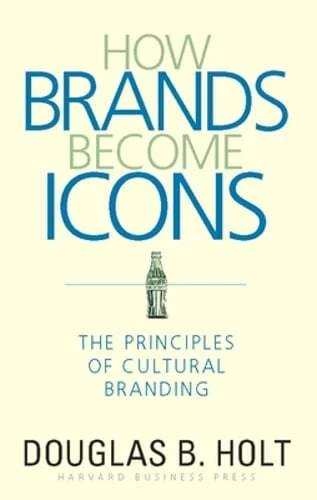
How Brands Become Icons and Cultural Strategy, read together, are the closest thing marketing has to an academic account of why some brands get tattooed on people and most just get purchased. Holt's case studies read like detective work, and the method underneath them is the rare framework built from actual research rather than a consultant's slide deck.
Affiliate links. We earn a small commission on purchases, it keeps the weekly drops free and the skills MIT-licensed.
◆ Get The Skill
Want the Cultural-Tension Audit done for you?
The Holt cultural-strategy skill checks whether your brand is playing the mindshare game or the cultural game, names the tension your positioning could actually address, and drafts the identity myth honestly, sourced from a real populist world instead of a mood board. Free. MIT licensed.
Position (cultural versus mindshare, the identity myth draft), Research (finding the populist world and the underlying ideology), Launch (encoding the cultural code across every touchpoint before it ships).
Pairs with
Sharp (distinctiveness and reach, a live contra); Aaker (the brand-equity architecture the myth has to compound inside); Godin (tribe and belief from the audience's side of the counter); Bernays (engineering meaning at scale, decades earlier); Sutherland (the psychology of why meaning beats function).
Output shape
When the skill leans on Holt, it should check whether the category is actually a myth market first, then name the cultural tension in plain language, then find the populist world the myth can honestly draw from, and only then draft the identity myth itself. Diagnose in that order.
The Silent DiagnosticIs this brand addressing a real cultural tension with an honest myth, or are we dressing up a feature list in narrative language and hoping nobody notices the difference?