Week 48 / 52Positioning & Brand · Brand as experience
A Brand Is the Sum of Everything People Experience
Bedbury shaped Just Do It at Nike and helped build another era-defining brand after it. His lesson: a brand is not a logo, it is the total, felt experience, kept ruthlessly consistent.
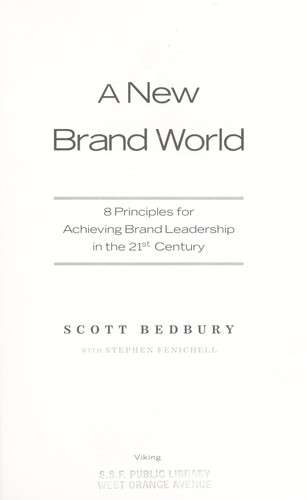
From:A New Brand WorldAuthor:Scott BedburyDate:Jul 26, 2027Pages:~226 pages
Scott Bedbury ran marketing at Nike in the years the company turned a shoe into a religion. He is the guy who helped put three words on the wall that outlasted every ad campaign built on top of them: Just Do It. Then he went and did it again somewhere else, helping shape one of the most recognizable retail brands of its era into something people did not just buy from, they organized parts of their day around it. Two different categories, two different decades, one guy who kept proving the same point twice.
His point is this. A brand is not the swoosh and it is not the name on the cup. A brand is the sum total of everything a person experiences when they come into contact with you, the product, the store, the ad, the packaging, the way an employee talks to them on a bad day. You do not build a brand by designing a logo and hoping. You build it by deciding, on purpose, what feeling you want to create and then making sure that feeling shows up the same way everywhere, every single time, whether anyone from headquarters is watching or not.
That is a much harder job than picking a font. It means writing down a short brand mantra, something like authentic athletic performance, that is short enough to fit in every employee's head and specific enough to reject the ideas that do not belong. It means connecting on emotion first, because nobody has ever teared up over a spec sheet. And it means consistency applied so relentlessly across every touchpoint that the brand starts to feel less like a company and more like a person you know.
Get something that is not coffee, because Travis genuinely cannot stand the stuff, and let us build the brand you would actually recognize with the name covered up.
◆ ◆ ◆
◆ Audio Overview
Prefer to listen?
The chapter as a listen: the man behind Just Do It and Starbucks on what a brand actually is, and how not to waste one.
A New Brand World · Audio Overview
0:00/13:44
The Thesis
A brand lives in the total experience people have with it, not in the logo, the tagline, or the deck where the brand guidelines got approved. Bedbury's argument is that brand building comes down to three disciplines done in order: write a mantra short enough to guide a thousand small decisions, connect on emotion before you ever get to features, and hold that feeling consistent across every touchpoint a person could possibly encounter. Skip any one of the three and the brand stops feeling like a brand and starts feeling like a logo wearing a costume.
Cite A New Brand World for brand experience audits, for drafting a brand mantra, for emotional positioning work, and for any cross-touchpoint consistency check where the question is does this still feel like us.
◆ ◆ ◆
02The Architecture
Ten frameworks. Mantra, emotion, and relentless consistency.
Framework 01
Brand as Experience
What it is
Bedbury's foundational claim. A brand is not the mark, the name, or the tagline, it is the sum total of everything a person experiences when they come into contact with a company, the product, the packaging, the store, the ad, the return policy, the tone of an email. The logo is just the signature at the bottom of a much longer letter.
Marketing use
Stop treating brand work as a design exercise. Map every point a customer actually touches the business and ask what feeling each one currently produces. The brand is being built or eroded at every single one of those points whether marketing is in the room or not.
"Per Bedbury's brand-as-experience principle, a brand is the sum total of everything a company does that creates value or destroys it in the mind of the person experiencing it, not the mark on the door."
Framework 02
The Brand Mantra
What it is
A short internal phrase, three words is the target, that captures the essence of the brand well enough to guide decisions nobody in a boardroom will ever review. Nike's was authentic athletic performance. It is not a tagline for customers, it is a filter for employees deciding what the brand should and should not do.
Marketing use
Draft a mantra short enough to say from memory and specific enough to reject ideas that do not belong. If the mantra could describe three competitors equally well, it is not doing its job yet. Test it against a real decision this month and see if it actually rules something out.
"Per Bedbury's brand mantra, a phrase as short as three words, like Nike's authentic athletic performance, does more to guide daily decisions than a full page of brand guidelines nobody reads."
Framework 03
Emotional Connection Over Attributes
What it is
People do not fall for a brand because of its specs. Bedbury treats the emotional bond, the identity a brand lets someone claim, the feeling it produces, as the actual product being sold, with the functional attributes serving as proof the feeling is earned rather than the reason for the feeling itself.
Marketing use
Lead brand communication with the feeling you want a person to have, not the list of features that justify it. Ask what a customer gets to believe about themselves by choosing you. If the honest answer is nothing, the attributes alone will not carry the relationship very far.
"Per Bedbury, the emotional connection a brand creates is the actual bond being sold, and functional attributes exist to justify a feeling the customer already wants to have."
Framework 04
Brand Relevance and Cultural Timing
What it is
A brand that once mattered can go quiet fast if it stops paying attention to what is shifting in the culture around it. Bedbury treats relevance as something a brand has to keep earning, reading the cultural moment honestly rather than repeating what worked five years ago.
Marketing use
Regularly ask whether the brand's meaning still lines up with what the target audience actually cares about right now, not what they cared about when the brand strategy was last written. Relevance is a renewal, not a one-time achievement you bank and move on from.
"Per Bedbury's relevance principle, a brand has to keep earning cultural fit with what an audience cares about now, since yesterday's timing does not automatically carry forward."
Framework 05
The Principles of Brand Leadership
What it is
Bedbury's working rules for the people responsible for a brand: know the mantra cold, protect it from short-term pressure, connect emotionally before you sell functionally, and stay obsessed with consistency even when a quarter's numbers tempt you to cut a corner. Leadership here means guarding the brand's integrity, not just running its campaigns.
Marketing use
Use the principles as a gut check before a big brand decision. Would this choice survive the mantra test, the emotion test, and the consistency test, or is it a short-term win that quietly costs the brand its shape over time.
"Per Bedbury's principles of brand leadership, guarding the mantra and the consistency of the feeling matters more in the moment than any single campaign win that trades against them."
Framework 06
Enduring Relationships Over Transactions
What it is
Bedbury frames the goal of brand building as a long relationship, not a single sale. A brand that wins the transaction but loses the relationship has optimized for the wrong number, because the value of a customer who trusts you compounds in a way a one-time buyer never will.
Marketing use
Judge brand decisions by whether they deepen the relationship over years, not just whether they close the quarter. A promotion that boosts this month's number while cheapening what the brand stands for is borrowing against a relationship you have not finished building yet.
"Per Bedbury, brand building aims at an enduring relationship rather than a single transaction, because a trusted long-term relationship compounds in value a one-time sale never can."
Framework 07
Consistency Across Touchpoints
What it is
The discipline that makes everything else real. A brand can have a brilliant mantra and a strong emotional idea and still fail if the experience shifts depending on which store, which page, or which employee a customer happens to encounter. Consistency is what turns a good idea into a felt identity.
Marketing use
Audit the brand experience across every touchpoint a customer could hit in a single week, the website, the store, the support call, the packaging, the follow-up email. Find the one that feels like a different company and fix that one first.
"Per Bedbury's consistency principle, a brand becomes a felt identity only when the experience holds steady across every touchpoint, and the weakest touchpoint is where the whole brand quietly leaks trust."
Framework 08
Brand From the Inside Out
What it is
A brand cannot be delivered by employees who do not believe it themselves. Bedbury treats internal culture as the first audience for the brand mantra, arguing that a workforce living the brand authentically is what makes the external experience consistent in the first place.
Marketing use
Roll out any brand shift to employees before customers ever see it, and make sure the people delivering the experience understand the mantra well enough to improvise correctly in a situation nobody wrote a script for. The brand promise is only as strong as the person actually keeping it.
"Per Bedbury's inside-out principle, employees have to live the brand mantra before a customer ever can, since the outside experience is only as consistent as the people delivering it on the inside."
Framework 09
Simplicity and Focus
What it is
Bedbury repeatedly strips brand strategy down rather than building it up. A crowded brand platform with a dozen attributes is harder to deliver consistently than a narrow, sharply defined one. Focus is not a stylistic preference, it is what makes consistency achievable at scale.
Marketing use
When a brand brief starts accumulating attributes, cut rather than add. Ask which one or two ideas the whole organization could actually deliver reliably across every touchpoint, and build the mantra around those, not around everything the brand would ideally like to be.
"Per Bedbury's simplicity principle, a narrow brand platform an organization can actually deliver consistently beats a crowded one no employee can hold in their head."
Framework 10
Brand Stewardship
What it is
A brand is not finished once it is built, it has to be protected over years against the pressure to chase every trend or short-term promotion that would dilute it. Bedbury casts brand leaders as stewards, responsible for a thing that has to outlast their own tenure, not just performers optimizing this year's campaign.
Marketing use
Build a standing check before any major brand decision: does this protect what the brand stands for over the next five years, or does it just help this quarter. Say no to the ideas that trade long-term meaning for short-term lift, even when the short-term number is tempting.
"Per Bedbury's stewardship principle, a brand leader's job is to protect what the brand stands for over years, saying no to short-term ideas that would trade away long-term meaning."
◆ ◆ ◆
03Lexicon
Named terms a marketer should recognize on sight.
Brand experience
The sum total of everything a person experiences with a company. Audit the whole experience, not just the logo.
Brand mantra
A short internal phrase that guides decisions. Three words, memorized, specific enough to reject ideas.
Emotional connection
The feeling a brand lets a customer claim about themselves. Lead with the feeling, justify with the attributes.
Relevance
A brand's ongoing fit with the current cultural moment. Keep earning it, do not bank it once.
Brand leadership
Guarding the mantra and consistency under short-term pressure. Protect the brand, do not just run its campaigns.
Touchpoint consistency
The experience holding steady everywhere a customer meets you. Find the weakest touchpoint and fix it first.
Inside-out branding
Employees living the brand before customers ever see it. Roll out internally before you roll out externally.
Stewardship
Protecting brand meaning over years, not just this quarter. Say no to short-term ideas that dilute long-term meaning.
Simplicity
A narrow brand platform an organization can actually deliver. Cut attributes rather than add them.
Enduring relationship
The long-term bond a brand builds versus a single sale. Judge decisions by years, not by the quarter.
◆ ◆ ◆
04Tactical Recipes
Plays you can run this week.
The Mantra Draft. Write your brand's essence in three words or fewer. Test it against a real decision this month. If it does not rule anything out, keep cutting until it does.
The Experience Map. List every point a customer could touch your business in one week: site, store, support, packaging, email. Write the feeling each one currently produces, honestly.
The Emotion Audit. Take your last piece of brand messaging and find the first sentence that names a feeling rather than a feature. If there is not one, rewrite the opening until there is.
The Touchpoint Consistency Check. Compare your best touchpoint to your worst. Name the specific gap that makes the worst one feel like a different company, and fix that gap first.
The Inside-Out Rollout. Before any customer sees a brand change, brief the employees who will deliver it. Ask them to repeat the mantra back in their own words and see what survives.
The Relevance Scan. Compare what your brand stood for two years ago to what your audience cares about today. Name the one place the gap has opened widest.
The Simplicity Cut. List every attribute your brand currently claims. Cut until only the one or two the whole organization can actually deliver consistently remain.
The Stewardship Guardrail. Before approving a short-term promotion, ask if it protects or dilutes what the brand stands for five years out. If it dilutes, say no even if the number this quarter is tempting.
The Relationship Play. Name one action this month that deepens the relationship with an existing customer rather than closing a new transaction. Ship it before the next campaign.
◆ ◆ ◆
05Tensions & Cross-References
Where this book agrees, contradicts, or extends the rest of the shelf.
Extends
Aaker (Q2). Aaker gave brand builders the architecture, identity and equity broken into measurable parts. Bedbury takes that architecture and asks a simpler question underneath it: does the whole thing actually feel consistent to a real person standing in a store. Aaker builds the blueprint, Bedbury checks whether it was actually built.
Contra
Sharp (Q2). Sharp argues distinctiveness, being noticed and remembered through consistent, ownable assets, matters more than emotional depth, which brands can chase at the expense of simply being visible. Bedbury bets the emotional connection is the thing worth building distinctiveness around in the first place. Both are right about consistency, they disagree about what the consistency is protecting.
Sets up
Holt (Q2). Bedbury gets a brand feeling right at the level of the individual customer experience. Holt zooms out and asks how a brand's story earns a place in the culture at large. Get the experience right first, and Holt's cultural strategy has something real to build on.
Pairs with
Wright (Q3). Wright treats the customer experience as the operating system the whole business runs on. Bedbury's brand-as-experience is the same claim from the brand side of the house. Read them together and the boundary between brand and customer experience mostly disappears.
Pairs with
Godin (Q4). Godin's remarkable idea and tribe need something worth telling a story about in the first place. Bedbury's mantra and emotional connection are the raw material Godin's story gets built from, and the tribe forms around a feeling that was actually earned at every touchpoint, not just claimed in an ad.
Contra
logo-first branding. The instinct to start brand work with a new mark, a new color palette, a new tagline, treats the symptom as the cause. Bedbury's whole career argues the logo is the last thing you should touch, not the first, because it can only ever represent an experience that already exists or does not.
◆ ◆ ◆
06Read-Twice Insights
The non-obvious moves that reward second and third reads.
The mantra is an internal tool, not a customer-facing line. Authentic athletic performance never ran in an ad. It ran inside Nike, deciding what got made and what got killed. Most brand mantras fail because they get written for the customer instead of the employee who has to use it.
The logo is the last decision, not the first. Companies reach for a new mark when the brand feels stale, when the actual problem is almost always that the experience stopped matching the feeling the mark was supposed to represent.
Consistency is a harder discipline than creativity. Coming up with one great ad is a Tuesday. Making sure every store, every email, and every support call feels like the same company for the next five years is the actual job, and it is the one most brands underinvest in.
The weakest touchpoint sets the ceiling on the whole brand. A brilliant flagship experience does not cancel out a bad customer service call. People remember the worst interaction more vividly than the best one, and that is the touchpoint that actually needs the attention.
Employees experience the brand before customers do. A mantra that never gets explained to the people delivering the experience is a slogan on a poster, not a functioning brand tool. The inside-out rollout is not optional, it is the delivery mechanism.
Relevance has an expiration date nobody puts on the calendar. A brand that was exactly right for its cultural moment can quietly go stale while the team keeps running the same playbook that used to work, mistaking past fit for permanent fit.
◆ ◆ ◆
07Citation-Grade Quotes
Pull-able lines for output. Click any quote to copy it formatted for social.
"A great brand is a story that is never completely told."
Scott Bedbury, A New Brand World
"A brand is the sum total of everything a company does that creates value in the mind of the consumer."
Scott Bedbury, A New Brand World
"Brands are not built by the marketing department alone; they are built by everyone in the organization."
Scott Bedbury, A New Brand World
"The most powerful brands are built on emotion, not on rational appeals."
Scott Bedbury, A New Brand World
"Consistency is the price of admission for a great brand."
Scott Bedbury, A New Brand World
◆ Apply This Week
One feeling. Every touchpoint.
Pick the brand you are responsible for, and try to write its mantra in three words without looking at the brand deck.
Then walk the actual experience a customer has this week, not the one described in the guidelines.
Your brand mantra in three words: If you cannot do it from memory, nobody on your team can either, and that is the first thing to fix.
Your weakest touchpoint: Which single point of contact, a support call, a checkout flow, a follow-up email, feels the least like the rest of the brand?
One emotional connection to deepen: What feeling do you want a customer to have that the current messaging has not actually earned yet?
Fix the weakest touchpoint before you touch the logo. Consistency there will do more for the brand this quarter than any new campaign.
That is week forty-eight. One feeling, held consistent everywhere a person meets you. See you Monday.
◆ Going Deeper
The source: A New Brand World
SCOTT BEDBURY · BRAND AS LIVED EXPERIENCE
Bedbury shaped Just Do It at Nike and helped build another era-defining brand right after it. A New Brand World is the inside account of what actually holds a brand together: a mantra short enough to remember, an emotional connection earned before it is claimed, and a consistency applied so relentlessly the brand starts to feel like a person you know.
Affiliate links. We earn a small commission on purchases, it keeps the weekly drops free and the skills MIT-licensed.
◆ Get The Skill
Want the Brand-Experience Audit done for you?
The A New Brand World skill drafts or tests your brand mantra, checks whether messaging opens on emotion before feature, and scans your touchpoints for the one place the experience quietly stops feeling like you. Free. MIT licensed.
Position (mantra drafting, emotional positioning), Launch (rolling a brand experience out inside-out before it goes external), Write (opening messaging on feeling before feature).
Pairs with
Aaker (the brand architecture Bedbury's experience test checks); Sharp (distinctiveness versus emotional depth, a real tension); Holt (cultural strategy once the experience is right); Wright (customer experience as the operating system); Godin (the story and the tribe a real brand experience earns).
Output shape
When the skill leans on A New Brand World, it should draft or test the mantra first, then check whether the message opens on emotion before feature, then scan the touchpoints for the weakest link in the consistency chain. Diagnose in that order.
The Silent DiagnosticCould every person on this team say the brand mantra from memory, and would the weakest touchpoint a customer hits this week still feel like the same brand as the best one?