Week 47 / 52Positioning & Brand · Brand as an asset
A Brand Is an Asset, Not a Logo
Aaker spent a career proving brand equity belongs on the balance sheet. Awareness, loyalty, associations, perceived quality: name them, build them, protect them.
From:Aaker on BrandingAuthor:David AakerDate:Jul 19, 2027Pages:~208 pages
Ask a room full of finance people what a brand is worth and watch the room get uncomfortable. Revenue, they can model. Inventory, they can count. A brand, the thing that makes a stranger pick your box off the shelf over an identical box sitting six inches to the left, gets waved at with a shrug and a line about goodwill. It feels soft. It feels like the department that ordered the branded pens. And when the budget gets tight, soft is the first thing that gets cut, right before anyone asks what that softness was actually doing for the number on the shelf.
David Aaker spent a career arguing that the finance people had the wrong model, not the wrong instinct. A brand is not a vibe sitting on top of the business. It is an asset sitting on the balance sheet whether your accountants know how to price it or not, built out of specific, nameable, trackable parts: how many people know you exist, how many of them keep coming back, what they believe about you without being told, and whether they think what you make is actually good. Awareness, loyalty, associations, perceived quality. Name the four and you can build them on purpose instead of hoping they accumulate.
That reframe changes the whole conversation. An asset gets invested in, maintained, protected from erosion, and passed down in better condition than you found it. A vibe gets whatever is left in the budget after the real spending is done. Aaker's whole body of work, the identity system, the architecture rules, the long game of building the same associations year after year instead of chasing a new campaign concept every quarter, only makes sense once you accept the premise: this is not decoration, this is capital, and capital compounds when you manage it and erodes when you neglect it.
So before you sit down to write the next campaign brief, go get yourself something that is not coffee, sit with that idea for a minute, and let it rearrange how you think about the thing your company spent a decade building without ever putting a number on it.
◆ ◆ ◆
◆ Audio Overview
Prefer to listen?
The chapter as a listen: brand as strategic asset, identity systems, and the twenty principles that built the discipline.
Aaker on Branding · Audio Overview
0:00/14:30
The Thesis
A brand is a strategic asset built from awareness, loyalty, associations, and perceived quality, not a logo sitting on top of the real business. Managing it deliberately over time, the identity you commit to, the architecture that governs your portfolio, the stories that carry it forward, compounds its value the way any asset compounds when it is invested in instead of neglected.
Cite Aaker for brand strategy, portfolio architecture, brand equity, and long-term brand decisions, anywhere the question is what does this brand stand for and is that answer built to last.
◆ ◆ ◆
02The Architecture
Ten frameworks. Brand equity, identity, and the portfolio.
Framework 01
Brand Equity as an Asset
What it is
Aaker's foundational claim. Brand equity is a set of assets, awareness, loyalty, associations, and perceived quality, linked to a brand's name and symbol that add to or subtract from the value a product or service provides. Treat it as capital on the books, not sentiment in the hallway.
Marketing use
Audit all four drivers on a schedule, the way you would audit inventory or receivables. A brand strong on awareness but weak on perceived quality has a different problem, and a different fix, than one strong on loyalty but invisible to anyone new.
"Per Aaker's brand equity framework, awareness, loyalty, associations, and perceived quality are the four assets a marketer should audit and build on purpose rather than let accumulate by accident."
Framework 02
Brand Identity
What it is
What the brand should stand for in the mind of the customer, chosen deliberately rather than discovered by accident in last year's ad campaign. Identity is the aspiration, distinct from image, which is how the brand is currently perceived, warts included.
Marketing use
Write the identity down as a small set of associations you are committing to build, then measure image against it honestly. The gap between the two is not a flaw to hide, it is the actual work plan for the next several years.
"Per Aaker's brand identity framework, identity is the aspiration a company commits to and builds toward, while image is the current, sometimes unflattering, perception it is measured against."
Framework 03
Brand Vision
What it is
The aspirational future state the identity is built to reach, a picture of what the brand will mean once the identity work has actually taken hold, not a mission statement written to sound nice in a deck.
Marketing use
Use the vision to test every identity element you are considering. If an association does not move the brand toward the vision, it is decoration, not strategy, and it is competing for the same limited attention as the elements that matter.
"Per Aaker's brand vision concept, the aspirational future state the identity is built toward is the test for whether any given association is strategy or merely decoration."
Framework 04
Brand Associations and Personality
What it is
The specific things people connect to the brand without being told, attributes, benefits, and a personality (think of the brand as a person and ask what kind of person it is). Associations are the actual content of the asset, the reason awareness and loyalty have something to attach to.
Marketing use
Map the associations you currently own against the ones you want to own, then commit resources to closing the gap instead of adding new, unrelated ones. A brand that adds associations faster than it reinforces existing ones ends up standing for nothing in particular.
"Per Aaker's associations and personality framework, the specific attributes and personality traits people connect to a brand are the actual content the equity is built from, not the name and logo alone."
Framework 05
Brand Architecture
What it is
The system that governs how brands in a portfolio relate to each other, ranging from a house of brands (each brand stands alone, no visible parent) to a branded house (one master brand covers everything), with hybrids in between. Architecture decides whether a new offering borrows equity or builds its own.
Marketing use
Choose the architecture on purpose before you name the next product. A house of brands protects the parent from risk in a new category but forfeits the leverage of shared equity. A branded house gets leverage but puts the whole reputation on the line with every launch.
"Per Aaker's brand architecture framework, the choice between a house of brands and a branded house determines whether a new offering borrows existing equity or has to build its own from zero."
Framework 06
The Brand as a Relationship
What it is
Aaker frames the brand and the customer as two parties in an ongoing relationship, not a one-time transaction. Relationships have history, trust that accumulates or breaks, and expectations that get set the first time and either honored or violated every time after.
Marketing use
Manage the brand the way you would manage a long relationship, consistency over novelty, kept promises over clever ones, and repair work done quickly and visibly when trust takes a hit. A brand is not re-introduced each quarter, it is maintained.
"Per Aaker's brand-as-relationship framework, a brand and its customers are two parties in an ongoing relationship where trust accumulates or breaks over time, not a transaction reset with every campaign."
Framework 07
Signature Stories
What it is
Authentic, engaging narratives that carry the brand's identity and strategy in a way a list of attributes never could. A signature story does the persuading indirectly, letting the audience draw the conclusion instead of being told the conclusion outright.
Marketing use
Find the true story already sitting inside your company, a founding decision, a customer who was helped in an unusual way, a moment the brand kept a promise when it would have been easier not to, and tell that story on repeat instead of inventing a new campaign concept every quarter.
"Per Aaker's signature stories framework, an authentic narrative that carries the brand's strategy indirectly is more persuasive and more durable than a direct list of claimed attributes."
Framework 08
Brand Extensions
What it is
The decision to stretch an existing brand name onto a new product or category, weighed against the risk of building a new name from zero. Extensions work when the parent's associations transfer credibly, and backfire when they dilute the very associations that made the parent valuable.
Marketing use
Before extending, ask honestly whether the new offering fits the existing associations or merely benefits from temporary borrowed attention. A fit that has to be explained in the ad copy is usually not a fit, it is a stretch the brand will eventually snap back from.
"Per Aaker's brand extension framework, an extension succeeds when the parent brand's associations transfer credibly to the new category, and dilutes the parent when they do not."
Framework 09
Brand Relevance
What it is
Aaker's later argument that the biggest threat to an established brand is often not a competitor winning the same fight, it is a new subcategory that makes the whole fight irrelevant. Winning the perception battle inside a category that customers have stopped caring about is a hollow win.
Marketing use
Watch for subcategories forming at the edge of your market, not just competitors inside it. The defense is not better positioning within the old category, it is deciding whether to lead the new subcategory yourself before somebody else makes your category the one nobody needs anymore.
"Per Aaker's brand relevance framework, an emerging subcategory that makes the existing category irrelevant is a bigger threat than a competitor fighting for the same customers inside it."
Framework 10
Building Brands Over Time
What it is
The long game underneath every other framework. Brand equity compounds through consistency, the same core identity reinforced across years and campaigns, not through a constant search for the next fresh angle. Aaker treats reinvention for its own sake as the quiet enemy of equity.
Marketing use
Resist the internal pressure to refresh the identity just because the team is bored of it. Customers are not as tired of your core message as your own marketing department is, and the brands that compound value are usually the ones still saying a version of the same true thing a decade later.
"Per Aaker's long-term brand-building principle, equity compounds through years of consistent reinforcement of the same core identity, and reinvention for its own sake is usually a cost, not a gain."
◆ ◆ ◆
03Lexicon
Named terms a marketer should recognize on sight.
Brand equity
The set of assets, awareness, loyalty, associations, perceived quality, linked to a name and symbol. Audit the four drivers, do not eyeball the vibe.
Brand identity
What the brand should stand for, chosen and committed to. Write it down before you measure against it.
Brand vision
The aspirational future state the identity is built toward. Test every association against whether it serves the vision.
Associations
The specific attributes and benefits people connect to the brand. Reinforce owned ones before adding unrelated new ones.
Perceived quality
What customers believe about how good the offering actually is. A driver of equity, not a byproduct of it.
Brand architecture
The system governing how portfolio brands relate to each other. Choose house of brands or branded house on purpose.
Signature story
An authentic narrative that carries identity and strategy indirectly. Find the true story already inside the company.
Brand extension
Stretching an existing name onto a new product or category. Only if the associations transfer credibly.
Brand relevance
Whether the category itself still matters to customers. Watch the subcategory forming at the edge, not just the rival inside it.
Brand personality
The brand described as if it were a person. Ask what kind of person it is, then stay in character.
◆ ◆ ◆
04Tactical Recipes
Plays you can run this week.
The Equity Audit. Score the brand on all four drivers, awareness, loyalty, associations, perceived quality, on a simple scale. The lowest score is the next quarter's actual priority, not whichever driver is easiest to campaign around.
The Identity Statement. Write the brand identity in one paragraph as an aspiration, then write the current image in one honest paragraph. The gap between the two is the real strategic brief.
The Association Map. List every association customers currently connect to the brand unprompted, then mark which ones you actually want reinforced. Stop adding new associations until the wanted ones are secure.
The Architecture Decision. Before naming a new offering, decide on paper whether it is a house-of-brands play or a branded-house play, and state why. Never let the name get chosen before the architecture does.
The Signature-Story Find. Interview someone who was at the company early, or a customer with an unusual history, and pull out the one true story that shows the identity in action instead of stating it.
The Extension Check. Before stretching the name onto a new category, write the sentence a skeptical customer would say to explain the fit. If the sentence needs a paragraph of justification, the fit is not there yet.
The Relevance Play. List the subcategories forming at the edge of your market this year. For each one, decide whether to lead it, ignore it, or get made irrelevant by it, on purpose rather than by default.
The Consistency Guardrail. Before approving a creative refresh, ask whether it reinforces the existing identity or merely relieves the internal team's boredom with it. Approve the first, question the second.
The Perceived-Quality Lift. Find the one product or service detail customers actually notice and judge quality by, then invest visibly there before touching anything cosmetic that customers were never evaluating in the first place.
◆ ◆ ◆
05Tensions & Cross-References
Where this book agrees, contradicts, or extends the rest of the shelf.
Contra
Sharp (Q2). Sharp's mental and physical availability treats distinctiveness and reach as the whole game and is openly skeptical of deep brand meaning as the driver of growth. Aaker would answer that distinctiveness without owned associations is a coin flip repeated forever, memorable but empty.
Extends
Ries and Trout (Q2). Positioning claims the slot in the mind; Aaker's identity work is the deliberate content poured into that slot and defended there for years. Positioning picks the address, identity builds the house.
Sets up
Bedbury (Q2). Aaker treats the brand as an asset with measurable drivers; Bedbury pushes further into brand as a lived experience, every touchpoint a chance to make or break the relationship Aaker says the brand and customer are already in.
Contra
Holt (Q2). Holt's cultural branding argues equity comes from a brand attaching itself to a cultural myth at the right historical moment, not from steadily accumulating awareness and loyalty scores. Aaker would say the myth still has to be measured in something, and equity is the something.
Grounds in
Kotler (Foundations). Kotler treats brand as one strategic lever among the four Ps; Aaker zooms in and argues that lever alone is worth its own balance sheet line, its own architecture, and its own decade-long plan.
Tension with
brand-as-decoration thinking. Treating the logo, the tagline, and the campaign concept as the brand itself is exactly the mistake Aaker's whole body of work argues against. The decoration is downstream of the asset, not the asset itself.
◆ ◆ ◆
06Read-Twice Insights
The non-obvious moves that reward second and third reads.
The finance department is not wrong to want a number, it is wrong about which number to ask for. Awareness, loyalty, associations, and perceived quality are all measurable. The failure is not that brand cannot be quantified, it is that most companies never bother building the dashboard.
Identity and image are two different documents, and most companies only ever write the second one. Image is what a survey tells you today. Identity is what you are committing to build regardless of today's survey. Confusing the two turns strategy into a mirror instead of a plan.
Architecture decisions made by accident are still architecture decisions. Naming a new product after the parent, or not, sets precedent whether or not anyone in the room called it a portfolio strategy meeting.
A signature story outperforms a claim because it asks nothing of the listener's trust. A claim requires the audience to believe you. A story lets them reach the conclusion themselves, and a conclusion you reach yourself is one you actually keep.
Relevance can be lost while every metric on the current dashboard is going up. Winning the perception battle inside a category customers are quietly abandoning is the kind of win that shows up in last quarter's report and nowhere in next year's.
Consistency is not the absence of creativity, it is creativity aimed at the same target for a decade. The brands that compound are not the ones that never changed the ad, they are the ones that never changed what the ad was arguing for.
◆ ◆ ◆
07Citation-Grade Quotes
Pull-able lines for output. Click any quote to copy it formatted for social.
"A brand is a promise, and building a brand is about keeping that promise over time."
David Aaker, Aaker on Branding
"Brand equity is a set of assets linked to a brand's name and symbol that add to or subtract from the value provided by a product or service."
David Aaker, Aaker on Branding
"Brand identity is the aspiration, the brand as the organization wants it to be perceived, while brand image is the reality of how it is perceived today."
David Aaker, Aaker on Branding
"Signature stories can create, illustrate, and enhance the brand identity and strategy in ways that a set of claimed attributes never can."
David Aaker, Aaker on Branding
"Consider brand relevance: the biggest threat to a strong brand is not a competitor, it is a subcategory shift that renders the category itself irrelevant."
David Aaker, paraphrased from Aaker on Branding
◆ Apply This Week
Name the asset. Then name the gap.
Pull up the brand you are responsible for right now, whatever size it is, and score it honestly against the four drivers: awareness, loyalty, associations, perceived quality.
Do not average the scores together. The point is not a single grade, the point is finding which one is quietly dragging the other three down.
Your strongest equity driver: Which of the four is genuinely healthy right now, and what specifically has been invested in it that you can keep doing on purpose instead of by accident?
Your weakest equity driver: Which one would you be embarrassed to measure precisely, and is the fix an identity problem, an architecture problem, or a perceived quality problem?
One signature story you can tell: What is the true story, already sitting inside the company or a customer's history, that shows the identity in action without you having to state it as a claim?
Fix the weakest driver first, and tell the signature story before you write another line of claimed attributes. The asset compounds when it is tended, and erodes, quietly, when it is merely assumed.
That is week forty-seven. A brand is an asset, not a logo. Name it, build it, protect it. See you Monday.
◆ Going Deeper
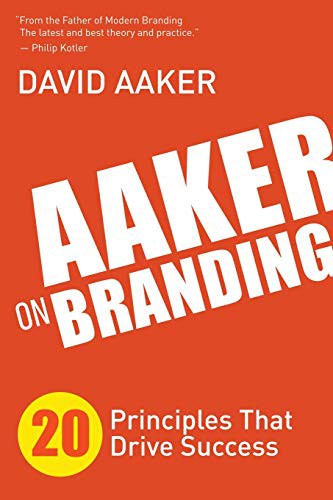
The source: Aaker on Branding
DAVID AAKER · BRAND EQUITY AS AN ASSET
Aaker built the vocabulary the entire brand strategy field still runs on, equity, identity, architecture, relevance, and made the case that a brand is capital on the balance sheet, built and protected over years, not a logo refreshed every budget cycle.
Affiliate links. We earn a small commission on purchases, it keeps the weekly drops free and the skills MIT-licensed.
◆ Get The Skill
Want the Brand-Equity Audit done for you?
The Aaker on Branding skill scores your brand against the four equity drivers, awareness, loyalty, associations, perceived quality, checks your identity statement against your actual image, tests any naming or extension decision against the architecture rules, and surfaces the one signature story you are not telling yet. Free. MIT licensed.
Position (identity versus image gap, architecture decisions), Naming (extension fit, house of brands versus branded house), Diagnose (the four-driver equity audit, relevance checks).
Pairs with
Sharp (distinctiveness and availability against owned associations); Ries and Trout (positioning as the address, identity as the house built on it); Bedbury (brand as lived experience, one layer past the asset view); Holt (cultural myth versus measured equity); Kotler (brand as one strategic lever inside the larger marketing mix).
Output shape
When the skill leans on Aaker, it should score the four equity drivers first, awareness, loyalty, associations, perceived quality, then check the identity statement against the current image, then evaluate any naming or extension decision against the architecture rules, and only then look for the signature story that is going untold. Diagnose in that order.
The Silent DiagnosticIf we scored this brand on awareness, loyalty, associations, and perceived quality right now, which one would come back weakest, and have we been treating that weakness as a fact of life instead of a fixable gap?