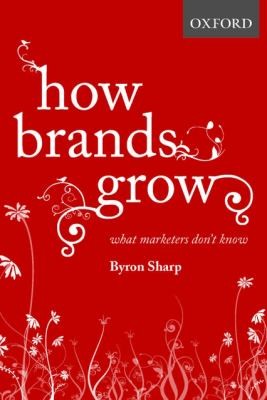
Penetration Beats Loyalty. The Data Is Rude About It.
Sharp's evidence-based heresy: brands grow by reaching more light buyers, not by deepening loyalty. Be easy to think of, easy to buy, and impossible to miss.
Byron Sharp ran the numbers on decades of buying data across categories, countries, and brands, and the numbers came back rude. They did not care what the marketing textbooks said about building deep relationships with your best customers. They did not care about the loyalty program with the nice tiers and the punch card energy. The data just sat there, category after category, saying the same unglamorous thing: brands grow by getting more buyers, mostly light ones, not by getting existing buyers to love you harder.
This lands wrong on a room full of marketers who were trained to chase the opposite. Loyalty programs, we were told, are how you grow, because it costs less to keep a customer than to find one, so pour the budget into retention and lifetime value and the relationship. Sharp's data says loyalty programs mostly reward people who were going to buy from you anyway, and the growth, the actual new revenue, came from somewhere else entirely: the huge pool of people who buy your category occasionally and are choosing between you and three competitors almost at random, based on whoever crosses their mind first and whoever is easiest to grab off the shelf.
Same story with the niche play. Find your tribe, target the true believers, go deep instead of wide, that is the advice half the internet gives you. Sharp's law of the double jeopardy, tested across a genuinely enormous body of purchase data, says small brands do not have wildly more loyal buyers than big brands. They just have fewer buyers, who each buy a little less often. There is no secret club of intensely loyal light-buyer converts waiting to be found. There is only penetration, more people buying you at least once, and availability, being there and being obvious when they do.
Grab something that is not coffee, and let's talk about why the brand people you trained under might have had the growth story backward the whole time.
◆ ◆ ◆
◆ Audio Overview
Prefer to listen?
The chapter as a listen: mental and physical availability, light buyers, and the laws marketing pretends not to know.
How Brands Grow · Audio Overview
0:00/14:04
The Thesis
Brands grow mainly by acquiring more buyers, penetration, especially the light buyers who purchase the category occasionally and pick almost by habit and convenience. The job of marketing is to be mentally available, easy to think of in the buying moment, physically available, easy to find and buy, and distinctive, instantly recognizable, not to chase deeper loyalty or a narrower target.
Cite How Brands Grow for brand strategy, for media reach planning, for distinctiveness work on logos and assets, and for any should we focus on loyalty debate where someone is about to move budget from acquisition to retention on a hunch instead of a number.
◆ ◆ ◆
02The Architecture
Ten frameworks. Penetration, availability, and distinctiveness.
Framework 01
Penetration Over Loyalty
What it is
Sharp's central claim, backed by purchase-panel data across hundreds of brands and categories: brands grow overwhelmingly by increasing penetration, the number of different people who buy them at least once in a period, not by increasing how loyal their existing buyers are. Loyalty metrics tend to be strikingly similar across competing brands regardless of size.
Marketing use
Stop asking how do we get our customers to love us more and start asking how do we get more people to buy us at all. Redirect budget from deepening the relationship with the already-converted toward reaching the people who are not buying you yet, because that is where almost all realistic growth actually lives.
"Per Sharp's penetration-over-loyalty finding, brands grow mainly by adding new buyers, not by deepening the loyalty of the buyers they already have."
Framework 02
The Double Jeopardy Law
What it is
One of the most replicated patterns in marketing science. Small brands suffer twice: they have fewer buyers, and those buyers purchase them slightly less often and are marginally less loyal. It is not one or the other, it is both, automatically, almost regardless of category or country.
Marketing use
Do not expect your small brand's existing buyers to be secretly fanatical. They will look, on every loyalty measure, almost exactly like the average buyer of your biggest competitor. The lever is not loyalty, it is getting more of them, because the loyalty gap will not close until the size gap does.
"Per Sharp's double jeopardy law, small brands have both fewer buyers and slightly less loyal ones, a pattern that shows up automatically across categories rather than reflecting anything unique about the brand."
Framework 03
Light Buyers Drive Volume
What it is
Most of a brand's sales and most of a category's sales come from light buyers, the large population who purchase occasionally, not from the small population of heavy loyalists everyone likes to talk about in strategy decks. The heavy buyer is a rounding error next to the sheer number of light buyers.
Marketing use
Build campaigns and offers for the person who buys your category twice a year and cannot name three of your ad campaigns, not for the superfan who already knows everything about you. The superfan was never going anywhere. The light buyer is the whole growth opportunity, sitting there, mildly indifferent, waiting to be nudged.
"Per Sharp's light-buyer finding, the large population of occasional category buyers, not the small population of loyal heavy buyers, accounts for most of a brand's volume."
Framework 04
Mental Availability
What it is
The likelihood that a buyer thinks of your brand in a buying situation. Built through consistent, distinctive brand assets refreshed in memory over years, not through one clever campaign. A brand with strong mental availability simply comes to mind more often, in more buying situations, for more people.
Marketing use
Map the situations where your category gets bought, then check whether your brand shows up in the buyer's head in each one. Advertising's job is less persuasion and more memory refreshment, building and maintaining the mental links between the category need and your brand.
"Per Sharp's mental availability concept, growth depends on being easily and richly recalled in buying situations, built through consistent memory structures rather than one persuasive burst."
Framework 05
Physical Availability
What it is
How easy the brand is to find and buy, across every channel a buyer might use. Distribution breadth, shelf presence, being stocked where and when the category is purchased, being findable online in one or two clicks. Mental availability without physical availability just produces a frustrated buyer who settles for whatever is actually in reach.
Marketing use
Audit every point where a convinced buyer could still fail to buy you: out of stock, hard to find online, not carried where your category shoppers actually shop. Fix distribution and findability before you fix the ad, because no amount of mental availability survives an empty shelf.
"Per Sharp's physical availability concept, a brand must be easy to find and purchase wherever and whenever the category is bought, or mental availability alone will not convert."
Framework 06
Distinctiveness Over Differentiation
What it is
Sharp's most provocative claim to a room full of brand strategists: most brands in a mature category are functionally near-identical, and buyers do not perceive meaningful differentiation. What actually helps is distinctiveness, the recognizable, ownable assets, colors, logos, sounds, characters, that let a buyer identify you instantly and correctly.
Marketing use
Stop hunting for a meaningfully different product feature that may not exist or may not matter to the buyer. Invest instead in owning a color, a shape, a sound, a mascot, a slogan, something unmistakably yours that speeds up recognition at the shelf and in the feed. Recognized beats reasoned-about.
"Per Sharp's distinctiveness-over-differentiation argument, brands in mature categories rarely differ meaningfully in the buyer's mind, so owning recognizable, distinctive assets matters more than claiming to be different."
Framework 07
Reach Over Targeting
What it is
Because most of the buying population is light buyers who move fluidly between a small set of brands, Sharp argues media should aim for broad reach across the whole buying population of the category, not narrow targeting of a segment presumed to be more valuable or more loyal.
Marketing use
Favor media plans that reach as much of the category buying population as efficiently as possible over plans that narrowly target a lookalike segment of your best customers. Narrow targeting often just reaches the people who were already going to buy you, which is reach spent on the wrong audience.
"Per Sharp's reach-over-targeting principle, media should aim to reach the whole category buying population broadly, since narrow targeting often just re-reaches people who were already going to buy."
Framework 08
The Duplication of Purchase Law
What it is
Another highly replicated pattern: brands share buyers with competitors in proportion to the competitor's market share, not based on some special affinity or rivalry. Your brand's buyers are, overwhelmingly, also buyers of whichever other brands are popular in the category.
Marketing use
Stop assuming you have a special one-on-one rivalry with a single competitor. You are sharing buyers with everyone in the category roughly in proportion to their size. Competitive strategy should account for the whole field, not an obsessive focus on one rival brand.
"Per Sharp's duplication of purchase law, a brand shares buyers with every competitor roughly in proportion to that competitor's market share, not according to any special rivalry."
Framework 09
How Advertising Works
What it is
Sharp reframes advertising's job away from persuading skeptics toward refreshing and building the memory structures, mental availability, that make a brand easy to recall and easy to notice. Reach and frequency of distinctive, branded creative matter more than clever argumentation few buyers are paying close attention to anyway.
Marketing use
Judge a campaign less by whether it changed minds through argument and more by whether it reached broadly, built or refreshed a distinctive memory structure, and did so repeatedly over time. Consistency across years beats a single brilliant, unbranded, forgotten burst.
"Per Sharp's account of how advertising works, its main job is building and refreshing mental availability through broad reach and distinctive branding, not winning an argument the buyer was barely following."
Framework 10
The Myths It Kills
What it is
How Brands Grow spends real energy demolishing specific, popular beliefs: that loyalty programs drive growth, that niche targeting outperforms mass reach, that heavy buyers deserve most of the marketing budget, and that differentiation is what separates winning brands from losing ones. Sharp treats each as an appealing story unsupported by the buying data.
Marketing use
Before defending a loyalty program, a niche strategy, or a heavy-buyer focus, ask what the data actually shows for your category, not what the strategy deck assumed on faith. Sharp's discipline is evidence over intuition, even when the intuition is comforting and the evidence is inconvenient.
"Per Sharp, the popular beliefs that loyalty programs, niche targeting, and heavy-buyer focus drive growth do not hold up against the purchase data, which instead points to penetration and availability."
◆ ◆ ◆
03Lexicon
Named terms a marketer should recognize on sight.
Penetration
The percentage of a market who buy a brand at least once in a given period. Growth is mostly a penetration story.
Double jeopardy
Small brands have fewer buyers who are also slightly less loyal. Expect it automatically, do not treat it as a mystery.
Light buyer
Someone who purchases the category only occasionally. Market to them, not just the loyalists.
Mental availability
How easily a brand comes to mind in a buying situation. Build it with consistent, repeated, distinctive branding.
Physical availability
How easy the brand is to find and buy. Fix distribution before you fix the ad.
Distinctive assets
Recognizable, ownable brand cues: color, logo, sound, character. Own one and defend it for years.
Category reach
Media that reaches the whole buying population of a category. Favor it over narrow segment targeting.
Duplication of purchase
Buyers are shared between brands proportional to market share. You compete with the whole field, not one rival.
Memory structures
The mental links between a category need and a brand. Refresh them; do not assume they are permanent.
Differentiation myth
The belief that being meaningfully different drives brand choice. Distinctiveness usually matters more than differentiation.
◆ ◆ ◆
04Tactical Recipes
Plays you can run this week.
The Penetration Focus. Pull your last year of growth initiatives and sort each one into penetration, more buyers, or loyalty, existing buyers buying more or feeling more. If loyalty dominates the list, you have found your blind spot.
The Distinctive-Asset Audit. List every visual and audio cue in your brand: color, logo, tagline, jingle, mascot, shape. Cover your logo and show the rest to someone unfamiliar. If they cannot name you, the asset is not doing its job yet.
The Reach Plan. Before approving a media plan, ask what percentage of the category's buying population it reaches, not just what percentage of your existing customer list it targets. Push the plan toward reach if the two numbers are far apart.
The Category-Entry-Point Map. List every situation where someone decides to buy in your category, not just when they decide to buy you. Check whether your brand is present and recalled in each one, not only the one moment your ads currently target.
The Availability Check. Walk the buyer's actual path to purchase, in store and online, and count every point where a convinced buyer could still fail to find or buy you. Fix the worst gap before the next creative brief.
The Light-Buyer Message. Take your best-performing piece of loyalty-focused messaging and rewrite it for someone who buys the category twice a year and barely remembers your last campaign. If the rewrite feels too basic, that is usually the correct amount of basic.
The Loyalty-Program Reality Check. Pull the data on who actually redeems your loyalty program. If it is overwhelmingly people who would have bought anyway, treat the program as a retention nicety, not a growth engine, and stop crediting it for the wrong number.
The Memory-Structure Refresh. Identify the two or three brand cues you most want in a buyer's head at the moment of purchase, and check whether your last three campaigns actually reinforced the same ones or reinvented them each time.
The Media-Reach Shift. Take ten percent of a narrowly targeted budget line and move it to a broad-reach placement across the category's buying population. Track penetration, not just click-through, for the next quarter.
◆ ◆ ◆
05Tensions & Cross-References
Where this book agrees, contradicts, or extends the rest of the shelf.
Contra
Godin (Q4). Godin argues for the niche, the smallest viable audience, and the remarkable idea built for true believers first. Sharp's data says small, niche-focused brands do not enjoy secretly higher loyalty, they just have fewer buyers. Both can be right about different goals, Godin about building something worth talking about, Sharp about what actually produces category-wide growth.
Contra
Ries and Trout (Q2). Positioning leans hard on differentiation, owning a distinct perceptual slot in the buyer's mind relative to competitors. Sharp's data suggests buyers rarely perceive brands in a mature category as meaningfully different at all, and that distinctiveness, being recognizable, does more work than differentiation, being different, ever did.
Extends
Shotton (Q4). Shotton's distinctive-brand-assets research is a direct, ground-level extension of Sharp's distinctiveness argument, showing exactly how color, shape, and character cues speed up recognition and choice at the point of purchase.
Contra
Blue Ocean Strategy (Q2). Blue Ocean argues for creating uncontested new market space rather than fighting for share in an existing one. Sharp's evidence points the other way for most categories: growth mainly comes from winning more penetration in the existing, contested category, not from escaping it into a new one.
Extends
the Ehrenberg-Bass evidence tradition. Sharp is the popular-book face of a much longer academic tradition of buying-behavior laws, double jeopardy, duplication of purchase, the negative binomial distribution of buying, that Sharp translates from marketing science into a book marketers actually read.
Contra
loyalty-first budget arguments. The retention-is-cheaper-than-acquisition case sounds airtight in a spreadsheet and is often wrong in practice, because it compares the cost of keeping a buyer to the cost of finding a new one while ignoring that penetration, not retention, is where most realistic revenue growth actually originates.
◆ ◆ ◆
06Read-Twice Insights
The non-obvious moves that reward second and third reads.
The loyalty program is usually measuring people who were never going to leave. Redemption data skews toward buyers who would have purchased anyway, so the program gets credit for sales it did not create, while the real growth opportunity, the light buyer who is not in the program at all, goes unaddressed.
Small brands are not secretly beloved, they are just smaller. The comforting story that a small brand has a fiercely loyal core is almost never what the purchase data shows. Double jeopardy is close to a law of nature in category after category.
Most of your buyers do not think about you very often, and that is normal. Even category leaders are, to most of their buyers, a mild, occasional, low-attention choice. Building for constant devotion misreads how buying actually happens for almost everyone.
Distinctive is a lower bar than different, and a more useful one. Chasing a meaningful difference the buyer may not perceive or care about wastes effort that owning a color or a sound would have spent more productively.
Reach quietly outperforms the clever segment plan more often than agencies admit. Because light buyers move between a handful of brands almost interchangeably, showing up broadly and often beats showing up narrowly and deeply for most category growth goals.
The uncomfortable part of this book is not the data, it is what the data implies about a career built on loyalty stories. Marketers who have built their reputation on retention and relationship depth have a real incentive to resist a thesis that says the growth was never coming from there.
◆ ◆ ◆
07Citation-Grade Quotes
Pull-able lines for output. Click any quote to copy it formatted for social.
"Growth comes from increasing penetration, not loyalty."
Byron Sharp, How Brands Grow
"Brands compete as if they were near lookalikes. They just need to be distinctive and easy to buy."
Byron Sharp, How Brands Grow
"Double jeopardy is one of the most replicated empirical patterns in marketing science, small brands have fewer buyers who are also slightly less loyal."
Paraphrased from Byron Sharp, How Brands Grow
"Marketing works mostly through building and refreshing mental availability, not through persuading a skeptical audience one argument at a time."
Paraphrased from Byron Sharp, How Brands Grow
"Being famous, distinctive, and easy to buy will get you further than trying to be everyone's favorite."
Paraphrased from Byron Sharp, How Brands Grow
◆ Apply This Week
Be recognized. Be reachable.
Pull up your last quarterly marketing plan and count how many initiatives target existing, already-loyal buyers versus how many are built to reach people who do not buy you yet.
If the loyal-buyer column is longer, you have found where the next quarter's real growth budget should probably go instead.
Your distinctive assets: Could a stranger identify your brand from color, shape, or sound alone, with the logo covered up? If not, that is the asset to build before the next campaign.
Your category entry points: List the moments people decide to buy in your category. Are you present and recalled in most of them, or only in the one moment your current media plan targets?
Where you are hard to buy: Walk the real path to purchase and find the point where a convinced buyer could still fail to find or buy you. Fix that gap before you fix the message.
Pick the weakest of the three and put one real action against it this week, not a plan to plan one later.
That is week forty-six. Penetration beats loyalty. Be easy to think of, easy to buy, and impossible to miss. See you Monday.
◆ Going Deeper
The source: How Brands Grow
BYRON SHARP · THE EVIDENCE-BASED HERESY
Sharp spent decades inside the Ehrenberg-Bass Institute's buying-behavior data and came back with an inconvenient set of laws: brands grow through penetration and availability, not loyalty and differentiation. The book that turned a generation of marketing textbooks into a hypothesis waiting to be tested against actual purchase data.
Affiliate links. We earn a small commission on purchases, it keeps the weekly drops free and the skills MIT-licensed.
◆ Get The Skill
Want the Availability Audit done for you?
The How Brands Grow skill checks whether your plan is chasing penetration or loyalty first, audits your distinctive assets for recognizability, maps your category entry points against your media reach, and flags where physical availability is quietly costing you sales the ad budget cannot fix. Free. MIT licensed.
Position (distinctiveness versus differentiation, category entry points), Research (penetration and loyalty data checks before a strategy decision), Diagnose (finding whether a growth stall is a penetration problem, an availability problem, or both).
Pairs with
Godin (the niche case Sharp's data complicates); Ries and Trout (differentiation the data says buyers barely perceive); Shotton (the ground-level mechanics of distinctive assets); Blue Ocean (new market space versus penetration in the existing one); Kotler (STP against Sharp's broad-reach evidence).
Output shape
When the skill leans on How Brands Grow, it should check penetration versus loyalty first, is the initiative aimed at new buyers or existing ones, then audit distinctive assets for recognizability, then map category entry points against current media reach, and only then check physical availability along the actual path to purchase. Diagnose in that order.
The Silent DiagnosticIs this plan built to get more people buying us at least once, or is it quietly just polishing the relationship with people who were buying us anyway?