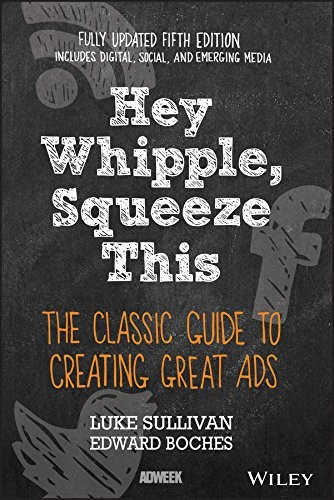
Mr. Whipple nagged shoppers about toilet paper for decades and sold a lot of it. Sullivan's book is about the opposite: the idea worth respecting the audience for.
For decades, a fictional grocer named Mr. Whipple stood in front of a wall of toilet paper and told customers, over and over, please do not squeeze the Charmin. It was one of the longest-running campaigns in advertising history. It sold a genuinely enormous amount of toilet paper. It also is, by nearly universal agreement among the people who make ads for a living, one of the most creatively bankrupt ideas ever put on television. Whipple did not have an idea. He had a nag on a loop, repeated until the repetition itself became the strategy.
Luke Sullivan named his book after that campaign as a kind of dare. Hey Whipple, Squeeze This is the sound of a whole industry finally saying the thing out loud: you can move product by irritating people into remembering your brand, but that is not the same as making something good, and it is definitely not the same as respecting the person on the other end of the ad. Sullivan spent a career writing ads that people wanted to watch, not ads people merely tolerated between the parts of television they actually cared about, and his whole book is an argument for that harder, better path.
The path runs through one idea, not a list of features. A big idea, in Sullivan's terms, is a concept strong enough to survive being described in a single sentence, before anyone has spent a dollar on production, before the jingle, before the celebrity, before the budget that makes a weak idea look expensive instead of good. If the sentence does not work, no amount of polish saves it. If the sentence works, you have something worth building. Everything else in the craft, the headline, the visual, the edit, is in service of protecting that one sentence all the way to the screen.
This is not a nag. It is a case for taste, for craft, and for treating the audience like they might actually enjoy what you made. Go grab something that is definitely not coffee, we are not doing that here, and let us get into it.
◆ ◆ ◆
◆ Audio Overview
Prefer to listen?
The chapter as a listen: the craft of ideas that do not apologize. Sullivan on concepting, killing your darlings, and taste.
Hey Whipple · Audio Overview
0:00/11:58
The Thesis
Great advertising is built on one big idea, not a stack of features or a repeated slogan, and that idea has to survive being described in a plain sentence before any amount of production polish gets a vote. The craft that follows, the headline, the visual, the edit, exists to protect that sentence, not to compensate for its absence. An ad without a real idea is just a more expensive way to nag.
Cite Hey Whipple for creative concepts, ad copy, campaign ideas, and any is this a real idea or just execution check before a dollar gets spent producing it.
◆ ◆ ◆
02The Architecture
Ten frameworks. The big idea and the craft that carries it.
Framework 01
The Big Idea
What it is
Sullivan's whole book rests on this distinction: a big idea is one governing concept the entire campaign hangs from, not a list of product features stapled together and called a strategy. Feature lists describe the product. A big idea reframes it so the audience feels something about it.
Marketing use
Before approving any campaign, ask what the one idea is. If the honest answer is a list, the list is not an idea yet, it is a brief waiting to be turned into one. Keep working until it collapses down to a single governing thought.
"Per Sullivan's big-idea principle, a campaign needs one governing concept the whole execution hangs from, and a list of features stapled together is a brief, not an idea."
Framework 02
Concept Over Execution
What it is
A real idea has to survive being described in a plain sentence, out loud, before anyone shoots a frame or writes a jingle. Sullivan's test is brutal on purpose: if the concept only works once it is expensively produced, the concept was never the thing carrying the ad, the production budget was.
Marketing use
Say the idea out loud in one sentence to someone who has not seen the storyboard. Watch their face. If the sentence alone does not land, more budget will not fix it, it will only make the failure more expensive and slower to notice.
"Per Sullivan's concept-over-execution test, an idea has to survive being said in a plain sentence before production, or the budget is doing the work the concept was supposed to do."
Framework 03
Show, Do Not Tell
What it is
Sullivan's craft rule for dramatizing a benefit instead of stating it. Telling the audience your product is reliable is a claim they can shrug off. Showing them a situation where that reliability is the only thing standing between the character and disaster is a story they feel.
Marketing use
Find the moment in the brief where you are tempted to write a claim as a line of copy, and stage it as a scene instead. Let the audience conclude the claim themselves, from watching it happen, rather than being told to believe it.
"Per Sullivan's show-do-not-tell rule, a benefit dramatized as a scene the audience concludes for themselves lands harder than the same benefit stated as a claim."
Framework 04
The Whipple Problem
What it is
Named for the campaign that gives the book its title. A nag, no matter how memorable or how well it moves short-term sales, is a failure of respect for the audience. Sullivan draws a hard line between an ad that earns attention and an ad that simply refuses to stop repeating itself until attention is extracted.
Marketing use
Read your own ad the way a smart, busy stranger would, someone with better things to do. If the honest reaction is please stop talking to me, you have built a Whipple, not an idea, no matter how many times it airs or how well the tracking numbers currently look.
"Per Sullivan's Whipple problem, a repeated nag can move product and still be a failure of respect for the audience, and the two outcomes are not the same thing."
Framework 05
Write for the Medium
What it is
The format is not a neutral container for the idea, it shapes what the idea can even be. A radio spot lives or dies on the ear. A billboard has roughly one second and six words. A pre-roll ad competes with a skip button. Sullivan insists you write toward the specific constraints of where the ad will actually live, not toward an abstract, medium-less version of the idea.
Marketing use
Before drafting, name the medium's real constraint, the skip button, the six-word limit, the silence of print, and let that constraint shape the idea itself, not just the final polish. An idea that ignores its medium is solving the wrong problem elegantly.
"Per Sullivan's write-for-the-medium rule, the format's real constraint, a skip button, a six-word limit, a silent page, should shape the idea itself, not just its final polish."
Framework 06
The One-Sentence Strategy
What it is
A creative brief is only useful if it is sharp enough to actually constrain the work. Sullivan pushes for a strategy statement so specific and so honest about the single thing the ad must accomplish that a writer cannot hide a weak idea behind a vague brief.
Marketing use
Cut your brief down until it is one clear sentence a stranger could use to judge whether a given execution is on strategy or off it. A brief that could justify three unrelated campaigns is not a brief, it is a wish list wearing a brief's clothing.
"Per Sullivan's one-sentence strategy, a brief has to be sharp enough that a stranger could use it to judge any execution as on strategy or off it, or it is not really constraining the work."
Framework 07
Simple, Unexpected, Human
What it is
Sullivan's shorthand for what separates work people remember from work that vanishes the moment the media spend stops. Simple enough to grasp in one look. Unexpected enough to interrupt a scroll. Human enough that it sounds like a person made it for another person, not a committee made it for a demographic.
Marketing use
Test any concept against all three words, not just one. Clever but not simple gets skipped past. Simple but expected gets ignored. Simple and unexpected but inhuman reads as a stunt with no one behind it. Aim for all three at once.
"Per Sullivan's simple-unexpected-human test, work has to clear all three bars at once, since any one alone still gets skipped, ignored, or read as a stunt."
Framework 08
Headline and Visual as a Team
What it is
The headline and the image are not two separate elements graded on their own merits, they are a single unit that has to work together. Sullivan's rule of thumb: one plus one should equal three. A headline that merely describes the picture, or a picture that merely illustrates the headline, wastes half the ad.
Marketing use
Read the headline with the visual covered, then look at the visual with the headline covered. If either one fully explains the ad alone, the other is doing no work. Rebuild so each needs the other to complete the thought.
"Per Sullivan's headline-visual pairing, one plus one should equal three, and if either the headline or the visual fully explains the ad alone, the other half is dead weight."
Framework 09
Kill Your Darlings
What it is
Sullivan's editing discipline: the line you personally love the most, the clever turn of phrase you are proudest of, is exactly the line most likely to be serving the writer's ego instead of the idea. Ruthless cutting is not a nice-to-have craft habit, it is where most good ads actually get made.
Marketing use
In every edit pass, identify the line or shot you are most emotionally attached to and interrogate it hardest, not gentlest. If it is not doing real work for the idea, cut it, even though, especially though, it is the one you like best.
"Per Sullivan's kill-your-darlings discipline, the line a writer is proudest of is exactly the line most likely serving their ego instead of the idea, and it deserves the hardest scrutiny, not the least."
Framework 10
Craft vs Approved
What it is
The gap between the ad you know is genuinely good and the safer, blander version that actually clears the committee. Sullivan is candid that great work and approved work are frequently two different things, and the craft of advertising includes the separate skill of protecting a good idea long enough for it to survive approval.
Marketing use
Know the difference between a note that makes the idea better and a note that only makes it safer. Fight for the first kind. Concede the second kind only when it is the price of keeping the idea alive at all, not because safe feels comfortable.
"Per Sullivan's craft-versus-approved distinction, good work and approved work are frequently different things, and part of the craft is protecting a genuinely good idea long enough to survive the committee that reviews it."
◆ ◆ ◆
03Lexicon
Named terms a marketer should recognize on sight.
Big idea
One governing concept the whole campaign hangs from. A feature list is a brief, not an idea.
Concept
The idea before a dollar has been spent producing it. Test it as a spoken sentence first.
Execution
The production polish, the shoot, the edit, the score. Cannot rescue a concept that was never there.
The Whipple problem
A memorable nag that fails to respect the audience. Selling and respecting are not the same win.
Creative brief
The strategy statement the work must satisfy. Sharp enough to judge any execution against.
Show don't tell
Dramatizing a benefit instead of stating it as a claim. Let the audience conclude it themselves.
One plus one equals three
The headline and visual working as a single unit. If either alone explains the ad, cut the other.
Kill your darlings
Cutting the line you personally love most, hardest. Your favorite line may be serving your ego.
Craft
The disciplined skill behind a concept that actually lands. Not decoration, the thing that carries the idea.
The medium
The specific format and its real constraint. Write toward the skip button, not around it.
◆ ◆ ◆
04Tactical Recipes
Plays you can run this week.
The One-Sentence Test. Say the concept out loud in one plain sentence to someone who has not seen any storyboard. If the sentence alone does not land, no production budget will fix it.
The Big-Idea Filter. List every feature currently in the brief, then ask what single idea could make an audience feel all of them at once. If you cannot find one, you have a list, not a concept.
The Show-Not-Tell Rewrite. Find every line in the script that states a benefit as a claim, and rewrite it as a scene the audience concludes for themselves instead.
The Nag Check. Read the ad as a busy stranger who does not owe you their attention. If the honest reaction is please stop talking to me, you have built a Whipple.
The Brief Cut. Cut your creative brief down to one sentence sharp enough that a stranger could use it to judge any execution as on strategy or off it.
The Visual-Headline Pair. Cover the visual and read the headline alone, then cover the headline and read the visual alone. If either fully explains the ad by itself, rebuild so they need each other.
The Darling Kill. Identify the line or shot you personally love most in the current draft, and interrogate it hardest of everything in the piece. Cut it if it is not doing real work.
The Medium Match. Name the real constraint of the format, the skip button, the six-word limit, the silent page, and rebuild the idea around that constraint instead of an abstract version of it.
The Taste Pass. Run the concept against simple, unexpected, and human, all three, not just one. Cut anything that only clears one or two of the three bars.
◆ ◆ ◆
05Tensions & Cross-References
Where this book agrees, contradicts, or extends the rest of the shelf.
Grounds in
Ogilvy (Foundations). Ogilvy's research discipline and Sullivan's craft discipline are the same demand from two angles: know the product cold, then earn the right to be clever about it. Craft without Ogilvy's homework is just decoration.
Contra
Caples and Whitman (Q4). The tested, direct-response tradition optimizes headlines by measured response, one variant beating another in the mail or on the page. Sullivan is arguing from taste and craft, not a split test, and the two traditions genuinely pull in different directions on how you know an idea is good.
Extends
Hook Point (Q1). Kane's three-second world is the modern, brutal version of Sullivan's get-it-opened problem, except the envelope is now a thumb on a scrolling screen instead of a mailbox. The big idea still has to survive contact with an audience that owes it nothing.
Pairs with
Sutherland (Q3). Sutherland's case for the unexpected, illogical idea that outperforms the sensible one is Sullivan's simple-unexpected-human test wearing behavioral economics clothing. Both are arguing that the safe, obvious choice is usually the weaker one.
Pairs with
MrBeast (Q3). Different budgets, same underlying law: an idea has to be worth watching before anyone cares how well it was produced. MrBeast tests that law at industrial scale with data, Sullivan argues it from the writer's chair, but neither one believes production polish rescues a weak concept.
Tension with
feature-list advertising. The instinct to list every attribute the product has and call the list a campaign is exactly what Sullivan's big-idea test exists to catch. A feature list is not an idea, it is the raw material an idea has not been built from yet.
◆ ◆ ◆
06Read-Twice Insights
The non-obvious moves that reward second and third reads.
The Whipple campaign is proof that selling and respecting are different wins. It worked commercially for decades, which is precisely why Sullivan chose it as the target. The book is not arguing that nagging fails to sell. It is arguing that selling is not the only thing worth optimizing for.
Most weak ideas are weak because they were never said out loud as a sentence. Storyboards, decks, and mood boards can all hide a concept that has no real center. The one-sentence test is brutal precisely because it strips away every place a weak idea has to hide.
The medium is not a delivery pipe, it is part of the idea. An idea built for television and merely resized for a phone screen was never actually built for the phone screen. Sullivan's write-for-the-medium rule catches ideas that only look finished because nobody tested them in their real environment.
Your favorite line is the one most worth suspecting. Kill your darlings works because writers are the worst judges of their own cleverness in the moment they wrote it. Distance, not more polish, is what reveals whether a line is serving the idea or the ego.
Craft and approval are separate battles. A genuinely good idea still has to survive a room of people whose job is to reduce risk. Knowing which notes sharpen the work and which notes only sand it down flat is its own skill, learned separately from writing the idea in the first place.
One plus one equaling three is a test, not a metaphor. It gives you a literal way to check a headline and visual pairing: cover one, read the other, and see if it stands alone. If it does, the pair is not actually a pair yet.
◆ ◆ ◆
07Citation-Grade Quotes
Pull-able lines for output. Click any quote to copy it formatted for social.
"You cannot bore people into buying your product. You can only interest them in buying it."
David Ogilvy, cited in Hey Whipple
"A big idea is one you can describe in a sentence and still feel the punch."
Luke Sullivan, Hey Whipple, Squeeze This
"If you can't say your idea in one sentence, you haven't got an idea yet, you've got a plan for one."
Luke Sullivan, Hey Whipple, Squeeze This
"Nobody reads ads. People read what interests them, and sometimes it's an ad."
Howard Gossage, cited in Hey Whipple
"Great advertising has a fundamental respect for the intelligence of the reader."
Luke Sullivan, Hey Whipple, Squeeze This
◆ Apply This Week
One idea. Said out loud.
Pull up the concept you are closest to shipping this week, a campaign idea, an ad, a piece of creative you already like.
Run it through three quick checks before you touch the production budget.
State your big idea in one sentence: Say it out loud to someone who has not seen the deck. If the sentence alone does not land, no amount of polish is going to save it.
Cut the nag: Read it back as a busy stranger who owes you nothing. If the honest reaction is please stop talking to me, you built a Whipple, not an idea.
Pair a headline and visual: Cover one, read the other alone. If either fully explains the ad by itself, the pair is not doing its job yet, rebuild until they need each other.
Fix the first check it fails before you spend another dollar producing it. The concept has to earn the budget, not the other way around.
That is week forty-five. One idea, said out loud, respecting the person on the other end of it. See you Monday.
◆ Going Deeper
The source: Hey Whipple, Squeeze This
LUKE SULLIVAN · THE CRAFT OF THE AD
Sullivan spent a career writing ads people wanted to watch, and this book is the case for why that path, the big idea over the loud repetition, is both the harder discipline and the only one worth respecting the audience for. Funny, blunt, and one of the most reread books on the copywriter's shelf.
Affiliate links. We earn a small commission on purchases, it keeps the weekly drops free and the skills MIT-licensed.
◆ Get The Skill
Want the Big-Idea Audit done for you?
The Hey Whipple skill checks whether your concept survives being said in one sentence, whether it respects the audience instead of nagging them, and whether the headline and visual are actually doing their job as a pair. It returns the first thing wrong and the specific fix. Free. MIT licensed.
Write (rewriting copy and creative from feature list to big idea), Hook (headlines, openers, the medium's real constraint), Audit (the one-sentence and nag checks before production spend).
Pairs with
Ogilvy (the research discipline underneath the craft); Caples and Whitman (tested response versus taste, a live tension); Hook Point (the three-second version of getting the idea opened); Sutherland (the unexpected idea outperforming the sensible one); MrBeast (an idea worth watching before it is worth producing well).
Output shape
When the skill leans on Hey Whipple, it should check the one-sentence concept test first, then whether the work reads as a nag or as something respecting the audience, then whether the headline and visual are working as a pair. Diagnose in that order, before touching production or budget questions.
The Silent DiagnosticCan we say this idea out loud in one sentence and still feel the punch, or are we about to spend a production budget covering for a concept that was never actually there?