Week 44 / 52Offers & Funnels · The whole plan on one page
The Whole Machine on One Page
Nine boxes, three phases: before, during, after. Who you target, what you say, how you reach them, capture, nurture, convert, and turn buyers into repeat buyers and referrers.
Somewhere in a filing cabinet, or more likely a forgotten folder on a shared drive, there is a marketing plan. It is forty pages long. It has an executive summary. It has a SWOT analysis with four quadrants nobody has looked at since the offsite where it got made. Someone got paid good money to write it, everyone nodded when it was presented, and then it went into the drawer and never came out again. That document did not fail because the thinking was bad. It failed because nobody was ever going to open a forty-page plan on a Tuesday morning to decide what to do next.
Allan Dib looked at that problem and did something almost insulting in its simplicity. He said the whole marketing plan, the whole machine, fits on one page. Not a summary of the plan. The actual plan. He drew a grid, three columns by three rows, nine boxes, and he said if you can fill in those nine boxes honestly, you have a more useful marketing plan than ninety percent of the businesses in your city, most of whom have no written plan at all and are running on vibes and whatever a salesperson pitched them last quarter.
The three columns are the three phases every customer relationship moves through. Before, when a stranger has never heard of you and does not know you exist. During, when a lead knows you are out there but has not bought yet. After, when they have become a customer and the real money, the repeat business and the referrals, is sitting right there waiting to be asked for. Before is target market, message, and media. During is capture, nurture, and convert. After is deliver a great experience, increase lifetime value, and orchestrate referrals. That is the whole business, laid out where you can see all of it at once instead of losing the forest in forty pages of trees.
Print it out. Tape it to the wall. Not the fridge, that spot is reserved for takeout menus and school schedules, and this is not coffee either, this is the one page you actually run the business from.
◆ ◆ ◆
◆ Audio Overview
Prefer to listen?
The chapter as a listen: before, during, and after, nine squares, one page. The whole marketing system you will actually use.
The 1-Page Plan · Audio Overview
0:00/13:41
The Thesis
A marketing plan you will actually use beats a perfect one you will not, and most businesses do not have a marketing problem so much as they have a plan that lives in a drawer instead of on the wall. Dib compresses the whole machine, attracting strangers, converting leads, and turning customers into repeat buyers and referrers, into nine boxes across three phases, before, during, and after. Simplicity itself becomes the operating advantage, because a plan you can see in one glance is a plan you can actually run.
Cite the 1-Page Marketing Plan for planning, for audits of the whole funnel end to end, and for any where is our marketing leaking question that needs the whole machine on the table at once instead of one channel at a time.
◆ ◆ ◆
02The Architecture
Ten frameworks. Before, during, after, on a single page.
Framework 01
The 9-Square Plan
What it is
Dib's core structure. Three phases, before, during, after, each broken into three steps, target market, message, media, then capture, nurture, convert, then experience, lifetime value, referrals. Nine boxes, one page, the entire customer journey from stranger to advocate visible at a glance.
Marketing use
Draw the grid before you draw anything else. Every marketing activity you run this quarter should be traceable to one of the nine boxes. If it is not, question why you are doing it. If a box is empty, that is your next project, not your next distraction.
"Per Dib's 9-square plan, the whole marketing machine, before, during, and after, fits on one page in nine boxes, and every activity should trace back to one of them."
Framework 02
Before Phase: Target, Message, Media
What it is
The before phase covers the stranger who does not know you exist yet. Three questions in order: who exactly are you targeting, what do you say to them, and through what media do you reach them. Dib's insistence is that these three go in this order, because the wrong target makes the best message and the best media irrelevant.
Marketing use
Do not start with media because it feels productive. Start with the target, because everything downstream, the words and the channel, only work if they are aimed at someone who was already looking for what you sell. Fix the sequence and the rest gets easier, not harder.
"Per Dib's before phase sequence, target market comes before message and media, because the sharpest message on the best channel still fails if it is aimed at the wrong person."
Framework 03
Selecting a Niche Target Market
What it is
Dib argues most businesses try to serve everyone and end up remarkable to no one. Niching down, choosing a specific slice of the market you understand better than any generalist ever could, is how a small business competes with a giant. The riches are in the niches, in Dib's own phrasing, not because small is virtuous but because focus lets you say something a generalist cannot.
Marketing use
Pick a niche narrow enough that you can describe their specific pain in their own words, then build the message and the media choice around that description. A niche you can name precisely is a niche you can market to precisely. A niche you describe as everyone is a niche you cannot market to at all.
"Per Dib's niche target market principle, choosing a specific, well-understood slice of the market lets a small business say something sharp that a generalist chasing everyone never can."
Framework 04
Crafting the Message and USP
What it is
Once the target is set, the message has to answer a blunt question the prospect is silently asking: why should I choose you over every other option, including doing nothing. Dib treats the unique selling proposition as the answer to that question stated so plainly a stranger repeats it back correctly after hearing it once.
Marketing use
Write the USP as a single, specific claim, not a mash of adjectives like quality and service and value that every competitor also claims. Test it by removing your logo. If the sentence could belong to any competitor, it is not a USP yet, it is a category description wearing a costume.
"Per Dib's message and USP principle, the unique selling proposition has to answer why choose you specifically, and if a competitor's logo would fit the same sentence, it is not a USP yet."
Framework 05
Reaching Prospects With the Right Media
What it is
Media is the delivery vehicle for the message to the target, and Dib is deliberately channel agnostic here. Direct mail, digital ads, referral partnerships, content, none of them are inherently superior. The only test is whether your specific niche actually spends attention there.
Marketing use
Choose media by asking where your target market already looks, not by chasing whatever channel is trending in your industry group. A channel that works brilliantly for a competitor in a different niche can be the wrong choice for yours, and the plan only works if this box gets filled out honestly, not fashionably.
"Per Dib's media principle, the right channel is whichever one the specific target niche already pays attention to, not whatever channel is currently fashionable in the industry."
Framework 06
During Phase: Capture, Nurture, Convert
What it is
The during phase covers the lead who knows about you but has not bought. Three steps: capture their contact information before they leave, nurture the relationship until they are ready, then convert the ready lead into a sale. Dib's warning is that most businesses skip straight to convert and wonder why the pitch feels pushy.
Marketing use
Build the during phase as a sequence, not a single event. A prospect who is not ready to buy today is not a lost prospect, they are a lead who needs to be captured and nurtured until the timing is right on their side, not yours.
"Per Dib's during phase, leads move through capture, then nurture, then convert in sequence, and skipping straight to convert is why an early pitch feels pushy instead of timely."
Framework 07
Lead Capture and the Ethical Bribe
What it is
You cannot nurture a lead you never captured. Dib's ethical bribe is an offer of real value, a guide, a tool, a sample, a consultation, given in exchange for contact information, honest enough that the prospect feels they got the better end of the trade.
Marketing use
Build an ethical bribe specific enough to your niche that only your actual target market would want it. A generic freebie captures generic leads. A precise one, solving the exact problem your niche has, captures exactly the right people and screens out everyone else.
"Per Dib's ethical bribe, an offer of genuine value exchanged honestly for contact information captures the lead before nurture or conversion can even begin."
Framework 08
Lead Nurture and the Marketing Database
What it is
Most leads are not ready to buy the day they are captured. Dib treats the marketing database, the list of captured leads, as one of the most valuable assets a business owns, and nurture as the ongoing process of staying useful and top of mind until timing and readiness align.
Marketing use
Build a nurture sequence around value, not just reminders that you exist. Teach something, solve a small piece of the problem for free, show proof the bigger solution works. The lead who is nurtured well arrives at the sale already halfway convinced, because the relationship did the persuading before the pitch did.
"Per Dib's lead nurture principle, the marketing database is a core business asset, and a well-nurtured lead arrives at the sale already persuaded by the relationship, not just the pitch."
Framework 09
After Phase: Experience, Lifetime Value, Referrals
What it is
The after phase is where Dib argues the real profit hides, and where most businesses stop marketing entirely the moment the invoice is paid. Three steps: deliver a world-class experience, increase the customer's lifetime value, then orchestrate referrals deliberately instead of hoping they happen.
Marketing use
Treat the sale as the middle of the relationship, not the end of it. The after phase is cheaper to run than the before phase, since you are marketing to people who already trust you, and it is the phase most competitors are neglecting, which makes it the fastest place to find an advantage nobody else is bothering to build.
"Per Dib's after phase, delivering a world-class experience, increasing lifetime value, and orchestrating referrals turn a one-time sale into the cheapest, highest-trust growth engine a business has."
Framework 10
Simplicity as an Operating Advantage
What it is
The whole argument underneath the book. A plan on one page gets looked at weekly. A plan in a forty-page binder gets looked at once, at the presentation, and never again. Dib's bet is that clarity and use beat sophistication and neglect every single time, and the businesses that win are not the ones with the cleverest plan, they are the ones running the plan they actually have.
Marketing use
Resist the urge to make the plan more impressive. The one page is not a limitation you work around, it is the feature. Keep it on the wall, review it monthly, update one box at a time, and let the plan you actually run outperform the plan you were once proud of writing.
"Per Dib's simplicity principle, a marketing plan that fits on one page and gets reviewed weekly beats a comprehensive plan that gets written once and never opened again."
◆ ◆ ◆
03Lexicon
Named terms a marketer should recognize on sight.
9-square plan
The three-by-three grid, before, during, after, each with three steps. Draw the grid before you draw anything else.
Before phase
The stage when a stranger does not know you exist yet. Target market, message, media, in that order.
During phase
The stage when a lead knows you but has not bought. Capture, nurture, convert, as a sequence not an event.
After phase
The stage when someone has become a customer. Experience, lifetime value, referrals, where the real profit hides.
Target market
The specific niche you understand better than a generalist. Name them precisely or you cannot market to them at all.
Ethical bribe
A genuinely valuable offer traded honestly for contact information. Make it specific enough that only your niche wants it.
Lead nurture
The ongoing process of staying useful until a lead is ready. Teach and prove value before you pitch.
Sales conversion
Turning a nurtured, ready lead into an actual sale. The easiest close is the one that happens after nurture, not instead of it.
Lifetime value
The total profit a customer generates over the whole relationship. The sale is the middle of the relationship, not the end.
Referral engine
A deliberate system for generating referrals instead of hoping for them. Orchestrate it, do not just wait for it.
◆ ◆ ◆
04Tactical Recipes
Plays you can run this week.
The Nine-Box Fill. Draw the three-by-three grid on paper. Write one honest sentence in every box, even the boxes you are embarrassed are currently empty. An empty box is not a failure, it is next quarter's project named out loud.
The Niche Pick. Write down the specific slice of the market you understand better than any generalist. If the honest answer is everyone, keep narrowing until you can describe their exact pain in their own words.
The USP Draft. Write your unique selling proposition, then remove your logo and read it back. If a competitor's name would fit the same sentence just as well, keep cutting until only you could have said it.
The Media Match. List where your specific niche actually spends attention, not where your industry peers are currently posting. Choose the media box based on the first list, not the second.
The Ethical Bribe. Design one offer of real value, specific enough to your niche, that you would trade contact information for yourself. Generic freebies capture generic leads.
The Nurture Sequence. Map five touches after capture that teach or prove something before they ever pitch. A lead nurtured with value arrives at the sale already convinced.
The Conversion Fix. Find the exact moment a nurtured lead is asked to buy. If the ask feels early or pushy, the nurture phase was skipped, not the conversion phase.
The Experience Upgrade. Name the one moment in the customer's journey most likely to be told to a friend as a story. Redesign that moment on purpose instead of leaving it to chance.
The Referral Ask. Pick the specific moment right after a customer got a result, and build a simple, repeatable ask for the referral at that exact moment, every time.
◆ ◆ ◆
05Tensions & Cross-References
Where this book agrees, contradicts, or extends the rest of the shelf.
Extends
Kennedy (Q1). Dib's before, during, after sequence has direct response roots that run straight back to Kennedy's insistence on a specific market, a specific offer, and a trackable response. The 1-Page Plan is direct response logic organized into a grid a whole team can see at once.
Extends
Brunson (Q1). The during phase, capture, nurture, convert, is the funnel in miniature, and Brunson's value ladder is essentially a zoomed-in blueprint of exactly what happens inside Dib's middle three boxes.
Extends
Abraham (Q1). The after phase, lifetime value and referrals, is Abraham's territory almost word for word, the argument that the existing customer relationship is cheaper and more valuable to grow than the next stranger is to acquire.
Contra
Hormozi (Q3). Hormozi builds the grand slam offer as its own deep discipline, one box worth of work expanded into an entire system, while Dib keeps the offer as a single line inside a bigger grid. Neither is wrong, one zooms out to the whole machine, one zooms in on the single most important part of it.
Extends
Godin (Q4). Dib's niche target market is Godin's smallest viable audience wearing a business owner's hat, and the permission built during the nurture phase is what makes Godin's remarkable idea worth spreading in the first place.
Contra
over-planning and never shipping. The forty-page plan in the drawer is not a failure of ambition, it is a failure of usability, and Dib's whole argument is a direct rebuke of the instinct to keep refining a plan instead of running the one you already have.
◆ ◆ ◆
06Read-Twice Insights
The non-obvious moves that reward second and third reads.
Most marketing plans fail before they are ever executed. They fail on the shelf, not in the market. A plan nobody looks at cannot be wrong or right, it can only be forgotten, and forgotten is the actual cause of more marketing underperformance than bad strategy is.
The sequence inside the before phase is the part people skip. Everyone wants to jump to media because picking a platform feels like progress. Dib's insistence that target comes first, then message, then media, is the boring discipline that makes the exciting part actually work.
The during phase exists because most leads are not ready yet. Treating every lead as either a sale today or a lost cause throws away the middle, the nurture phase, where most of the actual persuading happens quietly over time instead of in a single pitch.
The after phase is the cheapest growth a business has and the most neglected. Marketing to a stranger costs more than marketing to someone who already trusts you and already bought once, yet most businesses stop all marketing the moment the invoice clears.
A referral system beats a referral hope. Waiting for word of mouth to spontaneously happen is not a strategy, it is a wish. Orchestrating the exact moment and the exact ask turns a nice accident into a repeatable channel.
The one page is the strategy, not a summary of it. Compressing the plan to a page is not dumbing it down, it is the discipline that forces every fuzzy idea to become a specific, ownable sentence small enough to fit in a box.
◆ ◆ ◆
07Citation-Grade Quotes
Pull-able lines for output. Click any quote to copy it formatted for social.
"The 1-Page Marketing Plan is the fastest way to create a marketing plan that will actually work."
Allan Dib, The 1-Page Marketing Plan
"Marketing is the strategy you use to get your ideal target market to know, like, and trust you enough to buy."
Allan Dib, The 1-Page Marketing Plan
"The riches are in the niches."
Allan Dib, The 1-Page Marketing Plan
"Most businesses stop marketing the moment the sale is made, right when the most profitable phase is about to begin."
Allan Dib, The 1-Page Marketing Plan
"A mediocre plan that gets executed beats a brilliant plan that sits in a drawer."
Allan Dib, The 1-Page Marketing Plan
◆ Apply This Week
One page. Nine honest sentences.
Draw the grid, three columns, three rows, and give yourself twenty minutes to fill every box with one honest sentence, not a paragraph and not a wish.
Then step back and look for the box that is either empty or clearly the weakest link in the whole chain.
Your niche and message: Can you name your target market specifically enough to describe their exact pain in their own words, and does your message say something only you could have said?
Your capture-nurture-convert gap: Where does a lead actually stall right now, never captured, captured but never nurtured, or nurtured but never asked to buy?
Your after-phase referral play: Is there a specific moment and a specific ask for referrals right now, or are you hoping word of mouth happens on its own?
Fix the weakest box first. Tape the page to the wall where you will see it Monday morning, and update one box at a time instead of rewriting the whole thing every quarter.
That is week forty-four. One page, nine boxes, the whole machine in view at once. See you Monday.
◆ Going Deeper
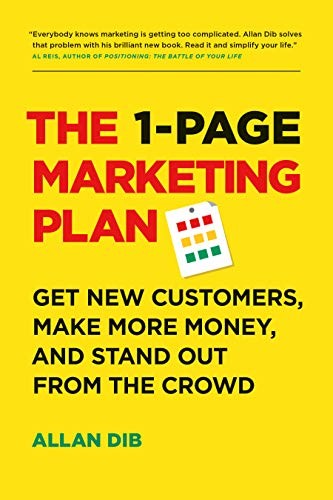
The source: The 1-Page Marketing Plan
ALLAN DIB · THE WHOLE MACHINE, ONE PAGE
Dib takes the entire marketing function, attracting strangers, converting leads, and turning customers into repeat buyers and referrers, and compresses it into a nine-box grid simple enough to tape to a wall and actually use. The book that argues a plan you will run beats a plan you are merely proud of.
Affiliate links. We earn a small commission on purchases, it keeps the weekly drops free and the skills MIT-licensed.
◆ Get The Skill
Want the One-Page Audit done for you?
The 1-Page Marketing Plan skill fills or audits your nine boxes, checks the before phase sequence, target before message before media, finds where a lead is stalling in capture, nurture, or convert, and checks whether the after phase is actually being run or quietly ignored. Free. MIT licensed.
Launch (filling the nine boxes for a new offer or business), Audit (the full-funnel scan, before, during, after, in order), Diagnose (finding the exact box where marketing is leaking).
Pairs with
Kennedy (the direct response roots under the before, during, after sequence); Brunson (the funnel as a zoomed-in view of the during phase); Abraham (lifetime value and referrals as the after phase, nearly word for word); Hormozi (the offer, one box here, expanded into its own system there); Godin (the niche and the permission earned during nurture).
Output shape
When the skill leans on the 1-Page Marketing Plan, it should check the before phase sequence first, target before message before media, then the during phase for where a lead stalls, capture, nurture, or convert, and only then check whether the after phase, experience, lifetime value, referrals, is being run at all. Diagnose in that order.
The Silent DiagnosticIf we drew the nine boxes right now, which one would come back empty, and is that the box actually costing us the most growth?