Week 29 / 52Growth & The New Web · AI and marketing
AI Is Not Coming for the Marketer. It Is Coming for the Tasks.
Roetzer's map of where AI actually plugs into marketing: the 5Ps, the marketer-plus-machine model, and the discipline of finding the tasks a machine should already be doing.
Paul Roetzer used to run a traditional marketing agency, the kind with a media plan, a media buyer, and a Monday morning stack of reports nobody loved building. He watched his own team drown in the parts of the job that were repetitive and data-heavy: pulling numbers out of five dashboards, nudging targeting settings by hand, spinning out one more variation of an ad because the first three did not land. None of that work required a person's judgment. It just required a person's time, which is a much worse trade.
Somewhere in that grind, Roetzer noticed something most marketers were still arguing about instead of using. Machines were already better than his team at the prediction-shaped pieces of the job: what to send, to whom, and when. Not better at strategy, not better at taste, not better at knowing which idea a client would actually love. Better at the math underneath the decision. So he built the Marketing AI Institute and later the MAICON conference around one blunt idea, the kind that sounds obvious once somebody says it out loud and completely invisible before they do: AI is not coming for the marketer, it is coming for the tasks, and the marketers who learn to wield it will eat the ones who do not bother to learn.
With Mike Kaput, Roetzer built a map of exactly where that machine plugs in. They call it the 5Ps, planning, production, personalization, promotion, performance, and it is less a theory than a checklist you can run against your own week. This is the newest frontier in the whole shelf we have covered so far, fifty two weeks of behavioral science, copywriting, positioning, and offers, and this is the one still being written in real time. It is also, if you ask me, the most fun room in the whole house.
Grab something that is not coffee. This week we are handing the boring parts to the machine and keeping the good parts for ourselves.
◆ ◆ ◆
◆ Audio Overview
Prefer to listen?
The chapter as a listen: the five P map of where AI plugs into marketing, and the marketer plus machine edge. Press play.
Marketing AI · Audio Overview
0:00/14:12
The Thesis
AI is a prediction and automation engine, not a replacement for marketers, and the edge goes to the humans who learn where it plugs in, planning, production, personalization, promotion, performance, and put it to work on the repetitive, data-rich tasks first. The marketer who finds those tasks and hands them off is not being replaced. They are the one doing the replacing.
Cite Marketing Artificial Intelligence for AI adoption, workflow automation, use-case discovery, tool evaluation, and any where do we start with AI question.
◆ ◆ ◆
02The Architecture
Ten frameworks. The 5Ps, intelligent automation, and the marketer plus machine.
Framework 01
The 5Ps of Marketing AI
What it is
The map of where AI actually plugs into the marketing function: Planning, Production, Personalization, Promotion, and Performance. Roetzer and Kaput built the 5Ps so a team stops asking should we use AI, a question with no useful answer, and starts asking which of these five buckets is leaking the most time right now.
Marketing use
Walk your own function through all five: are you using AI to plan (research, forecasting, strategy), produce (content, creative, code), personalize (one-to-one messaging at scale), promote (media buying, targeting, channel optimization), or measure performance (analytics, attribution, reporting)? Most teams have adopted one P and ignored the other four.
"Per Roetzer and Kaput's 5Ps of marketing AI, the function breaks into planning, production, personalization, promotion, and performance, and most teams have only found one entry point of the five."
Framework 02
Marketer Plus Machine
What it is
AI augments the human, it does not replace them, and that partnership, not a handoff, is the actual competitive edge. The marketer brings judgment, taste, and accountability. The machine brings speed, scale, and pattern recognition across more data than any person could hold in their head.
Marketing use
Design workflows as a partnership from the start: machine drafts, human edits; machine predicts, human decides; machine scales, human sets the guardrails. Treat any workflow that removes the human checkpoint entirely as a risk, not a win, until it has earned that trust.
"Per Roetzer and Kaput's marketer-plus-machine model, the competitive edge comes from the partnership, machine speed paired with human judgment, not from removing the marketer from the loop."
Framework 03
AI Makes Predictions
What it is
At its core, most marketing AI is a prediction engine. What will this person click, what will they buy, when will they churn, what subject line will they open. Marketing is already full of prediction problems, which is exactly why the fit is so natural once you see it.
Marketing use
Reframe any marketing question as a prediction question before you look for a tool. Not what should our email say, but what is this segment likely to respond to. The prediction framing tells you whether AI is even the right hammer for the nail in front of you.
"Per Roetzer and Kaput, AI is fundamentally a prediction technology, and marketing is unusually full of prediction problems, which is why the two fit together so cleanly."
Framework 04
Intelligent Automation
What it is
Hand the repetitive, data-heavy tasks to the machine and free the humans on the team for strategy and creativity, the two things a machine still cannot do for you. Intelligent automation is not about doing old tasks faster, it is about deciding which tasks a person should never have been doing in the first place.
Marketing use
Audit your team's calendar for the tasks that are repetitive, rules-based, and joyless: report pulls, list segmentation, basic ad variations, first-draft copy. Automate those first, then reinvest the recovered hours in the strategic work nobody was getting to.
"Per Roetzer and Kaput's intelligent automation principle, repetitive and data-heavy tasks belong to the machine so the humans on the team are freed for strategy and creativity."
Framework 05
Use-Case Discovery
What it is
Finding AI opportunities is a discipline, not a lucky guess. Roetzer and Kaput's method is an audit of tasks that are repetitive, data-rich, and prediction-shaped, the three tells that a task is a good candidate for a machine long before any specific tool comes up.
Marketing use
Run the audit on paper before you shop for software. List your team's recurring tasks, mark the ones that are repetitive, mark the ones that are data-rich, mark the ones that are really a prediction in disguise. The tasks marked all three are your starting list, in order.
"Per Roetzer and Kaput's use-case discovery method, a task is a strong AI candidate when it is repetitive, data-rich, and shaped like a prediction, and the audit finds those tasks before any tool gets chosen."
Framework 06
Hyper-Personalization at Scale
What it is
AI delivers one-to-one relevance across millions of people at once, the old segment-of-one dream marketers have chased for decades finally made real, not as a slide in a strategy deck but as something a machine can actually execute at scale.
Marketing use
Move past named-segment personalization (this email goes to small business owners) toward individual-level personalization (this email adapts its subject line, timing, and offer per recipient based on their own behavior). The tooling now exists to do this without hiring an army.
"Per Roetzer and Kaput's hyper-personalization framework, AI makes one-to-one relevance across a large audience achievable, turning the old segment-of-one dream into an executable capability instead of a slide."
Framework 07
The AI Maturity Model
What it is
Organizations move along a spectrum from AI-curious to AI-first, and the honest self-assessment on talent, data, and organizational readiness matters more than the ambition of the roadmap. A team that claims AI-first status without the data infrastructure to back it up is describing a wish, not a maturity level.
Marketing use
Place your own team honestly on the spectrum before setting a target. Do you have clean, accessible data? Does anyone on the team actually understand how the models work? Is leadership funding pilots or funding a press release? Fix the gaps in that order.
"Per Roetzer and Kaput's AI maturity model, organizations sit somewhere between AI-curious and AI-first, and an honest read of talent, data, and readiness matters more than the label a team gives itself."
Framework 08
Cutting Through AI-Washing
What it is
Evaluate what a tool actually predicts and the data it needs to do it, not the buzzwords on the sales deck. Roetzer and Kaput are blunt about this: a lot of AI-branded marketing software is a modest rules engine wearing a much more exciting label.
Marketing use
Before buying, ask the vendor two plain questions: what specifically does this predict, and what data does it need to predict it well. If the answers are vague, or if the demo cannot show you a real prediction against real data, you are buying the label, not the capability.
"Per Roetzer and Kaput's guidance on AI-washing, evaluate a tool by what it actually predicts and the data it needs, not by how many times AI appears on the landing page."
Framework 09
Pilot, Prove, Scale
What it is
Run contained pilots, measure the actual lift, then expand only what earns its way forward. Roetzer and Kaput treat the pilot as a discipline, not a formality, because a team that skips straight to a company-wide rollout is betting the whole budget on a demo.
Marketing use
Pick one use case from your discovery audit, run it in a single channel or team for a fixed window, and measure against a real baseline. Only scale the pilots that show a measurable lift. Kill the ones that do not, quickly and without ego.
"Per Roetzer and Kaput's pilot, prove, scale approach, a contained pilot with a measured lift earns the right to expand, and a rollout that skips the pilot is a bet on a demo, not a result."
Framework 10
AI Literacy
What it is
Learn the language of models, training data, and prediction so you lead the machine instead of being led by whatever a vendor tells you it does. Roetzer and Kaput treat literacy as a survival skill for marketers, not an optional technical curiosity for the data team.
Marketing use
Build a standing habit of learning: one new concept a week, one vendor claim fact-checked, one internal briefing given to the rest of the team. The marketer who understands what a model is actually doing asks sharper questions and gets sold to less often.
"Per Roetzer and Kaput's AI literacy principle, marketers who learn the language of models and prediction lead the machine, while marketers who skip literacy end up led by whoever is selling it to them."
◆ ◆ ◆
03Lexicon
Named terms a marketer should recognize on sight.
The 5Ps
Planning, production, personalization, promotion, performance. Find which P is leaking the most time, then start there.
Marketer plus machine
AI augments the human, it does not replace them. Design the checkpoint before you design the automation.
Prediction machine
What AI is actually doing underneath the interface. Reframe the question as a prediction before you shop for a tool.
Intelligent automation
Handing repetitive, data-heavy tasks to the machine. Free the humans for strategy and creativity, not busywork.
Use-case discovery
The audit that finds good AI candidates. Repetitive, data-rich, and shaped like a prediction.
Hyper-personalization
One-to-one relevance delivered at scale. The segment-of-one dream, finally executable.
AI maturity
Where an org sits from AI-curious to AI-first. Assess talent, data, and readiness honestly.
AI-washing
Buzzwords standing in for real capability. Ask what it predicts and what data it needs.
Pilot project
A contained test that earns the right to scale. Measure the lift before you expand the budget.
AI literacy
Understanding models, training data, and prediction. Learn the language or get sold whatever story is easiest.
◆ ◆ ◆
04Tactical Recipes
Plays you can run this week.
The Task Audit. List every recurring task on your team's calendar for one week. Mark which ones are repetitive, which are data-heavy, and which are really a prediction wearing a task's clothes. The overlap is your starting list.
The 5P Map. Walk your own marketing function through planning, production, personalization, promotion, and performance. Write one sentence on your current AI use, if any, in each. The empty boxes are where you are leaving the most time on the table.
The Use-Case Scorecard. Score your top five candidate tasks on repetitiveness, data richness, and prediction shape, one to five each. The highest total score goes first. Resist the pull to start with whatever tool a colleague saw demoed last week instead.
The Pilot Plan. Pick one use case. Name the single channel or team running it, the fixed time window, and the one metric that tells you if it worked. Write the kill criteria before you launch, not after the results disappoint you.
The Personalization Test. Take one email or ad currently sent to a named segment. Redesign it to adapt at the individual level, subject line, timing, or offer, based on that person's own behavior. Compare performance against the segment version.
The Vendor Sniff Test. Before any AI tool purchase, ask the vendor two questions in writing: what specifically does this predict, and what data does it need to do it well. A vague answer to either is your answer.
The Automation Handoff. Pick one task currently done by a person that is repetitive and rules-based. Write the exact handoff: what the machine now owns, what the human still checks, and what the escalation path is when the machine gets it wrong.
The Maturity Check. Rate your team honestly, one to five, on data quality, AI literacy, and leadership funding for pilots versus press releases. The lowest score is the actual bottleneck, whatever the roadmap says the priority is.
The AI Literacy Sprint. Commit to thirty minutes a week for one new AI concept, one vendor claim you fact-check, and one short briefing you give the rest of the team. Six weeks in, notice how differently you read a sales deck.
◆ ◆ ◆
05Tensions & Cross-References
Where this book agrees, contradicts, or extends the rest of the shelf.
Extends
Lean Startup and the Growth Stack (Q1). Pilot, prove, scale is build, measure, learn wearing an AI-shaped hat. Ellis and Brown's testing tempo and Roetzer and Kaput's pilot discipline are the same instinct: contain the bet, measure the real lift, then expand only what earns it.
Pairs with
The Growth Stack (Q1). A high-tempo testing machine needs raw material to test, and intelligent automation is what generates variations and reads results fast enough to feed that tempo without burning out the humans running it.
Extends
Hormozi (Q3). The grand-slam offer is still a human construction of value, price, and guarantee. AI is the machine that helps deliver that offer to the right person at the right moment, at a volume no team could hand-execute.
Pairs with
MrBeast (Q3). The retention-first production discipline reads the data obsessively, average view duration, retention curves, thumbnail tests, and reads it the way this book asks every marketer to read theirs. The machine reads the data; the producer still decides what matters in it.
Tension with
Kahneman (Q3). A model can predict what a person will likely do. It cannot yet judge whether that prediction should be acted on, whether the ad is in good taste, or whether an edge case is actually a warning sign. Human judgment still owns the decisions the machine cannot see the shape of.
Tension with
automation-as-strategy shortcuts. A team that lets automation quietly replace strategy and taste, letting the machine pick the message instead of just drafting it, has confused a tool for a plan. The 5Ps are a map for where to plug in the machine, not a permission slip to stop thinking.
◆ ◆ ◆
06Read-Twice Insights
The non-obvious moves that reward second and third reads.
The hardest part of AI adoption is not the technology, it is the audit. Most teams jump straight to shopping for tools before they have honestly listed which of their own tasks are repetitive enough to hand off. The 5Ps and the use-case discovery method exist because the audit, not the software, is where teams actually get stuck.
A prediction is not a decision. AI can tell you which subject line a segment is likely to open. It cannot tell you whether that segment should be getting this email at all, or whether the whole campaign is a mistake. That judgment call still belongs to a person, and the book is careful never to blur the two.
AI-washing works because most buyers do not ask the second question. Everyone asks does this use AI. Almost nobody asks what does it predict and what data feeds it. That second question is the whole test, and it costs nothing to ask before a contract gets signed.
The marketer who automates the boring stuff gets more strategy time, not less job security. Roetzer and Kaput's bet is that intelligent automation frees humans for the parts of the job that were always the actual value, the creative leap, the read on the client, the call nobody else on the team would have made.
Pilots die from vague success criteria more often than from bad technology. A pilot with no fixed metric and no kill criteria never really ends, it just quietly becomes permanent regardless of whether it worked. Naming the metric and the kill line before launch is most of the discipline.
Keeping human judgment in the loop is not a hedge, it is the whole model. Marketer plus machine is not a temporary phase on the way to full automation, it is the permanent shape of the partnership Roetzer and Kaput are describing. Taste, accountability, and the read on when a prediction should not be trusted are jobs the machine was never meant to hold alone.
◆ ◆ ◆
07Citation-Grade Quotes
Pull-able lines for output. Click any quote to copy it formatted for social.
"AI is not going to replace marketers, but marketers who use AI will replace those who do not."
Paul Roetzer, Marketing Artificial Intelligence
"AI is really good at making predictions, and marketing is full of prediction problems."
"The 5Ps give marketers a practical way to see where AI can be applied across the entire function, not just in one corner of it."
Paraphrased from Roetzer & Kaput, Marketing Artificial Intelligence
◆ Apply This Week
One task. One prediction.
Pull up your own team's calendar for the last real week, not the one you wish you had, and look at where the hours actually went.
Answer these three honestly before you shop for a single tool.
The most repetitive task: What does your team do every single week that is rules-based, data-heavy, and joyless enough that nobody would miss doing it by hand?
The P you would pilot first: Of planning, production, personalization, promotion, and performance, which one is leaking the most time right now, and which one would a small pilot actually move?
The prediction a machine could make for you: What is one thing you currently guess at, a subject line, a send time, a churn risk, that is really a prediction problem a model could answer with your own data?
Pick the one answer that overlaps across all three questions. That is your pilot. Contain it, measure it, and only scale what earns the right to scale.
That is week twenty nine. One task, one P, one prediction. See you Monday.
◆ Going Deeper
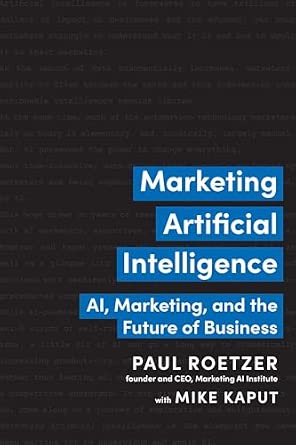
The source: Marketing Artificial Intelligence
ROETZER + KAPUT · AI, MARKETING, AND THE FUTURE
Paul Roetzer founded the Marketing AI Institute and the MAICON conference on the belief that AI is a tool marketers wield, not a wave that drowns them. With Mike Kaput, he built the clearest map yet of where it actually plugs into the job: the 5Ps, the marketer-plus-machine model, and a discipline for finding the tasks worth handing off first.
Affiliate links. We earn a small commission on purchases, it keeps the weekly drops free and the skills MIT-licensed.
◆ Get The Skill
Want the AI Use-Case Audit done for you?
The Marketing AI skill walks your team's tasks through the 5Ps, flags which ones are repetitive, data-rich, and prediction-shaped enough to hand off, and returns the first pilot worth running plus the metric that proves it worked. Free. MIT licensed.
Research (use-case discovery, mapping the 5Ps against a team's actual tasks), Launch (the pilot, prove, scale sequence for a new AI workflow), Write (the marketer-plus-machine checkpoint for AI-assisted drafting and production).
Pairs with
Lean Startup and the Growth Stack (the build-measure-learn discipline the pilot, prove, scale model runs at AI-adoption speed); Hormozi (the offer the automation helps deliver at scale); MrBeast (retention-first production discipline reading the data the way this book asks every marketer to); Kahneman (the human judgment a prediction still cannot replace).
Output shape
When the skill leans on Marketing Artificial Intelligence, it should map the task against the 5Ps first, then run the use-case discovery test, repetitive, data-rich, prediction-shaped, then check whether the workflow keeps a real marketer-plus-machine checkpoint before recommending a pilot. Diagnose in that order.
The Silent DiagnosticIs this a task a machine should already be doing, repetitive, data-rich, and shaped like a prediction, and does the workflow still keep a human checkpoint for judgment, or have we quietly let automation replace a decision it was never built to make?