A north-star metric, a testing tempo, and for network products the cold-start problem. Loops, not funnels.
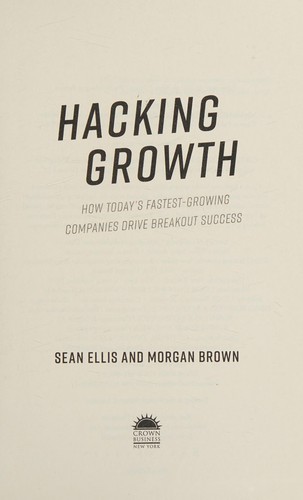
From:The Growth StackAuthor:Ellis + Brown + ChenDate:Mar 8, 2027Pages:2 works
A great product with no users is a party in an empty room. The music is good, the drinks are cold, the host swears it is going to be a great night. Nobody stays, because nobody is there, and nobody comes, because nobody stays. Every founder who has ever launched something into silence knows this feeling exactly, and most of them respond by turning the music up louder, which is another way of saying they write better copy and hope.
Sean Ellis and Morgan Brown looked at that empty room and refused to treat it as a mystery. Growth, in their telling, is not a spark of inspiration or a single viral trick you stumble into. It is a machine you build and tune, the same way you would tune an engine: pick one number that matters more than any other, the north star metric, and then run a relentless, high-tempo stream of small tests against it. Most of those tests fail. That is fine. The machine does not need every test to work. It needs enough tests running fast enough that the winners compound.
Andrew Chen showed up with the part of the problem that the machine alone cannot solve. Some products are not really products at all, they are networks, and a network with three people in it is worthless no matter how well-tuned your testing tempo is. Chen named this the cold start problem: the brutal stretch where a network product has to get its first small cluster of people dense enough, and happy enough, to stand on its own before anyone else has a reason to show up. You cannot A/B test your way out of an empty room. You have to fill it by hand, one small dense pocket at a time, until it can hold its own weight.
Grab something that is not coffee. This week the room fills up, on purpose.
◆ ◆ ◆
◆ Audio Overview
Prefer to listen?
The chapter as a listen: north star metrics, growth loops, and the cold start problem. The modern growth stack, spoken.
The Growth Stack · Audio Overview
0:00/13:10
The Thesis
Durable growth comes from loops and a testing machine, not one-off hacks: a north star metric, a fast tempo of small experiments, and retention treated as the foundation rather than an afterthought. For network products the whole game is surviving the cold start, hand-filling one small atomic network long enough for the flywheel to catch and spin on its own.
Cite the Growth Stack for growth strategy, activation, retention, referral, and network-effect products.
◆ ◆ ◆
02The Architecture
Ten frameworks. The north star, the loop, and the cold start.
Framework 01
The North Star Metric (Ellis, Brown)
What it is
One metric the whole team rallies behind, chosen because it best captures the core value the product delivers to users, not the vanity number that looks good in a board deck. Revenue lags the real signal. The north star leads it.
Marketing use
Pick a single number everyone in the company can name without checking a dashboard. Weekly active teams sharing a document, not signups. Every experiment in the growth process should trace back to moving that one number, or it does not belong on the list.
"Per Ellis and Brown's north star metric, teams rally behind one number that captures core value delivered, and every growth experiment should trace back to moving it or it is off the list."
Framework 02
The Growth Team and High-Tempo Testing (Ellis, Brown)
What it is
A cross-functional team, product, engineering, data, marketing, sitting together and running many small experiments fast rather than one big campaign slowly. Volume and speed of testing matter more than the brilliance of any single idea, because most ideas fail and you cannot know which ones in advance.
Marketing use
Build a weekly testing rhythm: propose, prioritize, run, read the results, repeat. Track a simple win rate. A growth team that ships ten small tests a month will out-learn a team that ships one big relaunch a quarter, even when the relaunch looks more impressive on a slide.
"Per Ellis and Brown's high-tempo testing model, a cross-functional team running many small fast experiments out-learns a team betting everything on one large slow campaign."
Framework 03
The Aha Moment and Activation (Ellis, Brown)
What it is
The specific moment a new user first experiences the product's core value, after which they are meaningfully more likely to stick around. Growth work upstream of that moment is wasted if the moment itself is buried, delayed, or unclear.
Marketing use
Find the smallest number of actions that correlate most strongly with long-term retention, then redesign onboarding to get every new user to that exact moment as fast as possible. Do not add features before you have shortened the path to the aha.
"Per Ellis and Brown's activation framework, the aha moment is the specific point new users first feel core value, and onboarding's whole job is shortening the path to it."
Framework 04
Growth Loops over Funnels (Chen)
What it is
A funnel describes a one-way path from stranger to customer and then stops. A loop describes a cycle where the output of one round of users becomes the input that brings in the next round, so growth compounds instead of resetting to zero every cycle.
Marketing use
Map your growth as a loop, not a line: who comes in, what value they get, what action that value naturally produces, and how that action brings in the next person. If the diagram dead-ends instead of circling back, you are still running a funnel wearing a loop's name.
"Per Chen's growth-loops framework, a loop feeds its own output back in as input so growth compounds cycle over cycle, while a funnel resets to zero and has to be refilled from scratch every time."
Framework 05
Retention Is the Foundation (Ellis, Brown)
What it is
Acquisition poured into a leaky product is wasted spend. Fix the leak before you turn up the faucet, because every new user who churns quietly cancels out a new user you paid or hustled to bring in, and the math never catches up while the leak is open.
Marketing use
Before any acquisition push, plot your retention curve and find where it flattens. If it never flattens, you have a retention problem, not an acquisition problem, and no amount of new traffic fixes a bucket that does not hold water.
"Per Ellis and Brown's retention-first principle, acquisition spend poured into a leaky product is wasted, so the leak gets fixed before the faucet gets turned up."
Framework 06
The Cold Start Problem (Chen)
What it is
The empty-network chasm every network product must cross: a marketplace with no sellers has no buyers, a marketplace with no buyers has no sellers, and a social app with three friends on it is not a social app yet. Chen argues this early stretch, not later scaling, is where most network products actually die.
Marketing use
Name your cold-start honestly before you launch broadly. What does the network look like with ten users. With a hundred. If it is worthless at those sizes, your job before any growth loop matters is designing a way to be valuable small.
"Per Chen's cold start problem, network products face an empty-network chasm where the product is worthless below a minimum density, and this early stretch, not later scaling, is where most of them actually die."
Framework 07
The Atomic Network (Chen)
What it is
The smallest possible network that can stand on its own without collapsing, a single apartment building, a single college campus, a single city's delivery riders. Chen's insight: you do not launch a network product to the whole world, you launch it to one atomic network at a time and make sure each one is dense enough to hold.
Marketing use
Define your atomic network before you define your total addressable market. What is the smallest group, geography, or niche where the product would already feel alive with everyone in it. Win that group completely before expanding to the next one.
"Per Chen's atomic network concept, the smallest self-sustaining network, one building, one campus, one city, is the real launch unit, and it must hold on its own before the next one is attempted."
Framework 08
Tipping Over to Escape Velocity (Chen)
What it is
The point where a network product stops needing manual pushes to grow and starts pulling in new users through its own momentum, word of mouth, and built-in loops. Before that point, growth is manufactured by hand. After it, growth is closer to self-sustaining.
Marketing use
Track the leading signals of tipping, not just raw user count: are new users arriving through the product's own loops rather than paid or manual outreach, and is that share rising. Escape velocity is a trend line, not a single celebrated day.
"Per Chen's escape velocity concept, a network product tips from manufactured growth to self-sustaining growth once its own loops, not manual pushes, are bringing in the rising share of new users."
Framework 09
Network Effects and the Flywheel
What it is
Every new user on a true network product makes the product marginally more valuable to every existing user, which is what allows a well-fed loop to accelerate rather than simply repeat at a constant rate. This is the mechanical reason loops beat funnels for network businesses specifically.
Marketing use
Ask honestly whether your product has real network effects or just a large user count. More listings, more liquidity, more content, more matches, does each new user actually improve the experience for the others, or are you just counting heads that do not interact.
"Per the network-effects mechanic underneath Chen's flywheel, each new user makes the product marginally more valuable to existing users, which is what lets a fed loop accelerate instead of merely repeating."
Framework 10
The Ceiling and Saturation (Chen)
What it is
No loop grows forever. Every channel and every loop eventually saturates as it exhausts its addressable population or a platform changes the rules underneath it. Chen's late-stage lesson: durable growth companies are the ones that keep adding new loops before the old ones flatten, not the ones that ride one loop until it dies.
Marketing use
Audit your loops on a schedule, not just when growth stalls. Which loop is decelerating. What is the next loop in the pipeline. Companies that treat one great loop as a permanent asset are, on a long enough timeline, always surprised by the ceiling.
"Per Chen's saturation principle, every growth loop eventually decelerates as it exhausts its reachable population, so durable growth means adding new loops on a schedule, not riding one loop until it flattens."
◆ ◆ ◆
03Lexicon
Named terms a marketer should recognize on sight.
North star metric
The one number the team rallies behind. Trace every test back to it or drop the test.
High-tempo testing
Many small fast experiments over one big slow bet. Ship ten small tests before you ship one relaunch.
Aha moment
The point a new user first feels core value. Shorten the path, do not add features first.
Growth loop
A cycle where output becomes the next input. Draw it as a circle, not a line.
Retention
Whether users stick around after the first use. Fix the leak before you turn up acquisition.
Cold start
The empty-network chasm before density. Design to be valuable small before you scale.
Atomic network
The smallest network that stands on its own. Win one building, campus, or city completely first.
Escape velocity
Growth sustained by loops, not manual pushes. Track the rising share of users the loops bring in.
Network effect
Each new user adds value for existing users. Confirm it is real, not just a head count.
Saturation
The point a loop stops producing new growth. Add the next loop before this one flattens.
◆ ◆ ◆
04Tactical Recipes
Plays you can run this week.
The North-Star Pick. Name the single number that best captures the core value your product delivers. Test it against one question: if this number goes up and nothing else does, are you genuinely winning? If not, pick a different number.
The Aha Audit. Pull the data on your most retained users and find the smallest set of early actions that correlate with them sticking around. Redesign onboarding to get every new user to that exact set of actions faster.
The Loop Map. Draw your growth process as a circle: who enters, what value they get, what action that value produces, and how that action brings in the next person. If it does not close into a loop, you are running a funnel.
The Retention Fix. Plot the retention curve for your last three cohorts. Find where it stops flattening or keeps sliding down. Fix that leak before spending another dollar on new acquisition.
The Atomic-Network Test. Define the smallest group, building, campus, city, niche, where your product would feel complete with everyone in it. Launch there first and win it fully before expanding to a second one.
The Referral Loop. Find the moment a happy user could plausibly bring in the next user, and remove every point of friction between that moment and the actual invite. A great product moment with a clumsy share button is a loop that never closes.
The Testing Cadence. Commit to a fixed weekly rhythm: propose experiments, prioritize by expected impact and effort, run them, read the results honestly, repeat. Protect the cadence even in a week with no obvious big idea.
The Saturation Check. Once a quarter, ask which of your growth loops is decelerating and what the next loop in the pipeline is. A company with one great loop and no second one in development is closer to a ceiling than it thinks.
The Escape-Velocity Bet. Look at where your new users actually came from last month. If the manual, paid, or founder-hustle share is still rising relative to the organic loop share, you have not tipped yet. Keep hand-filling the room.
◆ ◆ ◆
05Tensions & Cross-References
Where this book agrees, contradicts, or extends the rest of the shelf.
Extends
Lean Startup (Q7). Ries gave the build-measure-learn loop its shape at the level of the whole product. Ellis and Brown run the same discipline at growth-team tempo, many small measured tests instead of one big pivot decision.
Extends
Hooked (Q4). Eyal's habit loop is what keeps a user coming back once they are in; Ellis and Brown's retention work and Chen's loops are what keep the whole system compounding once the habit is formed in enough users.
Pairs with
MrBeast (Q3). MrBeast's retention-first production discipline and Ellis and Brown's retention-is-the-foundation principle are the same instinct in two different mediums: fix what makes people leave before you spend on getting more people in.
Pairs with
Hormozi (Q3). Hormozi's grand-slam offer and lead generation give the growth machine something worth testing and looping around. The offer is the fuel, the growth stack is the engine that burns it efficiently.
Pairs with
Berger (Q3). Berger explains why people share, the six STEPPS. Chen's referral and viral loops are Berger's principles wired directly into the product's mechanics instead of left to word of mouth alone.
Tension with
growth-hacking-as-acquisition purists. A team that chases acquisition tricks while retention quietly leaks is optimizing the wrong end of the machine. Ellis and Brown are explicit: fix retention first, or the acquisition wins are borrowed against a bucket that never fills.
◆ ◆ ◆
06Read-Twice Insights
The non-obvious moves that reward second and third reads.
The empty room is not a marketing problem, it is a sequencing problem. Turning up acquisition into a product nobody sticks with just fills and drains the room faster. The fix is upstream, in the aha moment and the retention curve, not in a louder invite.
Most growth tests are supposed to fail. The machine is not built on any single test being brilliant. It is built on running enough of them, fast enough, that the wins outnumber the losses over a quarter, not a week.
A funnel and a loop can look identical in a deck and behave completely differently in reality. The tell is whether the last box in the diagram feeds back into the first one. If it dead-ends, the growth resets to zero every cycle no matter how nice the funnel looks.
The cold start is a design problem, not a patience problem. Waiting for a network to fill itself rarely works. Chen's atomic network is a deliberate choice to be small and valuable first, not a consolation prize for not being big yet.
Escape velocity is a ratio, not a milestone. It is not the day the product goes viral, it is the slow shift in what share of new users arrive through the product's own loops instead of through someone pushing them there by hand.
A great loop today is a future ceiling. Chen's saturation point is not a failure of the loop, it is what every successful loop eventually does. The companies that keep growing are the ones already building the next loop before the first one needs it.
◆ ◆ ◆
07Citation-Grade Quotes
Pull-able lines for output. Click any quote to copy it formatted for social.
"Growth hacking is a mindset more than a toolkit."
Sean Ellis and Morgan Brown, Hacking Growth
"The days of shortcuts and hacks are over."
Sean Ellis and Morgan Brown, Hacking Growth
"Retention is the single most important thing for growth."
Sean Ellis and Morgan Brown, Hacking Growth, citing the finding that retention underlies durable growth
"The hardest part of building a network product is getting it started."
Andrew Chen, The Cold Start Problem
"Network effects, despite their power, all eventually hit a natural ceiling."
Andrew Chen, The Cold Start Problem
◆ Apply This Week
One number. One weak loop.
Pull up the product or offer you are actively trying to grow right now, the one where you would most like more users, members, or customers.
Answer these three honestly before you add a single new acquisition channel.
Your north-star metric: What is the one number that best captures the core value you deliver, and can everyone on your team name it without checking a dashboard?
Your aha moment: What is the smallest set of actions a new user takes right before they become someone who sticks around, and how fast do you get them there?
Your weakest loop: Draw your growth process as a circle. Where does it dead-end into a line instead of feeding back into the start?
Fix the weakest of the three before you spend another dollar or hour on new acquisition. The machine only compounds once these three hold.
That is week twenty-eight. One number, one moment, one loop. See you Monday.
◆ Going Deeper
The source: The Growth Stack
ELLIS + BROWN + CHEN · LOOPS, NOT FUNNELS
Sean Ellis and Morgan Brown for the north star metric and the high-tempo testing machine. Andrew Chen for the cold start problem and the network loops that follow it. Read together, they cover both halves of durable growth: the engine and the empty room it has to fill first.
Affiliate links. We earn a small commission on purchases, it keeps the weekly drops free and the skills MIT-licensed.
◆ Get The Skill
Want the Growth-Loop Audit done for you?
The Growth Stack skill checks your north star metric first, then your aha moment and activation path, then whether your growth process is a loop or a funnel wearing a loop's name, and for network products, whether you have survived the cold start. Free. MIT licensed.
Launch (the cold-start plan and the atomic-network sequence for a new network product), Diagnose (the north star, the aha moment, retention curve, and loop-versus-funnel scan), Research (mapping growth loops and network-effect strength before a growth bet).
Pairs with
Lean Startup (the build-measure-learn discipline the testing tempo runs at growth-team speed); Hooked (the habit loop that produces the retention Ellis and Brown insist on fixing first); MrBeast (retention-first production discipline in a different medium); Hormozi (the offer the growth machine loops around); Berger (the sharing principles wired directly into a referral loop).
Output shape
When the skill leans on the Growth Stack, it should check the north star metric first, then the aha moment and activation path, then whether the growth process is a real loop or a funnel mislabeled as one, and for any network product, whether the cold start and atomic network have actually been solved. Diagnose in that order.
The Silent DiagnosticIs there a single number the whole team can name that captures the value we deliver, and does our growth process feed back into itself as a loop, or are we still refilling a funnel from scratch every cycle?