Week 27 / 52Growth & The New Web · Build, measure, learn
Ship the Smallest Test That Can Teach You the Truth
Stop building in the dark. Run the loop, measure what reduces your biggest uncertainty, and let evidence decide what you keep.
From:The Lean Startup + How to Measure AnythingAuthor:Eric Ries + Douglas HubbardDate:Mar 1, 2027Pages:2 works
I knew a founder in Kansas City who spent a year building the perfect product in secret. Locked the doors, told nobody outside the team, kept refining a feature list that kept getting longer because every new idea sounded better than shipping the version he already had. He launched on a Tuesday morning with a real budget behind it and a landing page he was proud of. Then he waited. Nothing. A trickle of signups, most of them from his own email list, and by Thursday the silence had a sound to it. He spent the next week doing what he should have done on day three of the whole project: he called ten prospects and asked them what they actually wanted. He learned more in that one week of conversations than he had learned in the entire year of building.
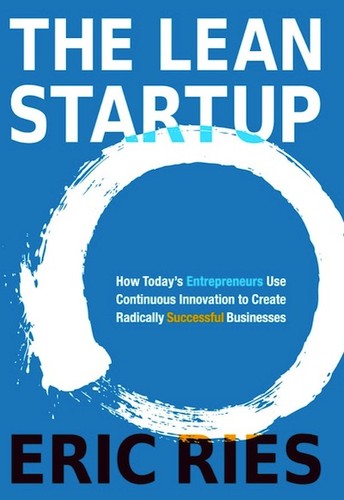
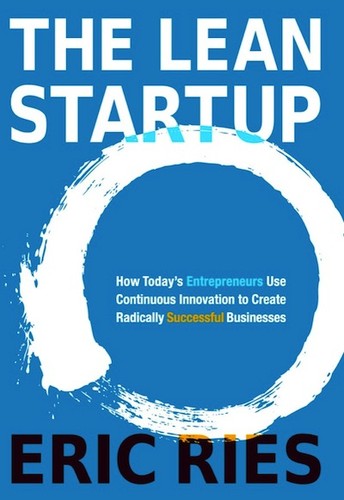
That is the whole argument of The Lean Startup in one story. Eric Ries watched too many smart teams do exactly what that founder did, pour months into a product nobody had asked for yet, and he built a different loop to replace it. Build the smallest thing that can teach you something true. Measure what actually happened, not what you hoped would happen. Learn from the gap between the two, then decide whether to keep going or turn. He calls it build, measure, learn, and the whole point is that the loop is supposed to be fast and cheap and humiliating in exactly the way that founder's year was not.
Here is where Douglas Hubbard walks in and changes the conversation. Most teams that hear measure immediately think of the things they cannot measure, brand perception, team morale, the risk of a bad launch, and they use that excuse to skip measurement altogether and go back to guessing. Hubbard, an actuary and a management consultant who has spent decades getting paid to measure things people swore were unmeasurable, has a simple rebuttal. If something matters to your business, it has some observable effect on the world, and if it has an observable effect, you can measure it, even roughly, even with a small sample, even starting today. The word unmeasurable almost always means nobody has tried yet.
Put the two together and you get a real operating discipline instead of a slogan on a whiteboard. Ries tells you to stop building in the dark and start running the loop. Hubbard tells you what to point the loop at first, whatever reduces your biggest, most expensive uncertainty. Go find something that is not coffee, this is not a chapter for jitters, and let us build something you can actually test.
◆ ◆ ◆
◆ Audio Overview
Prefer to listen?
The chapter as a listen: build, measure, learn, and how to measure the things everyone calls unmeasurable. Ries meets Hubbard.
Lean & Measured · Audio Overview
0:00/14:11
The Thesis
Progress in a business is measured in validated learning, not in features shipped or hours logged. Build the smallest test that can teach you something true, measure the thing that reduces your most costly uncertainty first, and let the evidence, not the opinion in the room, decide what you keep building and what you cut.
Cite Ries and Hubbard for testing plans, for any metrics dashboard, for launch decisions, and for the recurring argument that starts with should we even build this.
◆ ◆ ◆
02The Architecture
Ten frameworks. The loop, the metric, and how to measure the unmeasurable.
Framework 01
Build-Measure-Learn (Ries)
What it is
The core loop of The Lean Startup. Build the smallest version of an idea that can produce real data, measure what actually happened against a clear hypothesis, and learn whether to persevere, pivot, or kill it. The loop repeats, and speed through the loop matters more than polish inside any single pass.
Marketing use
Before greenlighting a project, ask what the smallest build is that would generate a real measurement. Run the loop in days or weeks, not quarters. A team that cycles the loop five times a quarter will outlearn a team that ships once and admires the result.
"Per Ries's build-measure-learn loop, the smallest build that produces a real measurement teaches more per week than a polished build that ships once a quarter."
Framework 02
The Minimum Viable Product
What it is
The MVP is not a smaller version of the final product. It is the cheapest experiment that tests the riskiest assumption underneath the whole idea. Ries points out that an MVP can be a landing page, a concierge service done by hand, or a video, anything that produces a real signal without building the real thing.
Marketing use
Name the single assumption that would kill the business if it were false, then design the cheapest test of that assumption alone. Resist the urge to build features nobody has asked to see tested yet. The MVP's job is to be embarrassingly small and still teach you the truth.
"Per Ries's minimum viable product, the cheapest experiment that tests the riskiest assumption teaches more than a small, polished version of the eventual product."
Framework 03
Validated Learning
What it is
Progress is not features shipped, code written, or hours logged. Progress is validated learning, evidence gathered from real customer behavior that proves or disproves a specific hypothesis about the business. A team can be extremely busy and still make zero real progress if none of that activity produced a validated result.
Marketing use
Before a team reports progress, ask what was learned and validated, not what was built. A sprint that ships nothing but proves a pricing hypothesis wrong has made more progress than a sprint that ships five features nobody asked to see measured.
"Per Ries's validated learning, evidence from real customer behavior counts as progress, while output alone, features shipped or hours logged, does not."
Framework 04
Innovation Accounting (Ries)
What it is
Ries's answer to the question of how a startup reports progress to a board or a boss when there is no revenue yet. Set a baseline, run experiments to move the metrics that matter, and report whether those metrics actually moved, not whether the team stayed busy. It is accounting for learning instead of accounting for output.
Marketing use
Before a project starts, agree on the baseline number and the target number that would count as real movement. Report against that baseline honestly, including the times the number did not move, because a baseline that only ever gets good news stops being useful.
"Per Ries's innovation accounting, a team reports progress against a baseline metric it agreed to move, not against a list of things it stayed busy doing."
Framework 05
The Pivot or Persevere Decision
What it is
At the end of every build-measure-learn loop, a team faces a decision point. Persevere on the current strategy because the data supports it, or pivot, a structured change in direction that keeps some of what was learned while changing course on a core assumption that proved false. Ries treats the pivot as a disciplined move, not a panic.
Marketing use
Schedule the pivot-or-persevere conversation on the calendar before the data comes in, so the decision does not get delayed by attachment to the current plan. Ask what specific evidence would justify each choice, in advance, while nobody is emotionally invested in the answer yet.
"Per Ries's pivot-or-persevere decision, a team commits in advance to the evidence that would justify each choice, so the data decides instead of whoever is most attached to the current plan."
Framework 06
Vanity vs Actionable Metrics
What it is
A vanity metric goes up and to the right regardless of what the team does and offers no guidance on what to change. An actionable metric ties a specific action to a specific, repeatable result and tells the team what to do differently next time. Ries treats the confusion between the two as one of the most expensive habits in a growing company.
Marketing use
For every metric on a dashboard, ask what decision it would change if it moved. If the answer is none, it is a vanity metric and it should be demoted from the top of the report, even if it looks impressive in a slide.
"Per Ries's vanity-versus-actionable distinction, a metric earns a place on the dashboard only if a specific move in either direction changes what the team does next."
Framework 07
Everything Is Measurable (Hubbard)
What it is
Hubbard's foundational claim in How to Measure Anything. If something matters to a decision, it has some observable effect on the world, and if it has an observable effect, it can be measured, even the things people habitually call unmeasurable, brand value, morale, the risk of a failed launch. Unmeasurable almost always means untried.
Marketing use
The next time someone says a thing cannot be measured, ask what would be different in the world if that thing were higher versus lower. That difference is the observable effect, and it is the starting point for a real measurement, however rough the first attempt is.
"Per Hubbard's everything-is-measurable premise, if a quantity matters enough to affect a decision, it has an observable effect that can be measured, however rough the first attempt."
Framework 08
The Value of Information (Hubbard)
What it is
Not all uncertainty is worth resolving. Hubbard's discipline is to calculate, even roughly, which unknown is costing the most money or risk if it stays unknown, and measure that one first. A cheap, precise measurement of a low-stakes question wastes effort a team could have spent on a rough measurement of a high-stakes one.
Marketing use
Before commissioning any research or analytics project, rank the open questions by how much money or risk rides on the answer, not by how easy or interesting the question is to study. Measure the expensive uncertainty first, even if the method has to be crude.
"Per Hubbard's value-of-information rule, the uncertainty costing the most money gets measured first, even crudely, ahead of an easier question that matters less."
Framework 09
Calibrated Estimates and Ranges (Hubbard)
What it is
Hubbard trains people to give estimates as ranges with a stated confidence level, a ninety percent confidence interval, instead of a single point number that pretends to a precision nobody actually has. A calibrated estimator is right about ninety percent of the time when they say they are ninety percent sure, a skill Hubbard shows can be trained.
Marketing use
Replace single-number forecasts on a plan with a range and a confidence level. Ask the team to state the number they are ninety percent sure the real result will fall between, and track over time whether that confidence was actually earned.
"Per Hubbard's calibrated estimation, a trained forecaster states a range and a confidence level instead of a single number that hides how uncertain the guess really is."
Framework 10
The Rule of Five (Hubbard)
What it is
A surprisingly small sample carries real statistical weight. Hubbard's rule of five says that with just five random samples from a population, there is a ninety three percent chance the true median falls between the smallest and largest value observed. A tiny bit of real data beats an argument built on zero data almost every time.
Marketing use
When a team says there is no time or budget to measure something, propose five data points as the floor, not the ceiling. Five customer calls, five page-load times, five competitor prices. It is not final, but it is a massive upgrade over a guess made in a room with no data at all.
"Per Hubbard's rule of five, five random samples give a ninety three percent chance the true median sits between the smallest and largest value, a small sample that already beats zero data."
◆ ◆ ◆
03Lexicon
Named terms a marketer should recognize on sight.
Build-measure-learn
Ries's core loop of the smallest build, the real measurement, and the honest lesson. Run it in days, not quarters.
MVP
The cheapest experiment that tests the riskiest assumption. Not a small product. A fast test.
Validated learning
Evidence from real customer behavior that proves or disproves a hypothesis. Progress is learning, not output.
Innovation accounting
Reporting progress against a baseline metric instead of a list of busywork. Agree the baseline before the sprint starts.
Pivot
A structured change of direction that keeps the learning and changes the false assumption. Decide the evidence bar before the data arrives.
Vanity metric
A number that rises regardless of action and tells you nothing to do differently. Demote it from the top of the dashboard.
Value of information
Hubbard's ranking of which uncertainty is costing the most if left unmeasured. Measure the expensive unknown first.
Calibration
Giving a range and a confidence level instead of a single fake-precise number. State what you are ninety percent sure of.
Confidence interval
The range a calibrated estimator believes the true answer falls within. Track whether your ranges were actually right.
Rule of five
Five random samples already narrow the true median to a real range. Five data points beat zero every time.
◆ ◆ ◆
04Tactical Recipes
Plays you can run this week.
The Riskiest-Assumption Test. Before building anything, write down the single assumption that would kill the project if it were false, then design the cheapest possible experiment that tests that assumption alone.
The MVP Cut. Take your current build plan and cut it down to the smallest version that still produces a real measurement. If it feels embarrassingly small, it is probably close to right.
The Vanity-Metric Purge. Go through your dashboard and ask of every number, what decision would this change if it moved. Remove or demote anything that survives no matter what the team does.
The Pivot Review. Before a project's data comes in, write down in advance what result would mean persevere and what result would mean pivot, so the decision is not made by whoever is most attached to the current plan.
The Uncertainty Ranking. List your open business questions and rank them by how much money or risk rides on the answer, not by how easy each one is to study. Measure the top of the list first.
The Calibrated Estimate. Replace one single-number forecast on your plan with a range and a stated confidence level, then track over time whether your ranges actually held up.
The Rule-of-Five Sample. When a metric feels unmeasurable, go collect five real data points today. Five customer calls, five load times, five competitor prices. Use the smallest and largest as a rough working range.
The Actionable-Metric Pick. Choose one metric this week that ties a specific action to a specific result, and put it above every vanity number on the next report.
The Learning Milestone. At your next check-in, report what was learned and validated instead of what was built. If nothing was validated, say so plainly and name the test that will fix it.
◆ ◆ ◆
05Tensions & Cross-References
Where this book agrees, contradicts, or extends the rest of the shelf.
Extends
MrBeast (Q3). MrBeast's obsession with retention data is innovation accounting with a camera pointed at it, watch time as the actionable metric, everything else demoted to vanity until it moves the real number.
Extends
Hormozi (Q3). The offer Hormozi tells you to stack is exactly the thing a build-measure-learn loop should be testing first, since the offer is usually the riskiest assumption in the whole business, not the product itself.
Pairs with
Goldstein (Q3). Goldstein's small, well-designed experiments are the applied version of Ries's loop at the level of a single email or a single page, run it small, measure the real behavior, learn before you scale it.
Sets up
Growth Stack (Q1, coming week twenty-eight). High-tempo testing is build-measure-learn running on a shorter clock, more loops per week instead of fewer, bigger bets.
Grounds in
Ogilvy (Foundations). Test everything is Ogilvy's oldest rule in the book, and Ries and Hubbard are the modern instruction manual for how to actually run that test cheaply and read the result honestly.
Tension with
gut-only decision making. Confident instinct still has a place, but instinct with no measurement behind it is exactly the founder-builds-in-secret-for-a-year failure mode this chapter opens on. Ries and Hubbard are the rebuttal to deciding by conviction alone.
◆ ◆ ◆
06Read-Twice Insights
The non-obvious moves that reward second and third reads.
A year of building can teach you less than a week of testing. The founder in the hook did not lack talent or effort. He lacked a loop. Ries would have had him talking to ten prospects on day three, not month eleven.
Busy is not the same as validated. A team can ship constantly and still be flying blind if none of that output was measured against a real hypothesis. Innovation accounting exists because busy looks like progress and often is not.
The word unmeasurable is usually a confession. Hubbard's whole career says the same thing every time: nobody tried to measure it yet, and calling it unmeasurable is easier than admitting that.
Measuring the wrong thing precisely is still a waste. The value of information rule means a beautifully accurate study of a low-stakes question can lose to a rough guess at a high-stakes one. Precision is not the goal. Reducing the costly uncertainty is.
A range you can trust beats a number you cannot. Calibrated ranges feel weaker in a meeting than a confident single figure, but the single figure is usually lying about how sure anyone actually is.
Five is not a small number if it is the first five you have ever collected. Teams treat small samples as worthless and large surveys as the only real data. The rule of five says the first five points already move you from guessing to estimating.
◆ ◆ ◆
07Citation-Grade Quotes
Pull-able lines for output. Click any quote to copy it formatted for social.
"The only way to win is to learn faster than anyone else."
Eric Ries, The Lean Startup
"A startup is a human institution designed to create a new product or service under conditions of extreme uncertainty."
Eric Ries, The Lean Startup
"Success is not delivering a feature, success is learning how to solve the customer's problem."
Eric Ries, The Lean Startup
"If it matters at all, it is detectable or observable."
Douglas Hubbard, How to Measure Anything
"You have more data than you think, you need less data than you think, and there is a useful measurement that is much simpler than you think."
Douglas Hubbard, How to Measure Anything
◆ Apply This Week
One assumption. One number.
Pick the project sitting closest to a real decision this week, a launch, a new feature, a campaign you are debating whether to fund.
Answer the three questions below before you write another line of copy or code.
Your riskiest assumption: What single belief, if false, sinks the whole project? Name it in one sentence, not a paragraph of hedging.
The smallest test of it: What is the cheapest, fastest version of an experiment that would give you a real answer, a landing page, five calls, a hand-run pilot?
The one metric that would change your mind: If that metric moved a specific amount in either direction, what would you actually do differently? If nothing, it is not the right metric.
Run that test before you run anything bigger. The evidence from a cheap experiment this week beats the confidence built on a year of building in the dark.
That is week twenty seven. One assumption, one test, one number that would change your mind. See you Monday.
◆ Going Deeper
The source: Lean + Measurement
RIES + HUBBARD · BUILD, MEASURE, LEARN
Eric Ries gave founders a loop instead of a leap of faith: build the smallest thing that can teach you something true, measure it honestly, and learn before you scale. Douglas Hubbard gave everyone else the missing half, proof that the things you call unmeasurable are measurable the moment you stop demanding certainty and start reducing uncertainty. Read together, they are the operating system behind every good testing culture.
Affiliate links. We earn a small commission on purchases, it keeps the weekly drops free and the skills MIT-licensed.
◆ Get The Skill
Want the Test Audit done for you?
The Lean + Measurement skill names the riskiest assumption under your plan first, then designs the smallest test of it, then ranks your open uncertainties by cost and tells you which one to measure this week, before it ever debates a feature list. Free. MIT licensed.
Research (ranking uncertainties by cost, designing the cheapest real test), Diagnose (separating vanity metrics from actionable ones, naming the riskiest assumption), Launch (the pivot-or-persevere decision, the MVP cut before a launch ships).
Pairs with
MrBeast (retention data as innovation accounting); Hormozi (the offer as the riskiest assumption to test); Goldstein (small experiments as the loop run at email scale); Growth Stack, coming week twenty-eight (the loop run on a faster clock); Ogilvy (test everything, the oldest version of this rule).
Output shape
When the skill leans on Ries and Hubbard, it should name the riskiest assumption first, then propose the smallest test that would produce real evidence, then rank any remaining open questions by the cost of staying uncertain, and only then talk about which metric belongs on the dashboard. Diagnose in that order.
The Silent DiagnosticWhat is the riskiest assumption under this plan, what is the smallest test that would tell us the truth about it, and is the metric we are watching one that would actually change what we do next?