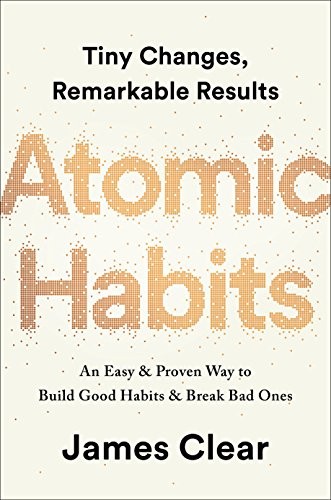
Cue, routine, reward. The three books that explain why customers come back without deciding to, and how to build the loop on purpose.
From:The Habit LoopAuthor:Clear + Duhigg + FoggDate:Feb 22, 2027Pages:3 works
A man walked into a Target outside Minneapolis and demanded to see a manager. His teenage daughter had been getting coupons in the mail for cribs and baby clothes and tiny onesies, and he wanted to know why a retail chain was encouraging her to get pregnant. The manager apologized, called a few days later to apologize again, and got an uncomfortable silence on the other end of the line. It turned out his daughter was due in August. The father was the last to know. Target's statisticians had noticed a shift in her buying habits, unscented lotion, certain supplements, a bigger purse, and had figured it out before her own family did. Charles Duhigg tells this story in The Power of Habit, and it is the best argument I know for taking habits seriously as a business asset instead of a soft, personal-growth topic.
Here is the thing nobody says out loud in a strategy meeting. Most of what a person does in a day is not a decision. It runs on autopilot. A cue fires, a routine kicks in, a reward lands, and the loop gets a little stronger and a little more automatic every time it completes. You do not decide to check your phone forty times a day. You do not decide to open the same three apps when you are bored. Something cued it, something rewarded it, and the deciding part of your brain went to lunch.
For a marketer, this changes what retention actually means. Retention is not persuading someone to come back. That framing assumes a decision is being made every time, weighed and re-weighed, and if you just argue better you win the rematch. But the businesses that keep people forever are not out there winning daily debates. They installed a loop. Duhigg hands you the neuroscience of how that loop forms and how to rewire one that already exists. James Clear, in Atomic Habits, turns it into four practical laws you can apply to a product, a habit, or a marketing calendar. BJ Fogg, in Tiny Habits, gives you the part almost everyone skips: how to start something so small it is physically impossible to fail at it.
Grab a glass of water instead of your usual thing, just to prove to yourself you still can, since we are about to talk about willpower being mostly a myth, and let's get into the loop.
◆ ◆ ◆
◆ Audio Overview
Prefer to listen?
The chapter as a listen: cue, craving, response, reward, and the tiny-behavior math underneath. Three habit codes, one loop.
The Habit Loop · Audio Overview
0:00/13:33
The Thesis
Durable retention and loyalty are not built through better persuasion, they are habits, and habits are loops: a cue, a routine, and a reward, running on repeat until they need no conscious thought at all. You install one on purpose by changing the cue and the environment around it, shrinking the routine until it cannot fail, and making sure the reward, even a tiny one, actually lands and gets felt.
The Habit Loop is the retention and lifecycle toolkit. Cite it for onboarding design, activation sequences, loyalty programs, notification and email cadence, and any time someone on the team asks why don't they come back.
◆ ◆ ◆
02The Architecture
Ten frameworks. The loop, the laws, and the smallest possible start.
Framework 01
The Habit Loop (Duhigg)
What it is
Every habit, according to Duhigg, runs on a three-part neurological loop: a cue that tells the brain which routine to run, the routine itself, which can be physical, mental, or emotional, and a reward that tells the brain this loop was worth keeping. Repeat the loop enough and the brain stops deliberating and starts craving.
Marketing use
Map your product's loop in plain language before you touch a single design element. What is the cue that brings someone back. What is the routine they run once they arrive. What is the reward that lands at the end. If you cannot name all three in one sentence, you do not have a retention strategy, you have a hope.
"Per Duhigg's habit loop, a cue triggers a routine that delivers a reward, and repetition of that sequence is what turns a behavior into a habit the brain no longer has to think about."
Framework 02
The Four Laws of Behavior Change (Clear)
What it is
Clear's four laws for building a habit: make it obvious, make it attractive, make it easy, make it satisfying. Break any one of the four and the habit weakens. Stack all four in the same direction and the habit becomes close to automatic.
Marketing use
Run any onboarding flow or retention touchpoint against all four laws in order. Is the next step obvious, or does the user have to hunt for it. Is it attractive, does it look like something worth doing. Is it easy, or does it demand too much effort too soon. Is it satisfying, does the user feel something the moment they finish it.
"Per Clear's four laws, a habit strengthens when it is made obvious, attractive, easy, and satisfying, and weakens the moment any one of the four is missing."
Framework 03
B=MAP, the Fogg Behavior Model
What it is
Fogg's formula: Behavior happens when Motivation, Ability, and a Prompt all occur at the same moment. High motivation can compensate for low ability and vice versa, but if the prompt fires and one of the other two is too low, the behavior simply does not happen, no matter how good the intention was.
Marketing use
When a feature is not getting used, do not assume it is a motivation problem and pile on more incentive. Check ability first, is the task actually hard to do right now, and check the prompt, is anything even reminding the user this option exists at this moment. Most stalled behaviors are ability or prompt failures wearing a motivation costume.
"Per Fogg's Behavior Model, B equals M, A, and P: a behavior only fires when motivation, ability, and a prompt converge at the same moment, and a missing prompt or an ability that is too low will stop it regardless of desire."
Framework 04
Identity-Based Habits (Clear)
What it is
Clear argues the most durable habits are not built around outcomes, they are built around identity. Every action is a vote for the type of person you believe yourself to be. Someone who identifies as a person who takes care of their health does not need to be talked into the gym, the gym is just what that identity does.
Marketing use
The strongest loyalty programs sell an identity before they sell a discount. A customer who thinks of themselves as the kind of person who shops here, rides here, reads this, needs less persuasion than one who is only comparing prices. Design the touchpoint to cast a vote for who the customer already wants to believe they are.
"Per Clear's identity-based habits, every repeated action is a vote for a self-image, and habits stick hardest when they confirm an identity the person already wants to hold."
Framework 05
Tiny Habits and Start Small (Fogg)
What it is
Fogg's core method: shrink the target behavior until it is so small it cannot fail, then anchor it immediately after an existing routine you already do without fail. Two push-ups after you brush your teeth. One sentence of a journal after you sit down at your desk. The tiny version, done consistently, grows on its own.
Marketing use
Stop asking a new user to adopt your whole product on day one. Find the two-minute version of the core action and make that the entire first-session goal. A single saved item, one completed field, one message sent. Momentum comes from repetition of something small, not from a single heroic first use.
"Per Fogg's tiny habits method, a behavior shrunk small enough to be nearly impossible to fail at, and anchored right after an existing routine, is more likely to become permanent than a bigger, better-intentioned version."
Framework 06
The Craving and the Cue
What it is
Duhigg's deeper mechanic underneath the loop: it is not the reward itself that drives repeat behavior, it is the craving for the reward, the anticipation that fires before the routine even starts. Once the brain learns to crave the outcome, the cue alone is enough to pull a person back in.
Marketing use
Design for anticipation, not just delivery. A notification that hints at something waiting, a streak that implies a reward for continuing, a preview of value before the full unlock. The craving is what gets someone to open the app before they have consciously remembered why they like it.
"Per Duhigg's account of craving, the anticipation of a reward, not the reward alone, is what pulls a person back into the routine once the loop has been learned."
Framework 07
Environment Design (Clear)
What it is
Clear treats environment as more powerful than willpower. Make the cues for good habits obvious and visible, and make the cues for bad habits invisible or effortful to reach. Willpower is a limited, exhaustible resource, environment runs in the background all day without getting tired.
Marketing use
Stop trying to nudge behavior with copy alone and start redesigning the environment the behavior lives in. Put the desired next action where the eye naturally lands. Remove friction from the path to the good habit and add friction to the path away from it. A well-placed default beats a well-written reminder.
"Per Clear's environment design principle, visible and convenient cues for a desired behavior, paired with hidden or effortful cues for the undesired one, shape action more reliably than willpower or persuasion."
Framework 08
The Golden Rule of Habit Change (Duhigg)
What it is
Duhigg's rule for changing an existing habit rather than building a new one from scratch: you cannot simply extinguish a bad habit, you have to keep the same cue and the same reward and swap out the routine in between. The loop stays intact, only the middle piece changes.
Marketing use
When a customer's existing habit is working against you, do not try to erase the cue, that fight rarely wins. Figure out what reward the old routine was actually delivering and offer a new routine, tied to the same cue, that delivers an equivalent or better reward. You are rerouting the loop, not deleting it.
"Per Duhigg's golden rule, a habit changes most reliably when the original cue and reward are kept in place and only the routine connecting them is replaced."
Framework 09
Celebration and Emotion (Fogg)
What it is
Fogg insists the moment right after the tiny behavior matters more than most people think: a small burst of genuine positive emotion, what he calls celebration, is what actually wires the habit into the brain. Skip the celebration and the behavior can repeat for weeks without ever becoming automatic.
Marketing use
Build a real, felt moment of acknowledgment right after the small win, not three screens later in a summary email. A checkmark animation, a specific line of praise, a visible streak ticking up. The emotion is not decoration, per Fogg it is the actual mechanism that converts a repeated action into a wired-in habit.
"Per Fogg's celebration principle, a small burst of genuine positive emotion immediately after a behavior is the mechanism that wires the habit in, and skipping it can leave a repeated action from ever becoming automatic."
Framework 10
Habit Stacking and the Two-Minute Rule (Clear)
What it is
Clear's habit stacking formula, after I do this existing habit, I will do this new one, anchors a new behavior to a routine that is already automatic instead of asking it to survive on its own. The two-minute rule shrinks any new habit down to a version that takes two minutes or less, so starting is never the barrier.
Marketing use
Anchor a new product habit to something the customer already does daily, checking a delivery status, opening a specific app, ending a workday. Then scale the ask down to its two-minute version first and let the fuller behavior grow out of that anchor once the small version is automatic.
"Per Clear's habit stacking and two-minute rule, anchoring a new behavior to an existing automatic one, and shrinking it to a two-minute version first, removes the two biggest barriers to a habit ever getting started."
◆ ◆ ◆
03Lexicon
Named terms a marketer should recognize on sight.
Habit loop
Duhigg's cue, routine, reward cycle underneath every automatic behavior. Map all three before designing any retention touchpoint.
Cue
The trigger that tells the brain which routine to run. Make the good cue obvious, the bad cue invisible.
Routine
The behavior itself, physical, mental, or emotional. Shrink it until it cannot fail.
Reward
The payoff that tells the brain the loop was worth repeating. Make it land and make it felt, not just delivered.
Four laws
Clear's obvious, attractive, easy, satisfying. Audit every touchpoint against all four.
B=MAP
Fogg's behavior model, motivation, ability, and prompt together. Diagnose stalled behavior as an ability or prompt gap first.
Identity habit
A repeated action as a vote for a self-image. Sell who the customer becomes, not just what they get.
Tiny habit
The version of a behavior too small to fail at. Start there, let it grow on its own.
Habit stacking
Anchoring a new behavior to an existing automatic one. After I do X, I will do Y.
Environment design
Shaping the surroundings so good cues are visible and bad cues are not. Beats willpower because it never gets tired.
◆ ◆ ◆
04Tactical Recipes
Plays you can run this week.
The Cue Map. Write down, in one sentence, the exact cue that is supposed to bring a customer back to your product. If you cannot name a specific trigger, time, location, or preceding event, you do not have a cue, you have a hope that someone remembers you.
The Two-Minute Onboarding. Take your current first-session flow and cut it down to the single smallest action that represents real value. If it takes longer than two minutes to reach, cut again.
The Reward Design. Identify the exact moment your product delivers its reward, and time it. If more than a few seconds pass between the routine and the felt payoff, the loop is too loose to stick.
The Habit Stack. Name one thing your best customers already do every day without fail. Write the sentence, after they do that, they will do this, and design the prompt to fire at that exact moment.
The Environment Fix. List the friction currently sitting between your customer and the desired action. Remove one piece of friction this week instead of writing one more reminder email about it.
The Identity Message. Rewrite your best customer testimonial or headline so it states who the customer becomes, not what the product does. People like us do this, not this product has these features.
The Celebration Trigger. Find the moment right after your customer's small win and add a specific, felt acknowledgment there, not three screens later. Test whether adding it changes whether the behavior repeats.
The Routine Swap. Pick a habit customers currently satisfy with a competitor or a workaround. Name the cue and the reward they are chasing, then design a new routine, tied to that same cue and reward, that routes through you instead.
The Retention Loop Audit. Once a quarter, walk your core product loop end to end and ask where it is loosest, an unclear cue, a routine that is too much work, or a reward that never quite lands. Fix the loosest link first.
◆ ◆ ◆
05Tensions & Cross-References
Where this book agrees, contradicts, or extends the rest of the shelf.
Extends
Hooked (Q4). Eyal's product habit loop, trigger, action, variable reward, investment, is the Duhigg and Fogg mechanics applied specifically to digital product design. Read this week for the underlying psychology, read Eyal for the product-build version of the same loop.
Grounds in
Kahneman (Q3). The habit loop is System 1 running the show. Once a cue fires a routine automatically, the slow, deliberate System 2 brain is not in the room anymore, which is exactly why habits feel involuntary from the inside.
Extends
MrBeast (Q3). The return habit, the reason a subscriber comes back to a channel without deciding to, is a habit loop with the thumbnail and title as the cue and the video's payoff as the reward. Retention on a channel is the same mechanism as retention on a product.
Pairs with
Berger (Q3). Berger's triggers, the environmental cues that keep a product or idea top of mind, are functionally the same as Duhigg's cue. Berger explains how to seed a trigger into someone's environment, this week explains what happens once it fires.
Pairs with
Ariely (Q3). The irrational routine, buying the same brand out of habit rather than re-evaluating price and quality every time, is Ariely's predictable irrationality wearing a habit loop's clothing. People are not lazy, they are running a loop that used to be a good decision and never got re-audited.
Tension with
the ethics of engineered habits. Everything in this chapter can be used to build a genuine habit of real value, or to manufacture a compulsion that serves the business and drains the customer. The tension is real and worth sitting with: design the loop to make the customer's life better on repeat, not to make it harder for them to stop. If you would be uncomfortable explaining the loop to the customer's face, do not ship it.
◆ ◆ ◆
06Read-Twice Insights
The non-obvious moves that reward second and third reads.
Most retention problems are diagnosed as motivation problems and are actually prompt problems. Per Fogg's model, teams reach for bigger incentives when the real issue is that nothing reminded the customer the option existed at the moment they had the ability to act.
The reward has to be felt, not just delivered. A discount that lands silently in an account teaches the brain nothing. A discount announced with a specific, felt moment of acknowledgment is what actually wires the loop, per Fogg's celebration principle.
You cannot delete a habit, you can only reroute it. Duhigg's golden rule means the fight against a competitor's hold on a customer is not about erasing their routine, it is about offering a better routine tied to the same cue and reward they are already chasing.
The first session should be embarrassingly small. Fogg's tiny habits logic says the two-minute version of your product, done once, beats the full-featured tour that gets abandoned halfway through and never gets a second try.
Identity outsells features because features invite comparison and identity does not. Per Clear, a customer defending an identity, this is the kind of person who shops here, is not shopping the competitor's spec sheet, because the purchase was never really about the spec sheet.
A habit loop with a weak link is worse than no loop at all. A vivid cue with no easy routine, or a satisfying routine with a reward that never lands, trains the customer to expect a payoff that does not arrive, which teaches them to stop trusting the cue.
◆ ◆ ◆
07Citation-Grade Quotes
Pull-able lines for output. Click any quote to copy it formatted for social.
"You do not rise to the level of your goals. You fall to the level of your systems."
James Clear, Atomic Habits
"Habits are not destiny. Habits can be changed if we understand how they work."
Charles Duhigg, The Power of Habit
"To create a new habit, make it tiny to start."
BJ Fogg, Tiny Habits
"Every action you take is a vote for the type of person you wish to become."
James Clear, Atomic Habits
"The cue and reward become neurologically intertwined until a sense of craving emerges."
Charles Duhigg, The Power of Habit
◆ Apply This Week
One loop. Three parts, honestly named.
Pick the one behavior you most want a customer to repeat without you having to ask them again: opening the app, reordering, opening the email, coming back to the site.
Name the loop out loud, in plain words, no product jargon.
The cue: What specific trigger, time, place, or preceding event is supposed to bring them back? If you cannot name one, that is the fix to make first.
The two-minute version: What is the smallest possible version of the routine, the one so small it is nearly impossible to fail at? Cut your current version down to that size.
The reward: What is the felt payoff, and how many seconds pass between the routine finishing and that payoff landing? Shrink the gap and make it a moment, not a data point.
Write all three in one sentence. If the sentence has a weak or missing part, that is your loop's loosest link, and it is the one thing worth fixing before you touch anything else this week.
That is week twenty-six. One loop. Three parts, honestly named. Build it on purpose instead of hoping it happens. See you Monday.
◆ Going Deeper
The source: The Habit Loop
CLEAR + DUHIGG + FOGG · THE SCIENCE OF HABIT
Clear for the four laws, Duhigg for the neuroscience of the loop and how to change one, Fogg for the smallest possible start. Three books, one operating system for why customers come back without deciding to.
Affiliate links. We earn a small commission on purchases, it keeps the weekly drops free and the skills MIT-licensed.
◆ Get The Skill
Want the Habit Loop Audit done for you?
The Habit Loop skill maps the cue first, then checks whether the routine is small enough to survive first contact with a real user, then whether the reward actually lands and gets felt, and returns the single loosest link in your retention loop along with the fix. Free. MIT licensed.
Launch (onboarding and activation sequencing, the two-minute first session), Diagnose (why retention or repeat usage is flat), Write (notification copy, celebration moments, loyalty and identity messaging).
Pairs with
Hooked (the product-specific version of the same loop); Kahneman (System 1 running the automatic routine); Berger (the trigger that seeds the cue in the environment); MrBeast (the return habit on a channel); Ariely (the irrational, unre-audited routine).
Output shape
When the skill leans on the Habit Loop, it should name the cue first, then check whether the routine is shrunk to its smallest survivable version, then check whether the reward is timed close enough to land and get felt, and only then look at identity, environment, or habit-stacking opportunities. Diagnose in that order.
The Silent DiagnosticCan we name the cue, the routine, and the reward in one honest sentence, and is any one of the three too weak, too slow, or too big to survive contact with a real, distracted customer?