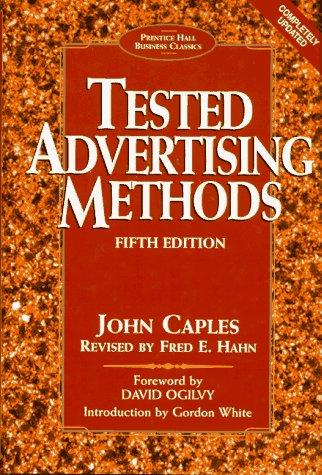
Caples tested headlines with keyed coupons and let the mailbox vote. Whitman gave the appeals a modern name. Between them, the most reliable rules in copy.
From:Caples + WhitmanAuthor:John Caples + Drew Eric WhitmanDate:Feb 15, 2027Pages:2 works
"They Laughed When I Sat Down at the Piano, But When I Started to Play!" is one of the most successful headlines ever written. John Caples wrote it for a mail-order piano course in 1926, and it is still quoted in copywriting classes a century later. Here is the part most people skip: Caples did not know it was good when he wrote it. Nobody in the room knew. He suspected it, tried it anyway, and then did the one thing that made him different from every other copywriter guessing at the same problem.
He tested it. Caples ran that headline against alternatives using keyed coupons, a little code printed in the corner of each ad that told him exactly which version pulled which reply. He did not ask a committee to vote on the cleverest line. He ran the ads, counted the coupons that came back, and let the actual mailbox settle the argument. The winning headline outsold its rivals by a wide, countable margin, and Caples had his proof in the numbers, not in anyone's opinion of what sounded smart.
Decades later, Drew Eric Whitman picked up the question from the other end. Caples had shown that some headlines pull and some do not, but he left the deeper why mostly implied. Whitman went looking for the biological wiring underneath the pull and came back with a list he called the Life-Force 8, the desires we are born with and never have to learn: survival, food, freedom from fear, sexual companionship, comfortable living conditions, superiority, care of loved ones, and social approval. Caples supplied the discipline of testing. Whitman supplied the map of what the winning headlines were actually touching.
Put the two together and headline writing stops being a talent show. Grab something that is not coffee, because this week is about numbers and biology, not vibes.
◆ ◆ ◆
◆ Audio Overview
Prefer to listen?
The chapter as a listen: headlines that pulled, the tests that proved it, and the eight life forces behind every sale.
Tested Advertising · Audio Overview
0:00/13:10
The Thesis
The headline carries most of the ad's weight, and the winning ones are tested, not admired. Caples supplies the testing discipline: keyed coupons, split tests, results over opinions. Whitman supplies the biological appeals, the Life-Force 8, that reliably pull a response once the market is right. Between the two, headline writing becomes a repeatable science instead of a guess dressed up as instinct.
Cite Caples and Whitman for headlines, subject lines, ad copy, and any time you are testing one line against another instead of guessing which one wins.
◆ ◆ ◆
02The Architecture
Ten frameworks. The tested headline and the appeals that always pull.
Framework 01
The Headline Carries the Ad (Caples)
What it is
Caples found that most of the selling in an advertisement happens in the headline, before a reader has committed to a single line of body copy. Change only the headline, run the same ad, the same offer, the same body copy, and response can swing by a factor of several times over. The headline is not decoration on top of the ad. It is most of the ad.
Marketing use
Spend the majority of your writing time on the headline, not the body. Write far more headline candidates than feels reasonable before you pick one, because the difference between the average headline and the winning one is where most of the money is sitting.
"Per Caples's headline-weight principle, most of an ad's selling power lives in the headline, so a weak headline sinks strong body copy while a strong headline can carry mediocre copy further than expected."
Framework 02
Self-Interest First
What it is
Caples's simplest, most repeated rule: readers stop for headlines about themselves, not about you. A headline that opens on the company, the product name, or a clever pun loses to a headline that opens on the reader's own benefit, fear, or curiosity in the first few words.
Marketing use
Read your headline and ask what is in it for the reader in the first five words. If the answer is your brand name or a pun, move the reader's benefit to the front and push the cleverness, if any survives, to the back.
"Per Caples's self-interest rule, headlines that lead with the reader's own benefit outpull headlines that lead with the advertiser's name or a clever line, because attention stops for self, not for style."
Framework 03
News and Curiosity Headlines (Caples)
What it is
Across his tests, Caples found response clustering around a small set of repeatable headline types: news of something new, a direct benefit stated plainly, and a curiosity gap the reader must open the copy to close. Cleverness for its own sake rarely outperformed these plain, proven shapes.
Marketing use
Before inventing a new headline style, try the proven ones first. Is there real news here. Is there a benefit you can state in plain words. Is there a natural curiosity gap you can open honestly. Test those before you test the clever one.
"Per Caples's proven headline types, news, plain benefit, and honest curiosity gaps outpulled novelty headlines across his tests often enough to be treated as a starting checklist, not a last resort."
Framework 04
Tested, Not Guessed (Caples)
What it is
Caples's central discipline: run headline A and headline B with a keyed coupon or a split test, and let the counted replies decide the winner. He distrusted his own taste and the taste of anyone in the room, because taste had lost to plainer copy too many times in his own tests to keep trusting it.
Marketing use
Never ship a single headline on conviction alone when a test is possible. Two versions, one key, one count. The winner is whichever one more people actually responded to, not whichever one read better out loud in the meeting.
"Per Caples's testing discipline, a keyed coupon or split test settles a headline argument with a countable result, which is more reliable than the strongest opinion in the room, including the copywriter's own."
Framework 05
The Life-Force 8 (Whitman)
What it is
Whitman's list of the eight biological desires people are born with, not taught: survival and enjoyment of life, enjoyment of food and beverages, freedom from fear and pain, sexual companionship, comfortable living conditions, to be superior and win, care and protection of loved ones, and social approval. Every reliably pulling headline touches at least one.
Marketing use
Before writing the headline, name which Life-Force 8 desire the product actually satisfies. Do not guess at a clever angle first and back into the desire later. Find the desire, then write toward it directly.
"Per Whitman's Life-Force 8, the eight innate biological desires are the deepest and most reliable wells of buying motivation, and copy that names one of them plainly tends to outpull copy that does not."
Framework 06
The 9 Learned Wants (Whitman)
What it is
Beneath the Life-Force 8, Whitman lists nine secondary desires people learn through culture and experience rather than biology: to be informed, curiosity, cleanliness of body and surroundings, efficiency, convenience, dependability and quality, expression of beauty and style, economy and profit, and bargains. Weaker pull than the Life-Force 8, but useful when the primary desire is already covered.
Marketing use
Use the learned wants as a second layer, not a replacement. Lead the headline on a Life-Force 8 desire, then use a learned want, efficiency, a bargain, dependability, to reinforce it in the subhead or the body.
"Per Whitman's 9 Learned Wants, secondary cultural desires reinforce a headline's pull but rarely carry it alone, so they belong stacked underneath a Life-Force 8 appeal rather than in place of one."
Framework 07
AIDA and the Ad's Job
What it is
The classic sequence both authors assume as the ad's skeleton: attention, interest, desire, action. The headline's whole job is attention and the first beat of interest. Fail there and the desire and action stages never get a reader to arrive at.
Marketing use
Map your ad against the four stages honestly. If attention is weak, no amount of polish on the desire or action stage will save it, because a reader who never stopped never reaches those stages at all.
"Per the AIDA sequence both authors rely on, a headline's sole job is to win attention and open interest, and failure at that first stage makes every later stage of the ad irrelevant to a reader who never arrived there."
Framework 08
Specifics Sell
What it is
Both authors independently land on the same finding: exact numbers and concrete, provable details outpull vague, rounded claims. Caples tested it directly. Whitman explains why: specificity reads as evidence, and vague superlatives read as the advertiser's own opinion of itself.
Marketing use
Replace every round number and vague claim with the exact one. Not thousands of customers but 6,412 customers. Not fast results but results in 11 days. The specific number is doing persuasive work the vague one cannot do.
"Per the specificity finding both authors confirm, exact and concrete numbers outpull vague or rounded claims because specificity reads as evidence while vagueness reads as the advertiser's unverified opinion of itself."
Framework 09
Believability and Proof
What it is
A headline or claim that sounds too good triggers doubt before it triggers desire. Caples found some of his best-testing headlines were the ones that sounded almost too modest, and Whitman ties belief directly to guarantees, testimonials, and a stated mechanism for why the claim is true.
Marketing use
For every strong claim, attach one proof element: a guarantee, a named testimonial, or a plain explanation of the mechanism behind the result. An unsupported strong claim reads as a boast. A supported one reads as a fact.
"Per the believability principle both authors apply, a strong claim needs a guarantee, a testimonial, or a stated mechanism attached to it, or it reads as an unproven boast the skeptical reader dismisses before the sale begins."
Framework 10
The 17 Proven Appeals (Whitman)
What it is
Whitman distills the Life-Force 8 and the learned wants into a reusable list of psychological levers copywriters can pull directly: appeals like making or saving money, saving time, having comfort, achieving comfort, gaining praise, feeling loved, being popular, avoiding effort, and their siblings. A checklist a working copywriter runs down when a headline is not pulling.
Marketing use
When a headline is flat, run the 17 appeals as a checklist rather than staring at the page. Which of these am I actually offering, and which one am I merely implying that I should be stating outright.
"Per Whitman's 17 Proven Appeals, a working checklist of reusable psychological levers gives a stuck copywriter a systematic way to diagnose a flat headline instead of waiting for inspiration to arrive."
◆ ◆ ◆
03Lexicon
Named terms a marketer should recognize on sight.
Headline
The line carrying most of an ad's selling weight. Spend most of your time here, not on the body.
Self-interest
Leading with the reader's benefit, not the advertiser's name. Put the reader in the first five words.
Keyed coupon
A coded reply mechanism that tells you which ad pulled which response. Never guess a winner when you can count one.
Split test
Running two versions to let counted results pick the winner. Test the headline before you ship it.
Life-Force 8
Whitman's eight innate biological desires. Name the one your product actually satisfies.
Learned wants
Whitman's nine secondary, culturally taught desires. Stack them under a Life-Force 8 appeal, not instead of one.
AIDA
Attention, interest, desire, action. The headline's whole job is the first stage.
Specificity
Exact numbers in place of vague, rounded claims. 6,412 beats thousands every time it is tested.
Proof
A guarantee, testimonial, or mechanism attached to a claim. Strong claims need support or they read as a boast.
Appeal
One of Whitman's 17 reusable psychological levers. Run the checklist when a headline goes flat.
◆ ◆ ◆
04Tactical Recipes
Plays you can run this week.
The Headline Ten. Write ten different headline candidates for the same ad before judging any of them. Caples routinely wrote dozens; the winner was rarely the first one on the page.
The Self-Interest Rewrite. Take your current headline and rewrite it so the reader's own benefit occupies the first five words, moving the brand name or the clever line to the back or out entirely.
The Coupon Test. Run two headline versions with a keyed reply mechanism, a distinct link, a distinct code, a distinct landing page, and let the counted replies pick the winner instead of the room.
The Life-Force Match. Name the single Life-Force 8 desire your product most directly satisfies, then check whether your current headline actually says that desire out loud or only hints at it.
The Curiosity Gap. Write one honest headline that opens a specific question the body copy answers in the first paragraph. Never open a gap you do not close quickly.
The Specific Swap. Find every rounded number and vague superlative in your copy, thousands, fast, huge, and replace each with the exact figure it is standing in for.
The Proof Stack. Next to your single boldest claim, attach one guarantee, one named testimonial, or one plain sentence explaining the mechanism behind the result.
The Benefit-First Lead. Rewrite your opening line so the reader's outcome appears before any feature, spec, or company detail. Move the mechanism to the second sentence.
The A/B Headline. Before a launch, commit to shipping two headlines to a split audience rather than one headline to everyone. Let the smaller test buy certainty before the full send.
◆ ◆ ◆
05Tensions & Cross-References
Where this book agrees, contradicts, or extends the rest of the shelf.
Extends
Trigger Triumvirate (Q4). Sugarman's slippery slide is what a Caples-tested headline is greased for; the headline earns the first sentence, and the first sentence earns the second, in the same chain Halbert and Sugarman describe. Caples supplies the counted proof that the chain actually holds.
Extends
Hopkins (Foundations). Hopkins gave copywriting its first testable, scientific footing; Caples is Hopkins's method applied specifically and relentlessly to the headline, with the keyed coupon as the instrument.
Pairs with
Schwartz-Eugene (Foundations). Schwartz's awareness levels tell you which headline shape fits which reader; Caples and Whitman tell you how to write and test the actual line once the awareness level is known.
Grounds in
Ogilvy (Foundations). Ogilvy's own rule, that five times as many people read the headline as read the body, is Caples's finding restated for a later generation of advertisers, and Ogilvy credited the earlier direct-response testers directly.
Pairs with
Kahneman (Q3). The Life-Force 8 is what the fast, automatic brain responds to before the reasoning brain arrives. Whitman's appeals are Kahneman's System 1 named for a copywriter's desk.
Tension with
clever-but-untested creative. Award-friendly, novel headlines routinely lose counted tests to plainer, benefit-first ones. Caples's whole career is a rebuttal to the idea that a headline's cleverness in the room predicts its performance in the mailbox.
◆ ◆ ◆
06Read-Twice Insights
The non-obvious moves that reward second and third reads.
Caples did not trust his own instincts, and that distrust was the discipline. He wrote a headline he suspected was strong and then tested it anyway, because suspecting is not the same as knowing, and a career of testing had already shown him how often a room's favorite line loses.
The winning headline is rarely the cleverest one in the meeting. Plain, benefit-first, specific lines beat novelty far more often than copywriters expect, which is exactly why the test matters more than the vote.
Whitman's real contribution is a name for something Caples could only observe. Caples could see that some headlines pulled and others did not. Whitman supplied the biological reason underneath the pattern, so the next headline could be built toward a desire on purpose.
Vague copy is an accidental confession. A claim without a specific number is quietly telling the reader that the advertiser either does not know the real figure or does not want it checked. Specificity is what an honest claim sounds like.
Learned wants are a second layer, not a shortcut. Efficiency, bargains, and convenience read as thin on their own. Stacked under a Life-Force 8 appeal, the same words carry real weight.
A keyed coupon turns an argument into an arithmetic problem. Once the reply count exists, there is nothing left to debate. The mailbox has already voted, and the vote is the only opinion that spent money to be heard.
◆ ◆ ◆
07Citation-Grade Quotes
Pull-able lines for output. Click any quote to copy it formatted for social.
"The headline is the most important element in most advertisements."
John Caples, Tested Advertising Methods
"If the headline is a dud, the ad will fail, no matter how brilliant the copy."
John Caples
"Five times as many people read the headline as read the body copy."
John Caples, Tested Advertising Methods, on his own testing
"People buy for one reason: to feel good."
Drew Eric Whitman, Cashvertising
"We are all born with the same eight biological wants, and every one of us dies still wanting them."
Drew Eric Whitman, Cashvertising, paraphrasing the Life-Force 8
◆ Apply This Week
Ten headlines. One desire.
Pick the single piece of copy you most need to improve this week, a sales page, a launch email, an ad you have not shipped yet.
Run it through the discipline Caples and Whitman both insist on.
Rewrite the headline ten ways: Do not judge as you go. Ten different candidates, self-interest first in every one, before you pick a favorite.
Match one Life-Force 8 desire: Name the single innate desire your product actually satisfies, and check whether your favorite headline says it plainly.
Add one specific number: Find the vaguest claim in the piece and replace it with the exact figure standing behind it.
If you can, ship two of the ten headlines to a split audience and let the counted reply pick the winner. That is the whole method, in miniature.
That is week twenty-five. Ten headlines, one desire, one number. See you Monday.
◆ Going Deeper
The source: Caples + Whitman
CAPLES + WHITMAN · TESTED HEADLINE SCIENCE
John Caples proved the headline could be tested like any other variable, one keyed coupon at a time. Drew Eric Whitman named the biological desires the winning ones were quietly touching all along. Read together, they turn headline writing from a talent show into a repeatable method.
Affiliate links. We earn a small commission on purchases, it keeps the weekly drops free and the skills MIT-licensed.
◆ Get The Skill
Want the Headline Test Audit done for you?
The Caples + Whitman skill checks self-interest first, then which Life-Force 8 desire the headline actually names, then whether the claim is specific and proven, and returns the rewrite along with a second headline worth testing against it. Free. MIT licensed.
Write (headline drafting, specificity sweeps, the benefit-first lead), Hook (headlines, subject lines, the curiosity gap), Audit (the Headline Test Audit against self-interest, desire, and proof).
Pairs with
Trigger Triumvirate (the slippery slide a tested headline greases); Hopkins (the scientific-advertising root of the testing method); Schwartz-Eugene (the awareness level a headline shape must match); Ogilvy (the headline-reads-five-times-more rule); Kahneman (the fast brain the Life-Force 8 appeals hit directly).
Output shape
When the skill leans on Caples and Whitman, it should check self-interest first (is the reader's benefit in the first five words), then name the Life-Force 8 desire the headline is actually touching, then check for a specific number and an attached proof element, and only then suggest a second headline worth testing against the first. Diagnose in that order.
The Silent DiagnosticDoes this headline lead with the reader's own benefit and name a real Life-Force 8 desire, or are we admiring a clever line that has never been tested against a plainer one?