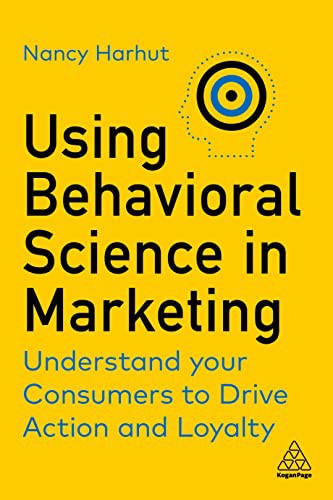
Behavioral Science, Off the Whiteboard and Into the Brief
The academics named the biases. These three put them in the subject line, the landing page, and the campaign brief where they earn their keep.
From:The Behavioral OperatorsAuthor:Harhut + Leach + YarrowDate:Dec 28, 2026Pages:3 works
A brief walked into a Tuesday meeting wearing a suit it did not own. Every slide cited a study. Loss aversion, check. Social proof, check. A little Zeigarnik effect in the subject line for texture. The room nodded along, somebody said "this tested beautifully," and everybody meant the deck, not the ad. Three weeks later the campaign ran and nothing much happened, because the brief had been written for the version of a customer who reads footnotes, weighs tradeoffs, and makes a considered decision at eleven in the morning with a full cup of something warm in hand. That customer does not exist. The one who does exist is scrolling at 11:47 PM, half a decision already made before the ad even loaded.
Nancy Harhut spent her career as a direct-response copywriter watching this exact gap, and she named it plainly: most people are not deciding, they are running on autopilot, and marketing that is written for the slow, deliberate brain misses the brain that actually shows up. Will Leach adds the piece Harhut's copywriter's eye does not need but your brief absolutely does, the emotional weather the person is standing in when they see your message. He calls it the mindstate, and it changes which biases even fire. And Kit Yarrow, who has spent decades studying shoppers up close, insists you cannot skip the third question: who is this person now. Not who they were in 2015 when your persona deck was written, but who they are today, more anxious, more fiercely individual, and a lot less inclined to take your word for anything.
None of that is an argument against strategy. It is an argument for finishing it. A behavioral bias is a fact about how brains work. It is not, by itself, a campaign. Somebody has to take Kahneman's System 1, tell it what emotional key it is standing in, and aim it at a person who has genuinely changed since the last time you researched them. That is the job these three do. Harhut hands you the fast-brain triggers. Leach hands you the frame those triggers live inside. Yarrow hands you the accurate portrait of who is on the other end of the send button.
This is the week the whiteboard biases become line items in the brief. Pour something that is not coffee, because we are not staying academic for long.
◆ ◆ ◆
◆ Audio Overview
Prefer to listen?
The chapter as a listen: the operators who turned behavioral science into campaign checklists. Practical, immediate, testable.
The Behavioral Operators · Audio Overview
0:00/13:14
The Thesis
Behavioral science only pays off the moment it leaves the whiteboard and lands in a subject line, a landing page, or a campaign brief. Harhut operationalizes the fast, automatic brain into specific copy moves. Leach operationalizes the emotional frame the buyer is standing in when the message arrives. Yarrow operationalizes who that buyer has actually become. Put together, you get ten tactics you can ship this week, not ten terms you can cite in a meeting.
Cite the Behavioral Operators for briefs, emails, landing pages, and any campaign that needs a behavioral edge, not a behavioral vocabulary lesson. It is the fast-brain, mindstate, and modern-buyer check before copy ships.
◆ ◆ ◆
02The Architecture
Ten frameworks. The fast brain, the emotional frame, the modern buyer.
Framework 01
Autopilot Decisions (Harhut)
What it is
Most purchase decisions are made fast, automatically, and without the deliberate weighing people believe they are doing. Harhut's core claim: write for the brain that is actually driving, the quick and instinctive one, not the slow and rational one that shows up in focus groups and post-purchase interviews.
Marketing use
Before you polish an argument, ask whether the copy is aimed at a reasoning process that will not occur. Replace the case you would make to a judge with the cue you would give a person mid-scroll. Short, automatic, obvious what to do next.
"Per Harhut's autopilot principle, copy written for careful deliberation misses the fast, automatic brain that actually makes most purchase decisions."
Framework 02
Mindstates and Regulatory Focus (Leach)
What it is
A mindstate is the emotional state a person is in when your message arrives, and it is not fixed, it shifts by moment and context. Leach borrows regulatory focus theory: people lean toward promotion, chasing a gain, or prevention, guarding against a loss, and the same offer needs a different frame for each.
Marketing use
Diagnose the mindstate before you write the hook. A promotion-focused buyer wants "get more," a prevention-focused buyer wants "do not lose what you have." The same discount, framed both ways, converts two different audiences and can flop hard when you frame it for the wrong one.
"Per Leach's mindstate framework, the same offer must be framed for promotion, chasing a gain, or prevention, guarding a loss, because the wrong frame for the buyer's mindstate falls flat."
Framework 03
The Endowed Progress Effect (Harhut)
What it is
People are more motivated to finish a task the closer they feel to the finish line, even when that closeness is manufactured. A punch card that starts with two stamps already filled in gets completed faster than an identical card starting empty, because a head start feels like sunk progress worth protecting.
Marketing use
Give the customer a running start wherever completion matters: a progress bar that opens partly full, a loyalty program that starts at step two, an application that pre-fills what you already know. The head start is not a trick, it is a real accelerant on follow-through.
"Per Harhut's endowed progress effect, a manufactured head start toward a goal measurably lifts the rate at which people complete it."
Framework 04
Loss Aversion Framing (Harhut)
What it is
Losses are felt roughly twice as intensely as equivalent gains. Harhut treats this as a copy lever, not just a finding: the threat of losing something already implicitly "owned" (a rate, a spot, a bonus) moves people harder than the promise of gaining the same thing fresh.
Marketing use
Reframe the benefit as a cost of inaction wherever it is honest to do so. Not "save twenty percent" but "do not pay twenty percent more after Friday." The dollar amount is identical. The psychological weight is not.
"Per Harhut's loss aversion framing, presenting a benefit as an avoidable loss carries more persuasive weight than presenting the identical benefit as a gain."
Framework 05
Social Proof Mechanics (Harhut)
What it is
Social proof only works when it is specific, similar, and salient. A vague "trusted by thousands" barely registers. A named, similar, nearby example (someone in your city, your role, your exact situation bought this an hour ago) reads as evidence a generic number never will.
Marketing use
Swap generic social proof for specific social proof: not "join thousands of marketers" but "join the 214 marketers at companies your size who signed up this month." Similarity to the reader is doing more work than the raw size of the crowd.
"Per Harhut's social proof mechanics, proof persuades in proportion to how specific, similar, and salient it is to the reader, not how large the underlying number is."
Framework 06
The Zeigarnik Effect
What it is
Unfinished tasks and unanswered questions occupy attention far more persistently than resolved ones. An open loop, a story cut off before the ending, a subject line that poses a question, holds the mind in a low-grade state of wanting closure until it gets it.
Marketing use
Design one genuine open loop per send: a subject line that raises a question the email answers, a page that promises the payoff two scrolls down. The device only works if you close every loop you open. An unresolved tease starts reading as a trick the second time you use it.
"Per the Zeigarnik effect, unresolved tasks and open questions hold attention more persistently than resolved ones, which is why an open loop pulls a reader forward if it is honestly closed."
Framework 07
Cognitive Fluency
What it is
Anything easy to process (simple language, clean layout, a familiar font, a repeatable rhythm) gets unconsciously coded as more true, more safe, and more likable than the identical content presented in a harder-to-process form. Fluency is a shortcut the brain takes for trustworthiness.
Marketing use
Cut the sentence, simplify the layout, pick the font people do not have to work to read. A cluttered page or a convoluted claim pays a truth tax before a single fact is even evaluated. Make the easy read do some of the persuading.
"Per the cognitive fluency effect, information that is easier to process is judged unconsciously as more true and more trustworthy, independent of its actual content."
Framework 08
Priming the Mindstate (Leach)
What it is
Leach argues you can set the emotional frame a person is in before you make the ask, the way a scent, an image, or an opening line quietly primes what follows. Prime the wrong emotion and even a strong offer lands in the wrong mindstate and underperforms.
Marketing use
Open on an image, headline, or story that puts the reader into the mindstate your offer needs. A prevention-focused warning primes caution before a security pitch. A promotion-focused win primes ambition before a growth pitch. Set the emotional room before you walk the offer into it.
"Per Leach's priming principle, the emotional frame set immediately before an offer governs how receptively that offer is received, so the prime should be chosen deliberately, not left to chance."
Framework 09
The New Consumer Mind (Yarrow)
What it is
Yarrow's research finds today's consumer is measurably more anxious, more fiercely individual, and more distrustful of institutions and advertising than the consumer marketing personas were built around a decade ago. Technology has reshaped not just how people shop but the emotional baseline they shop from.
Marketing use
Refresh the assumption underneath your persona, not just the persona's job title and channel habits. Assume more skepticism toward claims, more desire to be treated as an individual rather than a segment, and more emotional volatility than your old research captured. Old personas ship copy built for a person who has moved on.
"Per Yarrow's research on the new consumer mind, today's buyer is more anxious, more individual, and more distrustful than the persona assumptions built a decade ago, and copy built on the old assumptions is aimed at someone who no longer exists."
Framework 10
Behavioral Design of the Moment (Harhut, Leach, Yarrow)
What it is
All three converge on one working method: do not try to cram every bias into a single asset. Pick the one bias most likely to move this specific moment, name the mindstate the reader is in, and design the entire touchpoint around that single behavioral lever.
Marketing use
Before you write, choose one bias on purpose, loss aversion for a renewal reminder, endowed progress for an onboarding flow, specific social proof for a cold landing page, and build the whole moment around it. A brief carrying six biases at once usually lands none of them.
"Per the behavioral design principle Harhut, Leach, and Yarrow all converge on, a single moment is better served by one deliberately chosen bias, matched to the reader's mindstate, than by a checklist of every bias at once."
◆ ◆ ◆
03Lexicon
Named terms a marketer should recognize on sight.
Autopilot
The fast, automatic decision mode most purchases actually run on. Write for the brain that shows up, not the one in the focus group.
Mindstate
The emotional state a person is in when the message arrives. Diagnose it before you write the hook.
Regulatory focus
Promotion (chasing a gain) versus prevention (guarding a loss). Frame the same offer differently for each.
Endowed progress
A manufactured head start that lifts completion. Start the bar partly full.
Loss aversion
Losses felt roughly twice as hard as equivalent gains. Frame the benefit as an avoidable cost.
Zeigarnik effect
Unfinished tasks hold attention longer than finished ones. Open one loop, then close it.
Cognitive fluency
Easy to process reads as more true and more safe. Simplify before you persuade.
Priming
Setting the emotional frame before the ask arrives. Choose the prime on purpose.
Social proof (specific)
Proof that persuades because it is specific, similar, and salient. Name a number and a nearby buyer, not a crowd.
Behavioral brief
A brief built around one deliberately chosen bias, not a checklist of all of them. Pick the lever before you write.
◆ ◆ ◆
04Tactical Recipes
Plays you can run this week.
The Autopilot Rewrite. Take a paragraph built like a legal argument and cut it down to the single cue a scrolling reader needs: what to do next, made obvious in one line.
The Mindstate Pick. Before writing the hook, name the reader's likely mindstate, promotion or prevention, in one sentence. Write the hook to match it, not the offer's features.
The Head-Start Bar. Find one place a customer completes a multi-step process (onboarding, an application, a loyalty program) and open the progress indicator partly filled instead of empty.
The Loss Frame. Take a gain-framed benefit line ("save 20 percent") and rewrite it as an avoidable loss ("stop paying 20 percent more after Friday"). Same math, different weight.
The Specific-Proof Swap. Replace a vague social proof line ("trusted by thousands") with a specific, similar, salient one: a real number, a role like the reader's, a recent timeframe.
The Open-Loop Subject Line. Write a subject line that raises one genuine question the email body answers. Confirm the body actually closes the loop before you send.
The Fluency Pass. Read your landing page or email out loud. Cut every sentence that makes you stumble, and simplify the layout until the eye has nowhere to snag.
The Priming Image. Choose the header image, opening line, or first scene on purpose to set the mindstate (caution or ambition) your offer needs, then check the offer against that frame.
The One-Bias Brief. Before the team writes anything, name the single bias this asset will lean on. If the brief lists more than one, cut it down to one before copy starts.
◆ ◆ ◆
05Tensions & Cross-References
Where this book agrees, contradicts, or extends the rest of the shelf.
Grounds in
Kahneman (Q3). Autopilot and the fast brain are System 1 in Harhut's working vocabulary. Kahneman supplies the substrate; Harhut supplies the copy move that respects it.
Operationalizes
Cialdini (Q2). Cialdini named social proof as a principle of influence; Harhut's specific, similar, salient rule is the tactical upgrade that makes the principle actually convert instead of reading as filler.
Pairs with
Sutherland (Q3). Sutherland's psycho-logic argues context and framing change the meaning of a thing without changing the thing. Leach's mindstate priming is that same move applied to a single send.
Extends
The Trigger Triumvirate (Q4). Halbert and Sugarman gave you the in-copy triggers, curiosity, proof, urgency. The Behavioral Operators name which underlying bias each trigger is borrowing from and add the mindstate check the Triumvirate does not.
Sets up
Shotton (Q4, forward reference). Where these three name the biases and hand you the frame, Shotton's field-tested case studies show the same biases proven in live A/B tests. Read this week for the operating method, read Shotton for the receipts.
Tension with
Replication-crisis caution. Not every popular bias survives a rigorous re-test. Use the biases with a track record that holds up under scrutiny, loss aversion and social proof among them, and treat exotic, single-study effects as hypotheses to test, not laws to ship on faith.
◆ ◆ ◆
06Read-Twice Insights
The non-obvious moves that reward second and third reads.
A brief that cites five biases usually ships zero of them well. Harhut, Leach, and Yarrow all converge on the same discipline: pick one lever per moment. A checklist of biases crammed into one asset dilutes each one below the threshold where it actually moves behavior.
The mindstate changes which biases even apply. A loss frame that crushes it with a prevention-focused audience can flatten with a promotion-focused one. Leach's real contribution is not a new bias, it is the reminder that the same trigger needs a different setting depending on the emotional room the reader is standing in.
Old personas are aimed at a consumer who moved on. Yarrow's research is a warning most teams do not act on: the anxiety, distrust, and hunger for individual treatment she documents did not exist at the same intensity when most persona decks were last updated.
A manufactured head start is not a trick, it is a real accelerant. The endowed progress effect works even when people know the two starter stamps were free. Knowing the mechanism does not cancel the mechanism, which is true of most of the levers in this chapter.
Fluency is doing persuasive work before your argument even starts. A cluttered page pays a truth tax nobody notices consciously. Simplifying the layout is itself a form of persuasion, not just a design nicety.
Specific beats big, every time, in social proof. A crowd of thousands persuades less than one buyer who looks like the reader. Size is a vanity metric in social proof copy; similarity is the metric that converts.
◆ ◆ ◆
07Citation-Grade Quotes
Pull-able lines for output. Click any quote to copy it formatted for social.
"People are not rational. They are rationalizing."
Nancy Harhut, Using Behavioral Science in Marketing
"Most of the decisions your customers make happen on autopilot, long before the deliberate brain gets a vote."
Nancy Harhut, Using Behavioral Science in Marketing
"A head start that is entirely manufactured still moves people to finish, because progress felt is progress owned."
Nancy Harhut, Using Behavioral Science in Marketing
"The same offer, framed for the wrong mindstate, is not a weaker offer. It is the wrong offer."
Will Leach, Marketing to Mindstates
"Today's consumer is not the one your research captured a decade ago: more anxious, more individual, and far less willing to take a brand's word for it."
Kit Yarrow, Decoding the New Consumer Mind
◆ Apply This Week
One bias. One mindstate. One cut.
Pull the next asset on your calendar, whatever ships this week: an email, a landing page, a brief still in draft.
Run it through three moves before it goes out the door.
Pick one bias: Name the single behavioral lever this asset should lean on. If your notes list more than one, cut the rest.
Name the mindstate: Say out loud whether the reader is in a promotion mindstate (chasing a gain) or a prevention mindstate (guarding a loss), and check the copy matches it.
Cut one point of friction: Find the single sentence, step, or layout choice that costs you fluency, and simplify it before you ship.
You will not fix every bias this week. Fix the one that matters most for this asset, ship it, and watch the number move before you add a second lever.
That is week eighteen. One bias. One mindstate. One cut. See you Monday.
Harhut for the fast-brain copy moves, Leach for the emotional frame the buyer is standing in, Yarrow for the accurate portrait of who that buyer has become. Three short reads, one working method for turning a bias into a shipped campaign.
Affiliate links. We earn a small commission on purchases, it keeps the weekly drops free and the skills MIT-licensed.
◆ Get The Skill
Want the behavioral brief audit done for you?
The Behavioral Operators skill checks whether an asset is written for the fast brain or the slow one, names the reader's likely mindstate, flags any biases you have stacked past the one that matters, and hands back the single fix that will move the number. Free. MIT licensed.
Write (rewriting for autopilot, loss framing, specific proof, fluency), Audit (the Behavioral Brief Audit, one bias at a time), Launch (mindstate-matched sequences, endowed progress in onboarding).
Pairs with
Kahneman (the System 1 substrate autopilot runs on); Cialdini (the influence principles Harhut's proof mechanics operationalize); Sutherland (the psycho-logic behind mindstate priming); the Trigger Triumvirate (the in-copy triggers these frameworks name the mechanism under); Shotton (the field-tested receipts, forward reference).
Output shape
When the skill leans on the Behavioral Operators, it should name the single bias the asset is built around, state the reader's likely mindstate (promotion or prevention), and flag if more than one bias is competing for the same moment before recommending a fix.
The Silent DiagnosticIs this copy written for the brain that will actually read it at 11:47 PM half-decided already, and have we picked one bias to lean on, or are we hoping five will somehow add up?