In 1977, twenty marketers paid $2,000 each, the most expensive seminar in direct marketing at the time, to spend five days with Joe Sugarman. Getting there took a flight to Chicago, a commuter plane to Rhinelander, Wisconsin, a forty minute bus ride, and a pontoon boat across a lake to a house in the north woods. All of that to hear the man behind JS&A and BluBlocker sunglasses open with a question his students reliably got wrong: what is a headline for?
The wrong answers were everything marketing class taught. State the benefit. Flag the prospect. Make the promise. Sugarman's answer: the headline exists to get the first sentence read. The first sentence exists to get the second sentence read. That is the entire machine. One student, a Texas grapefruit farmer named Frank Schultz, took it back to a motel room, wrote the first ad of his life by those rules, and sold out his grapefruit harvest faster than he could get it off the trees.
Seven years later, Gary Halbert was teaching the same discipline in longhand from Boron Federal Prison Camp, one letter at a time, to his teenage son Bond. Different man, same religion, harder edges: the market comes first, the envelope second, the first line third, and none of it is negotiable. Peter Hollins shows up decades later with the lab notes, the behavioral research on why humans act first and explain themselves after, which is the reason any of this works at all.
Grab something that is not coffee. This week we grease the slide.
◆ ◆ ◆
◆ Audio Overview
Prefer to listen?
The chapter as a listen: slippery slides, Boron letters, and the psychology of the sale. Three copy masters, one episode.
The Trigger Triumvirate · Audio Overview
0:00/13:52
The Thesis
Copy is a machine with one moving part: attention, passed from element to element until the order form. Sugarman supplies the mechanics (every element exists to get the first sentence read; emotion sells, logic justifies). Halbert supplies the economics (a starving crowd beats better copy, and nothing sells until the envelope gets opened). Hollins supplies the biology (people act on triggers first and assemble reasons after). Master the sequence and conversion stops being a mystery.
The Trigger Triumvirate is the copy bench. Cite it when a page will not convert, when a first sentence does not pull, when a subject line keeps dying in the B-pile, and whenever the honest question is whether this crowd was ever hungry.
◆ ◆ ◆
02The Architecture
Six frameworks. The crowd, the open, the slide, the room, the loops, and the buttons at the close.
Framework 01
The Starving Crowd and the List Ladder (Halbert)
What it is
Halbert's hamburger stand exercise. He offers his students every advantage they can name for a new burger joint: better meat, sesame seed buns, prime location, lowest prices. He takes one advantage and beats them all: a crowd that is already starving. Then he makes the law operational with a ladder of ten list choices, from names pulled out of a phone book at the bottom to the summit: people who recently bought something similar, by the same channel, repeatedly, at real prices. Above even that sits your own satisfied customer list. Hunger is measured in purchases, never in opinions. His students swore they preferred plays to movies; the ticket counts said otherwise. Trust the wallet, not the mouth.
Marketing use
Before a word gets written, place the audience on the ladder. Recency, frequency, and dollars spent on a similar solution are the whole qualification. A list that has never spent money on this problem is rung one, and no headline rescues rung one. Fix the market or the offer first, then earn the right to argue about copy.
"Per Halbert's starving-crowd law, demonstrated buying behavior outranks demographics and stated preference: feed a market that is already hungry, and trust wallets over words."
Framework 02
The A-Pile and the Personal Letter (Halbert)
What it is
Everyone sorts the day's mail over the wastebasket into two piles. The A-pile looks personal: real stamp, typed or handwritten address, no label, and it always gets opened. The B-pile announces a commercial message from across the room and mostly gets tossed unread. Halbert's first objective for any promotion is getting the envelope into the A-pile, and his attention devices (he taped coins, two dollar bills, and a baggie of sand to his letters) obey one rule: the grabber must tie naturally into the story, or the attention curdles into resentment. Sugarman arrives at the same doctrine from the other coast: every communication should read as one person writing to one person, whatever the medium.
Marketing use
Subject lines, thumbnails, envelopes, and preview text fight a separate battle that happens before your copy exists to the reader. Write them the way a colleague writes, not the way a billboard shouts. Use a curiosity gimmick only if the first paragraph pays it off. Half the opens is half the orders, before quality ever gets a vote.
"Per Halbert's A-pile rule, unopened copy sells nothing: make the container look personal and make the attention device relevant before polishing anything inside."
Framework 03
The Slippery Slide and the First Sentence's Only Job (Sugarman)
What it is
The load-bearing axioms of the Adweek Copywriting Handbook. Every element of an ad (headline, subhead, photo, caption, logo, even the price) exists to do one thing: get the first sentence read. The first sentence's only job is to get the second sentence read, which is why Sugarman's openers are so short they barely qualify as sentences: a reader starting copy is a locomotive pulling from a standstill, enormous effort for the first few feet, unstoppable once rolling. The finished slide is greased so thoroughly the reader cannot climb out. His proof: a scientist once wrote him an angry letter because his thermostat ad had cost her five minutes she could not stop spending, and his testing showed a reader who gets a quarter of the way through the copy will very probably finish all of it.
Marketing use
Score copy by pull, not by information. Read the draft and mark every place a reader could comfortably stop: each mark is a hole in the slide. Cut the first sentence to a handful of easy words and postpone the features; nothing is owed to the reader until they are moving. The whole war is the first quarter of the page.
"Per Sugarman's slippery slide, every element exists to get the next one read, and the first quarter of the copy decides whether the rest gets read at all."
Framework 04
The Buying Environment and the Harmonizing Yes (Sugarman)
What it is
A salesperson gets to pick the room where the sale happens; Sugarman gives his students five options, from a fancy restaurant to the prospect's home during babysitting duty, and the correct answer is always the same: whichever environment best sells this product. In print, your layout, tone, and first paragraphs build that room. A luxury offer and a gadget teardown should feel like different stores. Then, inside the room, the copy feeds the reader accurate statements they nod along with, so the yes momentum is already rolling before the offer appears. Readers also smell the seller through the words: honesty, evasion, and personality all leak through copy whether you intend it or not.
Marketing use
Decide what store your landing page is before writing it: hushed and premium, breathless and newsy, technical and calm. Open with claims the reader already believes and can verify. Every early nod is borrowed trust the close gets to spend, and one overreach early can bankrupt the whole page.
"Per Sugarman's buying environment, the layout and first paragraphs build the store the sale happens in, and early truthful agreement compounds into the close."
Framework 05
Seeds of Curiosity (Sugarman)
What it is
The grease for the slow stretches of the slide. At natural stopping points, Sugarman plants a short forward hook: a stub of a sentence at the end of a paragraph that promises the next one, or a payoff teased early that the reader must finish the piece to collect. It is the television trick before every commercial break, done in print. He demonstrates it shamelessly in the book itself with the story of Ginger, a cliffhanger he refuses to resolve for two hundred pages, and readers flip to the appendix anyway. The mechanism underneath is an open loop the mind is not comfortable leaving open.
Marketing use
End sections, emails, and video beats on an unresolved line, one per beat, not five. Tease the best payoff of the piece early and deliver it late. And always deliver: a loop that never closes reads as a con, and the trust it burns was budgeted for the order button.
"Per Sugarman's seeds of curiosity, short unresolved hooks at the natural stopping points keep the slide greased, provided every loop opened gets paid off."
Framework 06
The Trigger Inventory (Sugarman x Hollins)
What it is
Chapter 19 of the handbook catalogues 31 psychological triggers, from involvement and ownership through honesty, credibility, greed, authority, urgency, exclusivity, storytelling, and hope. Four are load-bearing. Emotion sells and logic justifies: Sugarman admits he bought his Mercedes for the badge and recited the engineering to his friends afterward. Satisfaction conviction: a promise so far past the standard trial period that the reader asks how you can afford it; in his own Consumers Hero split test, upgrading the guarantee doubled response while price changes barely moved it. Specificity: ninety-two percent of new dentists beats new dentists everywhere, because precision reads as measurement. And the cure beats the preventive: sell relief from a felt problem, not protection from a hypothetical one. Hollins explains why the buttons exist at all: fear is the most predictable trigger in the catalogue, no decision happens in a social vacuum, drives like acquisition and the path of least resistance run underneath reasoning, and people act first and assemble their justifications after.
Marketing use
Run the inventory against finished copy: which triggers are present, which are absent, which are faked. A workable minimum for most pages: one emotional open, one precise number, one authority signal, one honest urgency, and one satisfaction conviction at the close. A faked trigger costs more than a missing one.
"Per Sugarman's trigger inventory and Hollins's behavioral wiring, buyers act on triggers and justify afterward, so audit which of the 31 buttons the copy actually presses."
◆ ◆ ◆
03Lexicon
Named terms a marketer should recognize on sight.
Slippery slide
Copy greased so thoroughly the reader cannot stop; every element sells the next. Judge lines by pull, not polish.
First sentence's only job
To get the second sentence read. Nothing else. Cut the opener to a handful of easy words.
Buying environment
The store your layout and opening paragraphs build around the reader. Match the room to the sale before writing.
Harmonize
Early, accurate statements the reader nods along with. Stack true yeses before the ask.
Seeds of curiosity
Short forward hooks at the natural stopping points. Open loops on purpose, pay off every one.
Emotion then logic
Feeling makes the sale; reason defends it at home. Lead with the want, hand over the alibi.
Satisfaction conviction
A guarantee so far past the trial period it proves conviction. "How can they afford that?" is the target reaction.
Cure, not prevention
Relief from a felt problem outsells protection from a hypothetical one. Position the preventive as a cure.
Starving crowd
A market already spending money on the hunger. Pick the crowd before the words.
A-pile / B-pile
Personal-looking mail gets opened; commercial-looking mail gets binned. Win the open before the copy exists.
AIDA, worked
Attention with a relevant grabber, interest with facts, desire with benefit pictures, action spelled out step by step. Spend up to a quarter of the piece on the close.
Wallet test
Judge markets by purchases, never by survey answers. People claim plays, they buy movie tickets.
◆ ◆ ◆
04Tactical Recipes
Monday-morning plays. Run them in this order.
The Starving-Crowd Check. Before anything gets written, place the audience on Halbert's ladder: have these people bought something like this, recently, repeatedly, at real prices? Answer with purchase data, never with survey answers. If the honest rung is one or two, stop polishing copy and fix the market or the offer. That is Monday's whole meeting.
The First-Sentence Audit. Read only the first sentence of the page, email, or script. Count the words; more than ten is a suspect. Then the only question that matters: does it force the second sentence? Rewrite until stopping after it feels wrong. Steal Sugarman's shapes: a five-word claim, a small confession, a flat statement that begs a why.
The Slippery-Slide Score. Print the copy and mark every place a reader could comfortably stop: tidy paragraph endings, closed loops, finished arguments before the offer. Each mark is a hole in the slide. Patch with a shorter sentence, a seed of curiosity, or a cut. Target: zero comfortable exits in the first quarter, because readers who clear the quarter tend to finish.
The Trigger Sweep. Run finished copy against the inventory: an emotional open, a precise number, an authority signal, an honest urgency, a satisfaction conviction that goes past the refund. Which of Sugarman's 31 are present, which are absent, which are faked? Add the one or two that fit the offer. Delete the fakes first; they are net negative.
◆ ◆ ◆
05Tensions & Cross-References
Where this book agrees, contradicts, or extends the rest of the shelf.
Extends
Schwartz (Wk 1). Schwartz decides what a market at a given awareness level can hear. The Triumvirate makes them read it. Awareness picks the message; the slide delivers it sentence by sentence.
Operationalizes
Cialdini (Wk 2, 14). Cialdini named the compliance principles at the level of psychology. Sugarman's 31 triggers are the same principles ground down to sentence level, and Hollins refreshes the lab notes underneath both.
Grounds in
Kotler (Wk 1). Halbert's starving crowd is segmentation and targeting with the MBA vocabulary stripped out, and his list ladder is recency-frequency-money analysis smuggled into a prison letter.
Pairs with
Kahneman (Wk 3). Emotion buys and logic justifies is System 1 and System 2 wearing a sales letter. Hollins's act-first-explain-later research is the same finding in behavioral dress.
Tension with
the brand school (Sharp, Binet & Field). Long-form direct response optimizes this week's sale; the brand school compounds memory over years. Different clocks, both correct. Trouble starts when one hires the other's copywriter.
Sets up
Hormozi (Wk 7). Sugarman's triggers and Halbert's crowd are the raw materials Hormozi later assembles into the offer machine. Learn the buttons here, the assembly line there.
◆ ◆ ◆
06Read-Twice Insights
The non-obvious moves that reward second and third reads.
The axioms chain; they do not stack. Elements sell the first sentence, the first sentence sells the second, the environment holds the slide, the triggers close. A break anywhere kills everything downstream, which is why diagnosing in order beats fixing at random.
The quarter rule changes where you spend edit time. Sugarman's testing said a reader who clears the first 25 percent of the copy will very probably finish it. The war is the first quarter of the page; the last three quarters are occupation.
A satisfaction conviction is a conviction, not a refund policy. In Sugarman's own split test, moving from a plain trial offer to a promise past anything reasonable doubled response, while price changes barely registered. The reader is buying your certainty, and the guarantee is where you display it.
Halbert invented RFM before he had the acronym. Recency, frequency, and money spent on a similar product beat every demographic on his ladder. And the wallet test is the cheapest research in existence: ignore what people say, count what they buy.
Both masters converge on personal. Sugarman's axiom says every communication is one writer to one reader; Halbert wrote his masterclass as literal letters to his son. The moment copy sounds like an announcement, it lands in the B-pile of the mind.
Hollins explains the whole trick. People act on triggers first and assemble reasons after, so emotion-then-logic is not a style preference, it is the order in which the brain does business. Copy that supplies the impulse and then the alibi is swimming with the current.
◆ ◆ ◆
07Citation-Grade Quotes
Pull-able lines for output. Click any quote to copy it formatted for social.
"The sole purpose of the first sentence in an advertisement is to get you to read the second sentence."
Joseph Sugarman, The Adweek Copywriting Handbook · Axiom 3
"You sell on emotion, but you justify a purchase with logic."
Joseph Sugarman, The Adweek Copywriting Handbook · Emotion Principle 3
"Never sell a product or service. Always sell a concept."
Joseph Sugarman, The Adweek Copywriting Handbook · Axiom 9
"The only advantage I want is A STARVING CROWD!"
Gary Halbert, The Boron Letters
"Truth, my good son, can be determined NOT by how people use their mouth but rather how they use their wallet."
Gary Halbert, The Boron Letters
"Our first objective is to get our envelope into the 'A' pile."
Gary Halbert, The Boron Letters
"Where fear exists, you can count on irrational behavior, because fear makes us want to act quickly, not intelligently or effectively."
Peter Hollins, Psychological Triggers
"Psychologists have observed that people sometimes act first, then create justifications for their actions after the fact."
Peter Hollins, Psychological Triggers
◆ Apply This Week
One page. Four gates. Stop at the first failure.
Pull up the page you most need to convert: the sales page, the launch email, the ad that spends real money.
Run it through the masters' gates in order, and stop at the first one it fails, because everything downstream of a failed gate is noise.
The crowd (Halbert): Has this audience already spent money on this problem, recently and repeatedly? Purchase data, not opinions. If no, fix the market or the offer and stop here.
The open (Halbert): Look at the subject line, thumbnail, or headline alone. Does it read like a person wrote it to a person, or does it announce a commercial message from across the room?
The slide (Sugarman): Count the words in the first sentence. Does it force the second? Then mark every comfortable exit in the first quarter of the copy.
The triggers (Sugarman x Hollins): At the close, is there an emotional reason, a logical alibi, one precise number, and a satisfaction conviction that goes past the refund?
The first failed gate is the one costing you the most. Fix that one, ship it, and watch the number move before touching anything else.
That is week fifteen. The crowd, the open, the slide, the triggers. See you Monday.
◆ Going Deeper
The sources: the Triumvirate
SUGARMAN 2007 · HALBERT 1984 · HOLLINS 2019 · THREE BOOKS, ONE DISCIPLINE
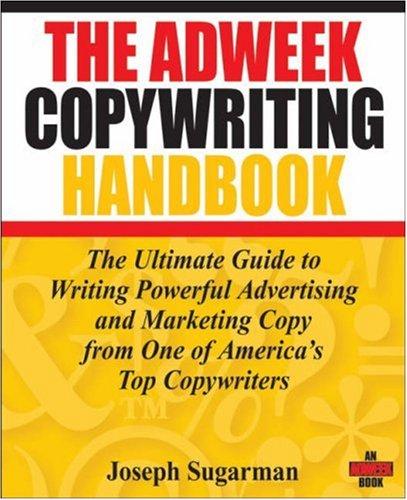
The Adweek Copywriting Handbook is the mechanics: fifteen axioms and 31 triggers from the man who sold America BluBlockers. The Boron Letters are the voice: a father teaching his son the trade from a prison camp. Psychological Triggers is the wiring diagram underneath both.
Affiliate links. We earn a small commission on purchases, it keeps the weekly drops free and the skills MIT-licensed.
◆ Get The Skill
Want the trigger inventory run for you?
The Trigger Triumvirate skill audits any copy block in the masters' order: the starving-crowd check on offer-market fit, the first-sentence audit, the slippery-slide score with a map of every comfortable exit, then the inventory of which Sugarman triggers are present, absent, or faked, with a rewrite recipe for the first failure. Free. MIT licensed.
Write (first sentences, slide rewrites, emotion-then-logic ordering), Hook (headlines, envelopes, subject lines, the A-pile), Audit (crowd, open, slide, triggers, in that order), Launch (curiosity seeds and satisfaction convictions sequenced across a series).
Pairs with
Schwartz (the awareness level picks the message the slide delivers); Cialdini (the principles behind the triggers); Kahneman (the two systems doing the buying and the justifying); Kotler (the market-first law under the starving crowd); Hormozi (the offer the triggers sell).
Output shape
When the skill leans on the Trigger Triumvirate, it diagnoses in the masters' order and stops at the first failure: is the crowd starving, does the container get opened, does the first sentence force the second, and which triggers are missing or faked at the close.
The Silent DiagnosticIs this crowd already spending money on the problem, does the first sentence force the second, and which trigger is missing at the close? If the crowd is cold, stop polishing sentences.