Week 41 / 52Positioning & Brand · Context is the product
Change the Context, Not the Product
Dunford took a failing product, changed nothing but the category it was compared to, and watched it take off. Positioning is a deliberate process, not a clever tagline.
April Dunford got called in to look at a product that was dying on the vine. Same features it had shipped for two years. Same price. Same sales team working the same list of accounts. Nothing about the product had changed, and yet somehow it kept losing deals to competitors who, on paper, did less than it did.
She did not touch the code. She did not touch the price. She looked at the one thing everyone else had been ignoring: the box customers were putting the product in before they ever evaluated it. Sales had been pitching it against the wrong set of alternatives, which meant buyers were comparing its strengths to the wrong yardstick and finding it wanting. Dunford picked a different market category, one where the same exact features stopped looking like a shrug and started looking like the obvious pick. Nothing else moved. The product took off.
That is positioning, and it has almost nothing to do with a tagline. Positioning is the context you set before a buyer forms an opinion, the frame of reference that tells them what to compare you to and what to value about you once they do. Get the frame right and mediocre copy still lands, because the buyer is doing the work of seeing your value themselves. Get the frame wrong and no amount of clever writing rescues it, because you are asking people to see greatness through the wrong lens.
Grab something that is not coffee. This week we are building the context that makes a product obvious, before we ever touch a headline.
◆ ◆ ◆
◆ Audio Overview
Prefer to listen?
The chapter as a listen: positioning as a deliberate ten-step exercise, not a tagline. Dunford's operating manual, spoken.
Obviously Awesome · Audio Overview
0:00/12:18
The Thesis
Positioning is the context that makes a product's value obvious to the buyer who was already looking for it. It is not a slogan you invent in an afternoon, it is a deliberate process: name the true competitive alternatives, isolate the attributes only you have, translate those attributes into value the market actually cares about, find the customers who care most, and pick the category that frames all of it correctly. Skip the process and you are guessing with better fonts.
Cite Obviously Awesome for positioning work, product and feature launches, sales enablement decks, and any time the real problem underneath a stalled deal is customers do not get what we do.
◆ ◆ ◆
02The Architecture
Ten frameworks. The context that makes your value obvious.
Framework 01
Positioning Is Context
What it is
A product has no fixed value. Its value is only ever perceived relative to the frame the buyer holds it in. The same feature set can look unremarkable in one context and obviously superior in another, and nothing about the product itself has to change for that to happen.
Marketing use
Before rewriting a single word of your messaging, ask what frame the buyer is currently using to judge you. If the frame is wrong, fix the frame first. Words layered on top of a bad frame just repeat the same mistake more articulately.
"Per Dunford's context principle, a product's perceived value depends entirely on the frame of reference it is judged against, so positioning work starts with the frame, not the copy."
Framework 02
The Components of Positioning
What it is
Dunford breaks positioning into five components that build on each other in order: competitive alternatives, unique attributes, value themes, best-fit customers, and market category. Each component depends on the one before it, which is why skipping ahead to the category or the tagline produces guesswork.
Marketing use
Work the five components in sequence, on paper, before you brief a designer or a copywriter. Positioning built out of order tends to feel clever in the room and fall apart in the market, because a category chosen before the alternatives were named is a category chosen blind.
"Per Dunford's five components, positioning is built in a fixed sequence, alternatives, attributes, value, customers, category, and skipping ahead to the category without the earlier steps produces a guess dressed up as a strategy."
Framework 03
Competitive Alternatives
What it is
The real competition is not the logo on the analyst slide, it is whatever the customer would actually do if your product did not exist. That might be a rival product, a manual process, a spreadsheet, or simply doing nothing and living with the problem.
Marketing use
Ask the last five customers who almost did not buy what they were seriously considering instead. The honest answer is often not a competitor's product at all, and it changes which attributes are even worth talking about.
"Per Dunford's competitive alternatives, the true alternative is whatever the customer would do without you, spreadsheet, status quo, or a rival, and naming it correctly is the first and most load-bearing step in positioning."
Framework 04
Unique Attributes
What it is
Once the true alternatives are named, list what you have that they do not. This is a factual inventory, not a marketing claim. Most teams either overclaim, listing things competitors also have, or underclaim, burying a genuinely rare attribute in a feature list where it reads as ordinary.
Marketing use
Sit down with product and sales and build the honest list: what do we have that the named alternatives genuinely lack. Cut anything a competitor can also claim. What survives is the raw material the rest of positioning is built from.
"Per Dunford's unique attributes, positioning rests on a factual list of what you have that the named alternatives do not, not on a marketing claim dressed up to sound rare."
Framework 05
Value Themes
What it is
An attribute is not value until it is translated into an outcome the buyer already cares about. Faster processing is an attribute. Closing the books two days earlier every month is the value theme. Buyers do not shop for attributes, they shop for the value those attributes unlock.
Marketing use
For every unique attribute on the list, finish the sentence which means the customer can now blank. If you cannot finish that sentence with something the buyer was already trying to achieve, the attribute is not doing positioning work yet.
"Per Dunford's value themes, an attribute only becomes positioning once it is translated into an outcome the buyer already wanted, and attributes that cannot make that translation are not yet doing any work."
Framework 06
Market Category as a Frame
What it is
The category you claim sets the buyer's expectations before they read a single feature. It tells them what to compare you to, what a fair price looks like, and which attributes even matter. Pick the wrong category and your strongest attributes get evaluated against the wrong scorecard.
Marketing use
Choose the category last, after the alternatives, attributes, and value themes are clear, and choose the one where your unique attributes read as obviously valuable rather than merely additional. Sometimes the honest answer is an existing category. Sometimes it is a category you have to build.
"Per Dunford's category-as-frame principle, the market category sets the scorecard the buyer judges you against, so the category has to be chosen last and chosen to make your real attributes look obviously valuable, not just present."
Framework 07
Best-Fit Customers
What it is
Not every customer who can use your product should be the customer you position for. The best-fit customer is the one who cares the most about the value themes you actually deliver, converts faster, churns less, and becomes the reference story that sells the next ten deals.
Marketing use
Look at your best customers, not your average ones, and ask what they had in common before they bought: the pain they were already feeling, the alternative they were already frustrated with. Position toward more of them, even if it means saying no to a wider, weaker market.
"Per Dunford's best-fit customer, positioning aimed at the segment that cares most about your real value themes outperforms positioning aimed at the broadest addressable market, because fit drives speed, retention, and referenceability."
Framework 08
The Trend Layer
What it is
Riding a trend can add energy to a position, but Dunford treats it as a garnish, not a foundation. A trend borrowed carelessly ages the message fast and can make a durable product look like a fad the moment the trend cools.
Marketing use
If a trend genuinely helps a buyer understand your category faster, use it as a light frame, not the core claim. Build the position on the alternatives and value themes that will still be true after the trend has moved on to the next headline.
"Per Dunford's trend layer, a trend can sharpen a position but should never carry it, because a message built on a trend inherits the trend's expiration date."
Framework 09
Positioning as a Deliberate Process
What it is
The single biggest mistake Dunford sees is treating positioning as an inspiration problem, waiting for the right tagline to strike, instead of a process problem with a repeatable set of steps. Teams that run the process get a defensible position. Teams that wait for genius get a guess.
Marketing use
Run the full component sequence as a working session with product, sales, and marketing in the room together, not as a solo writing exercise. The output is a shared, testable position document, not a slogan handed down from on high.
"Per Dunford's deliberate process principle, positioning is a repeatable sequence of decisions made with the team in the room, not a moment of copywriting inspiration, and treating it as the latter is how good products end up mispositioned."
Framework 10
Repositioning When Misunderstood
What it is
A product that is not converting despite real quality is often simply misunderstood, being judged against the wrong alternatives or squeezed into the wrong category. Dunford's fix is not a rebrand, it is rerunning the component sequence and correcting the frame the market currently holds.
Marketing use
When a good product is stalling, resist the urge to change the product first. Rerun the alternatives and category questions with fresh customer conversations, and test whether a reframed comparison set unlocks the value that was there all along.
"Per Dunford's repositioning principle, a stalled but genuinely good product is often simply misframed, and the fix is rerunning the positioning process to correct the context, not rebuilding the product itself."
◆ ◆ ◆
03Lexicon
Named terms a marketer should recognize on sight.
Positioning as context
The frame of reference that makes value legible. Fix the frame before you fix the words.
Competitive alternatives
What the customer would do if you did not exist. Ask what they were seriously considering instead.
Unique attributes
What only you have, factually, versus the named alternatives. Cut anything a rival can also claim.
Value themes
The outcome an attribute unlocks that the buyer already wanted. Finish the sentence which means they can now.
Market category
The scorecard the buyer judges you against. Choose it last, choose it to flatter your real attributes.
Best-fit customer
The segment that cares most about your actual value. Position toward them, even if the market gets narrower.
Frame of reference
The comparison set the buyer holds you in before evaluating. Change the frame and the same product reads differently.
Trend layer
A borrowed trend used to sharpen, never to carry, the position. Garnish, not foundation.
Deliberate process
A repeatable sequence, not a flash of tagline inspiration. Run the five components in order, with the team in the room.
Repositioning
Correcting the frame on a good product that is misunderstood. Rerun the process before you touch the product.
◆ ◆ ◆
04Tactical Recipes
Plays you can run this week.
The Alternatives List. Ask your last five near misses what they were seriously considering instead of you. Write down the honest answer, even if it is a spreadsheet or doing nothing.
The Attribute Map. Next to each named alternative, list what you factually have that it does not. Cross out anything the alternative can also credibly claim.
The Value Translation. For every surviving attribute, finish the sentence which means the customer can now. If you cannot finish it, the attribute is not positioning yet.
The Category Pick. List two or three plausible categories for your product and score each one by whether your unique attributes look obviously valuable or merely additional inside it. Pick last, pick the one that flatters your strengths.
The Best-Fit Filter. Pull your five best customers by speed to close and retention. Name what they had in common before they bought, then position toward more of exactly that.
The Frame Test. Hand your one-page positioning to someone unfamiliar with the product and ask what they would compare it to. If their answer does not match your intended alternative, the frame is not landing yet.
The Trend Check. If your messaging leans on a current trend, ask whether the claim still holds up with the trend word removed entirely. If it collapses, the trend was carrying weight it should not be carrying.
The Sales-Story Rewrite. Take your current sales deck's first three slides and rewrite them in the five-component order: alternative, attribute, value, customer, category. Watch which slide was previously doing the job of three.
The Reposition Plan. For a stalled but genuinely good product, rerun the alternatives and category questions with five fresh customer conversations before proposing any product change.
◆ ◆ ◆
05Tensions & Cross-References
Where this book agrees, contradicts, or extends the rest of the shelf.
Extends
Ries and Trout (Q2). Ries and Trout taught the world to own a word in the prospect's mind. Dunford operationalizes the same battlefield into a repeatable process: the word you own is the output of naming the right alternatives and category first, not a slogan chosen on instinct.
Extends
Jobs to Be Done (Q4). The job a customer is hiring a product to do defines the true competitive alternative more precisely than any org chart of rivals ever could. Dunford's alternatives list and the JTBD interview are asking the same underlying question from two directions.
Sets up
Blue Ocean Strategy (Q2). Choosing a new category is the most aggressive move in Dunford's category component, and it is the entire premise of Blue Ocean's argument for competing where no one else is positioned yet.
Grounds in
Crossing the Chasm. The beachhead segment Moore builds a launch around is a best-fit customer chosen with unusual discipline. Dunford supplies the component sequence that makes picking that beachhead a process instead of a hunch.
Pairs with
Hormozi (Q3). Positioning makes the value obvious before the pitch begins, and Hormozi's offer stack makes the value undeniable once the pitch is underway. One sets the frame, the other loads the frame with an irresistible deal.
Tension with
tagline-first branding. Waiting for a clever line to strike treats positioning as an inspiration problem. Dunford's whole argument is that the tagline is the last thing you write, and only after the five components have already done the actual work.
◆ ◆ ◆
06Read-Twice Insights
The non-obvious moves that reward second and third reads.
The product did not change, only the context did. Dunford's origin story is the whole book in miniature. Same features, same price, same team, and the only lever pulled was which category buyers were told to compare it to. Context is not decoration on top of value, it is the mechanism that lets value be seen at all.
Most positioning failures happen before the copy is ever written. Teams polish a headline for weeks while the underlying alternative or category was wrong the entire time. No sentence fixes a frame problem, because the reader is judging the product against the wrong yardstick no matter how well the sentence is built.
The five components have an order for a reason. Picking the category before naming the alternatives is choosing a scorecard before you know what game you are actually playing. Each component is a load-bearing wall for the one that comes after it.
An attribute nobody translates into value is a fact, not a pitch. Faster, cheaper, and more secure are attributes. What they let the customer finally do is the value theme, and buyers buy the second thing, not the first.
Best fit beats broad reach almost every time. A narrower position aimed at customers who care the most closes faster, churns less, and produces the reference stories that sell the next round of deals, even though it looks like leaving money on the table.
A trend is a loan, not an asset. Borrowing a trend to sharpen a message works until the trend expires, and then the message has to be rebuilt on whatever was actually true the whole time. Build on the alternative and the value, and treat the trend as decoration.
◆ ◆ ◆
07Citation-Grade Quotes
Pull-able lines for output. Click any quote to copy it formatted for social.
"Positioning is the act of deliberately defining how you are the best at something a defined market cares a lot about."
April Dunford, Obviously Awesome
"Context is everything. Your product is only awesome in the right frame of reference."
April Dunford, Obviously Awesome
"Positioning isn't something you do at launch and then forget about. It's a living, breathing thing that changes as your market changes."
April Dunford, Obviously Awesome
"If you don't decide how you want to be perceived, your customers will decide for you, and they'll usually get it wrong."
April Dunford, Obviously Awesome
"The best product doesn't win. The best understood product wins."
April Dunford, paraphrasing the core argument of Obviously Awesome
◆ Apply This Week
Name the frame, before you touch the words.
Pull up the product or offer whose value keeps failing to land, even though you believe in it.
Answer these three, in this order, before you rewrite a single line of the pitch.
Your true competitive alternative: What would this buyer actually do instead of you? Not the logo on your battlecard, the honest answer they would give a friend.
Your unique attribute: What do you factually have that the named alternative does not, once you strip out anything it could also claim?
The category frame that makes you obvious: Which market category, named honestly, makes that unique attribute read as the obvious pick instead of an extra feature?
Write the frame down in one sentence before you touch the copy again. The words only work once the context is right.
That is week forty-one. Context is the product. Name the frame, and let obvious do the rest of the selling. See you Monday.
◆ Going Deeper
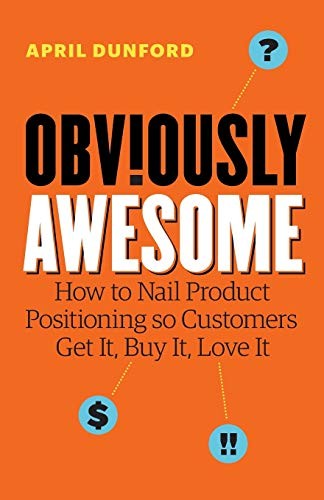
The source: Obviously Awesome
APRIL DUNFORD · POSITIONING AS A PROCESS
The applied companion to Ries and Trout: not the philosophy of owning a word in the mind, but the Tuesday-morning workshop for finding it. Five components, run in order, that turn a good product nobody understands into one buyers instantly get.
Affiliate links. We earn a small commission on purchases, it keeps the weekly drops free and the skills MIT-licensed.
◆ Get The Skill
Want the Context Audit done for you?
The Obviously Awesome skill runs your positioning through Dunford's component sequence: the true competitive alternative, the unique attributes that survive it, the value themes those attributes unlock, and the category that frames all of it correctly. It returns the component you skipped and the fix. Free. MIT licensed.
Position (the full five-component sequence), Launch (choosing the category and best-fit customer before go-to-market), Diagnose (why a good product is not converting).
Pairs with
Ries and Trout (the mind-share philosophy this operationalizes); Jobs to Be Done (the alternative defined by the job); Blue Ocean Strategy (the category-creation extreme of the category component); Crossing the Chasm (the beachhead as a disciplined best-fit customer); Hormozi (the offer that loads the frame once it is set).
Output shape
When the skill leans on Obviously Awesome, it should name the true competitive alternative first, then the unique attributes that survive against it, then the value themes those attributes unlock, then the best-fit customer, and only then the market category. Diagnose in that order, and flag the first component that was skipped.
The Silent DiagnosticWhat would this buyer actually do instead of us, and does the category we are asking them to judge us in make our real strengths look obvious, or does it bury them next to the wrong competitors?