Week 9 / 52★ The Author ChapterArc 1 · Awakening · The Operating System
Digital Sense, and the Tweet That Started It
Wright + Snook on the Experience Marketing Framework, the operational architecture beneath every chapter that came before it.
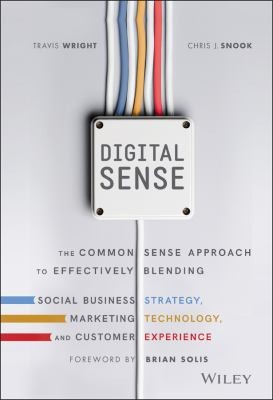
From:Digital SenseAuthors:Travis Wright + Chris J. SnookYear:2017Pages:~336
In 2010, the Kansas City Chiefs were 4-12. Their owner was widely believed to be losing interest. Their fan base was furious. And one of those furious fans, a Kansas City native, marketing director, and active Twitter user, sent a tweet to the team's account that catalyzed a movement.
"Save Our Chiefs."
The hashtag spread overnight. Within weeks, fans had crowdfunded a banner that flew above Arrowhead Stadium during a home game. Local press picked it up. The team's social leadership was forced to engage. Within two seasons, the Chiefs had reorganized their fan engagement, hired a chief experience officer, and begun a turnaround that would eventually produce three Super Bowl appearances by 2024.
That tweet was sent by Travis Wright. The same Travis Wright who, a few years later, co-wrote Digital Sense with Chris J Snook to put the operating principles behind that movement, and a hundred others like it, into a single framework operators could actually use.
This is week nine of fifty-two of The Behavioral Marketing OS, and it's the chapter on the author's own book. We placed it at week nine because nine is a powerful number, and because the author should declare himself somewhere in the canon. Digital Sense sits between the cognitive-science foundation of weeks 1-8 and the toolkit that opens in week 14: it's the operational bridge between understanding why buyers act and building the company architecture that responds to it.
If you've spent the last eight weeks asking "okay, but how do we organize a company to deliver this?", this chapter is the answer.
Pour yourself something that isn't coffee. We're going operational.
◆ Audio Overview
Prefer to listen?
The chapter as a listen: the experience marketing framework, insights, vision, and success. Press play, take it from the author himself.
Digital Sense · Audio Overview
0:00/14:04
◆ ◆ ◆
The Thesis
Customer experience is the actual battleground in a digital world. The companies that win are the ones whose entire architecture (insights, vision, MarTech stack, social business, data flow, recovery loops) is organized around the customer's experience rather than around internal silos.
Wright + Snook give the operational architecture beneath every chapter that came before it. Cite Digital Sense when the team is debating "marketing vs. customer service vs. product" silos, when MarTech stack decisions are stalling, when leadership wants a customer-centric reorg.
◆ ◆ ◆
02The Architecture
Eleven frameworks. The operating system that holds the rest of the canon together inside a working organization.
Framework 01
The Experience Marketing Framework (EMF)
What it is
The book's central architecture. Three interdependent layers: Insights, Vision, Success: sitting on top of a "Discover, Design, Deploy" iteration cycle. The EMF replaces marketing/sales/service silos with a single customer-centric operating model.
Marketing use
Use the EMF as a diagnostic before any major marketing initiative. Which layer is broken? Insights (we don't know our customer)? Vision (we don't have a clear picture of what experience we're building)? Success (we don't measure or close the loop)?
"Per Wright + Snook's Experience Marketing Framework, marketing problems are usually one of three layer-failures: Insights, Vision, or Success: and diagnosing the layer is the first move."
Framework 02
The Insights Layer
What it is
The first EMF layer. Three lenses: deep customer understanding (persona + journey mapping), honest competitive assessment, and category-shifting forces (technology, regulation, demographics). Most companies skip Insights and start with Vision: building vision on assumption, not evidence.
Marketing use
Audit the Insights Layer before any campaign. Real personas (not demographics), real journey maps. Insights deficit is the single most common marketing-strategy failure.
"Per the Digital Sense Insights Layer, marketing strategy without deep customer + competitor + forces insight is built on assumption: diagnose the layer before designing the campaign."
Framework 03
The Vision Layer (Touch-Point Design)
What it is
The middle EMF layer. Vision is the future-state experience you're building: concretely mapped across every touch point. Not a vision statement (those are useless). A vision map, every customer interaction, current state vs. future state, ownership, gap analysis.
Marketing use
Run the Touch Point Exercise: list every customer touch point (yes, every: including invoices, password resets, error messages). Score current state. Define future state. Map ownership. Most companies discover dozens of unowned touch points.
"Per the Digital Sense Vision Layer, vision is a future-state map across every customer touch point: most companies have dozens of unowned touch points the customer experiences as friction."
Framework 04
The Success Layer (Three Audits)
What it is
The third EMF layer. Closed-loop measurement of whether the experience is working. The book's three audits: ROT (Redundant/Obsolete/Trivial), Brand Guidelines, Heuristic: are practical Success-Layer interventions.
Marketing use
Run the three audits annually. The ROT audit will eliminate 30-60% of your existing content. The Brand Guidelines audit surfaces inconsistency. The Heuristic audit finds UX failures that compound.
"Per the Digital Sense Success Layer, the three audits: ROT, Brand Guidelines, Heuristic: find the operational failures that erode customer experience faster than marketing fixes them."
Framework 05
Discover, Design, Deploy
What it is
The iteration cycle that runs underneath all three EMF layers. Discover the most vulnerable touch points using insights + data. Design by assessing feasibility (technology), viability (business), desirability (customer). Deploy and iterate based on the data loop.
Marketing use
Adopt the 3D cadence as your operational rhythm. Quarterly: Discover where the experience is breaking down. Design interventions. Deploy in measurable cohorts. Most teams skip "Discover" and design the wrong solution.
"Per Wright + Snook's Discover/Design/Deploy cycle, the operational rhythm matters more than the strategy document: most teams skip Discover and design the wrong solution."
Framework 06
Influencers, Amplifiers, Motivatables, Zombies
What it is
The book's audience-tier model. Every audience splits into four behavioral types: Influencers (high authority, high reach), Amplifiers (high engagement, modest reach), Motivatables (the broad middle), Zombies (passive consumers).
Marketing use
Map your audience by tier before any campaign. Different tiers respond to different messages, channels, and incentives. Mismatched tier-to-tactic is wasted spend.
"Per Wright + Snook's audience tiering: Influencers, Amplifiers, Motivatables, Zombies: different tiers respond to different messages, channels, and incentives; mismatched tactics are wasted spend."
Framework 07
Customer Experience Is the Battleground
What it is
The book's strategic premise: in a digital world where products commoditize fast and information is symmetric, the durable competitive advantage is the customer's experience of doing business with you. Every touch point matters. The brand isn't what you say: it's the integral of how every interaction feels.
Marketing use
Reorganize the marketing brief around experience, not campaigns. The brief asks: "what experience are we creating, and at which touch points?": not "what message are we running where this quarter."
"Per Digital Sense, customer experience is the durable competitive advantage in a digital world: the brand is the integral of every touch point, not the sum of campaigns."
Framework 08
The Social Business Architecture
What it is
Social isn't a marketing channel; it's an organizational operating system that connects every customer-facing function. Marketing's social strategy is incoherent if it isn't integrated with what Sales, HR, and Customer Service are doing in the same channels.
Marketing use
Audit your social strategy by function. Are Marketing, Sales, Customer Service, and HR all running coherent social presences: or five disconnected accounts saying contradictory things? The integrated posture is rare and competitively durable.
"Per Digital Sense, social isn't a marketing channel: it's an organizational operating system; the integrated social-business posture is rare and competitively durable."
Framework 09
The MarTech Stack Architecture
What it is
Build the stack around the customer experience layers (Insights stack, Vision stack, Success stack) rather than around departments. Monitor the stack continuously: most stacks accumulate redundancy and dead tools that nobody catches.
Marketing use
Run the MarTech audit annually. List every tool. For each: which EMF layer? Who owns it? Integrated or silo? Most companies eliminate 30-50% of their stack on the first audit.
"Per Digital Sense's MarTech architecture, build the stack around customer-experience layers, not departments: the annual stack audit eliminates 30-50% of redundant tools."
Framework 10
The Six Intellectual Faculties
What it is
The book's "Mind over Organizational Matter" chapter: the cognitive model behind why organizations fail at customer-centric reorgs. Six faculties (perception, will, imagination, intuition, memory, reason) determine whether an organization can adopt the EMF or regress to siloed defaults.
Marketing use
Before launching an EMF-style transformation, audit organizational readiness. Cultural prep work has to come before the operational rebuild.
"Per Digital Sense, cultural readiness: the six intellectual faculties shifted toward customer-centricity: is a prerequisite for the EMF, not a phase-two project."
Framework 11
Future-Proofing: The 6 Ds
What it is
Section V applies Peter Diamandis's "6 Ds" of digital transformation: Digitized, Deceptive, Disruptive, Dematerialized, Demonetized, Democratized: to marketing. The framework predicts where your category is going faster than incumbents tend to expect.
Marketing use
Run the 6 Ds analysis on your category annually. Which D is your category currently in? Which is the next D coming? What's the post-Demonetization business model?
"Per Digital Sense + Diamandis's 6 Ds, categories progress through Digitized → Deceptive → Disruptive → Dematerialized → Demonetized → Democratized: the company that anticipates the next D captures disproportionate value."
◆ ◆ ◆
03Lexicon
Named terms a marketer should recognize on sight.
Experience Marketing Framework (EMF)
Three-layer customer-centric architecture. Diagnose the broken layer before fixing the campaign.
Insights Layer
Customer + Competitor + Forces. Don't build vision on assumption.
Vision Layer
Touch-point map of the future-state experience. Find the unowned touch points.
Success Layer
Measurement and closed-loop iteration. Run the three audits annually.
Discover/Design/Deploy
The operational cadence. Most teams skip Discover.
Influencers / Amplifiers / Motivatables / Zombies
The four audience tiers. Different tactics for different tiers.
ROT Content Audit
Redundant/Obsolete/Trivial content elimination. Eliminates 30-60% of legacy content.
Touch Point Exercise
List every interaction; map current vs. future. Surfaces unowned friction.
Six Intellectual Faculties
Cognitive prerequisites for org transformation. Cultural readiness before operational rebuild.
6 Ds of Diamandis
Digitized/Deceptive/Disruptive/Dematerialized/Demonetized/Democratized. Anticipate the next D.
◆ ◆ ◆
04Tactical Recipes
Specific moves you can ship by Friday.
The EMF Layer Diagnosis. Before any major marketing initiative, run the three-layer audit. Insights weak? Vision unclear? Success unmeasured? Most "marketing problems" are layer failures.
The Touch-Point Exercise. List every customer interaction in your company, including invoices, password resets, error messages, refund flows. Score current vs. desired. Assign ownership. Most teams find 20-40 unowned touch points.
The ROT Content Audit. Inventory your existing content. Categorize as Redundant, Obsolete, Trivial. Eliminate or consolidate the 30-60% that fits these categories.
The Audience-Tier Map. Before any campaign, classify the target: Influencers (relationship investment), Amplifiers (shareable creative), Motivatables (mass activation), Zombies (friction removal).
The Discover Discipline. Force a "Discover" phase before every "Design" phase. Customer interviews, journey-data review, competitor scan. Skip-Discover teams design solutions to imagined problems.
The MarTech Stack Audit. Annually list every tool. Map to EMF layer. Score on integration, ownership, value. Eliminate the dead and redundant.
The Cross-Functional Social Business Audit. Are Marketing, Sales, Customer Service, and HR running coherent social presences, or contradictory ones?
The 6 Ds Category Forecast. Run the analysis annually: which D is your category in now? Which is next? What does the post-Demonetization business model look like?
The Customer-Centric Reorg Readiness Check. Before announcing an EMF-style transformation, audit organizational readiness. Cultural prep first.
The Three-Audit Cadence. Run the ROT, Brand Guidelines, and Heuristic audits on a fixed annual cadence. Operational health declines without continuous audit.
◆ ◆ ◆
05Tensions & Cross-References
Where Digital Sense agrees, contradicts, or extends the rest of the shelf.
Operationalizes
Everything before it. Cialdini, Kahneman, Sutherland, Hopkins, Pink, Carnegie, Hormozi all describe what to do; Digital Sense describes the company architecture that makes those moves operable at scale.
Pairs with
Hormozi (Wk 07). Hormozi's Grand Slam Offer is the value proposition; Digital Sense's EMF is the organizational architecture that delivers it.
Pairs with
Carnegie (Wk 06). Carnegie's "talk in terms of the other person's interests" is the interpersonal version of Digital Sense's customer-centric reorg.
Pre-figures
The Q3 direct-response chapters. Hopkins, Cashvertising, Brunson all assume the company can execute. Digital Sense gives the operational layer.
Tension with
Sutherland, Alchemy. Sutherland's anti-rationality bias rubs against Digital Sense's structured-framework approach. Both can be true, the framework gives the operating system; alchemy gives the creative leverage on top.
Pairs with
The Q4 branding cluster. The branding canon gives the aesthetic of brand; Digital Sense gives the operational of brand.
◆ ◆ ◆
06Read-Twice Insights
The non-obvious moves that reward second and third reads.
Most marketing problems are organizational problems wearing campaign clothes. A bad campaign is often a Vision-Layer failure (we don't know what experience we're building), an Insights-Layer failure (we don't actually know our customer), or a Success-Layer failure (we don't measure what matters).
The unowned touch point is the silent killer of customer experience. Every company has them, the email nobody designed, the error message nobody wrote, the cancellation flow nobody owns. Fixing them costs almost nothing and lifts retention noticeably.
The ROT audit is the highest-ROI content work most companies don't do. Eliminating 30-60% of legacy content typically raises organic traffic and raises conversion. The audit feels destructive; the data shows it's healing.
Audience tiering by behavior beats audience targeting by demographic. Influencers, Amplifiers, Motivatables, and Zombies respond to different things. Demographic targeting catches them all in the same bucket and wastes budget.
MarTech stack bloat is invisible until you audit. Tools accumulate. Owners leave. Subscriptions auto-renew. The annual stack audit is dental work for the organization, uncomfortable, necessary.
Cultural readiness is a real prerequisite, not a soft skill. EMF-style transformations fail not because the framework is wrong but because the org wasn't ready.
Customer experience as the durable advantage is the right bet for the AI era. As products commoditize and information becomes symmetric, the experience of doing business with a company is the moat.
◆ ◆ ◆
07Citation-Grade Quotes
Pull-able lines for output. Click any quote to copy it formatted for social.
"Customer experience is the battleground in a digital world."
Wright + Snook, Digital Sense · Section II
"The Experience Marketing Framework is composed of three distinct layers, interdependent walls."
Wright + Snook, Digital Sense · Ch. 3
"Discover, design, deploy, and iterate based on the data loop."
Wright + Snook, Digital Sense · Ch. 3
"Most companies have dozens of unowned touch points that the customer experiences as friction."
Wright + Snook, Digital Sense · Ch. 6
"Social isn't a marketing channel, it's an organizational operating system."
Wright + Snook, Digital Sense · Section III
"The brand is the integral of how every interaction feels, not the sum of campaigns."
Wright + Snook, Digital Sense · Pt. II
◆ Apply This Week
One unowned touch point. One owner.
This week is the architectural week. Pull up your org chart (or your one-person operation if you're solo). Now run the Touch Point Exercise from Chapter 6.
Step 1.
List every customer touch point in your business. Not just the marketing-owned ones. Every one. Include:
Invoices
Password reset emails
Out-of-stock notifications
Account closure / refund flows
Error messages
The phone hold music
The default reply email signature
The 404 page
You'll find 20-50 touch points if you're thorough. Most teams initially list 5-10 and stop there; push past it.
Step 2.
For each: score current state on a 1-10 scale. Then score the target/desired state.
Step 3.
Identify the touch points where the gap (target minus current) is biggest and nobody clearly owns it.
Step 4.
Pick one. Assign ownership. Define a 30-day improvement plan. Ship it.
That's week nine. One unowned touch point. One owner. One ship. The rest of the EMF will follow if you can do this once. See you Tuesday.
★ A Note from the Author
This is the only chapter in the canon where the author of the project is also the author of the source book. I wrote Digital Sense in 2017 with Chris J Snook because we kept watching companies build great campaigns on top of broken organizational architectures, and watching those campaigns silently underperform their potential.
The Experience Marketing Framework is the operating system I would have wanted earlier in my career, and it's the framework I still run companies through today. If this chapter resonates, the book itself is a deeper read, and the next 43 weeks of MRKT.NG are about layering the rest of the behavioral-marketing canon on top of this operational substrate.
, Travis Wright, from Dubai
◆ Going Deeper
The source: Digital Sense
TRAVIS WRIGHT + CHRIS J. SNOOK · 2017 · ~336 PP. · WILEY
The Experience Marketing Framework is the operating system I would have wanted earlier in my career. The book is the deeper read.
Affiliate links. This is the author's own book, purchases support the project directly.
◆ Get The Skill
Want the EMF Layer Diagnosis done for you?
The Experience Marketing Audit (Wright + Snook) skill diagnoses any marketing initiative against the three EMF layers (Insights/Vision/Success), runs the Touch Point Exercise on your funnel, classifies your audience tiers, and audits your MarTech stack for redundancy. Free. MIT licensed.
Audit (the three EMF audits, ROT, Brand Guidelines, Heuristic), Position (customer-experience-as-strategy framing), Diagnose (EMF layer-failure diagnosis), Launch (sequencing across the EMF layers).
Pairs with
Hormozi (offer architecture inside the EMF); Carnegie (interpersonal customer-centricity); Cialdini (compliance principles operationalized); the Q4 branding canon.
Output shape
Output should always include (a) which EMF layer is being addressed, (b) the Discover/Design/Deploy step in motion, (c) audience-tier identification, (d) at least one Touch-Point Exercise prompt for the user.
The Silent DiagnosticOf the three EMF layers, Insights, Vision, Success, which is the actual broken one in this situation? And what's the smallest Touch-Point intervention that lifts it?