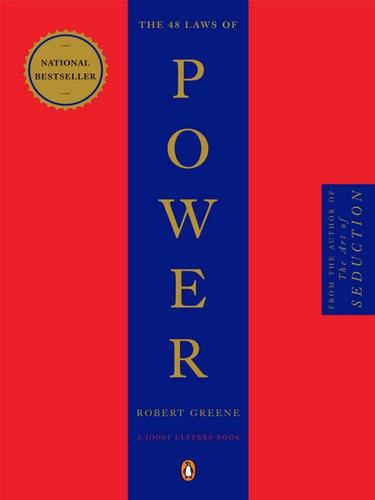
Week 4 / 52ROBERT GREENEQ1 Awakening · The dark arts
The Dark Arts, Domesticated
Robert Greene's three-volume map of how humans actually behave when no one's looking: and how to use it without becoming the thing you fear.
From:The 48 Laws of Power (1998) · The Art of Seduction (2001) · The Laws of Human Nature (2018)Author:Robert GreenePages:~900+ (trilogy)
Robert Greene wrote a book that drug dealers smuggle into prison and CEOs hide in their nightstand drawer. The 48 Laws of Power, banned in multiple correctional facilities not because it's violent, but because it's too useful. Wardens noticed inmates running its plays on each other and on staff.
Then he wrote two more. The Art of Seduction mapped the nine seducer archetypes (Siren, Rake, Ideal Lover, Dandy, Natural, Coquette, Charmer, Charismatic, Star) and the eighteen victim types they prey on. The Laws of Human Nature, the most mature of the three, did something different: it stopped teaching you how to win and started teaching you how to see.
The trilogy is a single curriculum disguised as three books. Power is the what (asymmetries between people). Seduction is the how (the slow art of moving someone from indifference to surrender). Human Nature is the why (the dark river underneath everything).
Greene doesn't give you new tactics. He gives you new eyes.
Pour yourself something stronger. We're going dark.
◆ Audio Overview
Prefer to listen?
The trilogy as a listen: power, seduction, and human nature as market forces. Press play, take Greene with you.
The Greene Trilogy · Audio Overview
0:00/13:38
◆ ◆ ◆
The Thesis
Marketing is power applied at scale, seduction performed asynchronously, and human nature instrumented through interfaces. Most marketers fail because they were taught the polite version of all three. Greene's trilogy assumes the world isn't fair, people aren't rational, and the surface is rarely the truth. That's not cynicism, it's the operating reality every brand navigates whether it admits it or not.
Greene is what you study when the polite frameworks aren't enough, when you need to understand the executive stalling your deal, the influencer playing both sides, the customer who keeps almost-buying. He doesn't give you new tactics. He gives you new eyes.
◆ ◆ ◆
02The Architecture
The trilogy as one integrated system: what, how, why.
Volume I: The 48 Laws
Power Asymmetries: The What
Foundation
Every business relationship has a power asymmetry. The person who needs the deal less has more power. Ignoring asymmetries is naïve. Marketing's job: understand who needs whom, and position accordingly.
Key Laws (Selected)
Law 1: Never outshine the master: in B2B, never make the buyer's CEO look dumb. Law 6: Court attention at all costs: be talked about, even at cost of reputation, before being ignored. Law 9: Win through actions, never through argument: demos beat decks. Law 13: Appeal to self-interest, never to mercy. Law 17: Cultivate unpredictability: predictable brands die. Law 27: Play on the need to believe. Law 32: Play to fantasies. Law 33: Discover each man's thumbscrew.
"Per Greene's 48 Laws, every business relationship has a power asymmetry: marketing's job is to understand who needs whom and position accordingly."
Volume II: The Art of Seduction
The Nine Seducer Archetypes: The How
The Framework
Each brand has one consistent persona that draws others in. The Siren (sensory overwhelm), The Rake (individual attention), The Ideal Lover (mirror of aspiration), The Dandy (ambiguous/bending), The Natural (unselfconscious), The Coquette (withdrawal as attraction), The Charmer (makes others feel important), The Charismatic (visionary intensity), The Star (projection screen).
Marketing Application
Pick one archetype. Audit every asset against it. Kill anything off-archetype. Commit for ten years. Most brands fail because they try to be three at once. The brand-archetype question: which seducer is your brand? Pick one. Commit.
"Per Greene's seducer archetypes, brands fail because they try to be three at once. Pick one. Commit for a decade."
Volume II continued: The Eighteen Victim Types
Segmentation by Psychological Deficit
The Insight
Greene maps eighteen kinds of people based on what they're missing in life: the missing piece is the seduction lever. The Reformed Rake (married, bored), the Disappointed Dreamer (idealistic, jaded), the Pampered Royal (over-indulged, restless).
Marketing Application
Replace demographics with psychology. "Women 35-54, HHI $100k+" is useless. "Disappointed Dreamers in the 8th year of corporate work who once wanted to start a magazine" is a brief. Segment by the hole in their life, not their zip code.
"Per Greene, segment by psychological deficit, not demographics. Identify what the buyer is missing, and position as the fulfillment."
Volume III: The Laws of Human Nature
The Deep Why: The Underlying Drives
The Framework
Six key laws: Law 1: Master your emotional self. Law 2: Transform self-love into empathy. Law 6: Elevate your perspective (vs. shortsightedness). Law 8: Change circumstances by changing attitude. Law 13: Advance with purpose. Law 18: Meditate on mortality: the deepest brand insight.
Marketing Application
Humans organize their entire lives around denying death. Every category secretly sells a death-denial promise. Insurance: continuity. Luxury: legacy. Health: time-extension. Tech: relevance. Religion: literal. The honest marketer names the death-denial under the surface.
"Per Greene, every category secretly sells a death-denial promise. Name it, and you've found the deepest brand lever."
Applied Framework: The Long Enmity
Strategic Rivalry as Brand Asset
The Principle
Coke/Pepsi. Apple/Microsoft. Mac/PC. The long-term strategic rivalry that sharpens both sides. Competition signals the category matters. The brands afraid to name their competitor miss the deepest brand-building tool of the decade.
Application
Liquid Death vs Big Soda. Apple's "Get a Mac" campaign. Mailchimp's old positioning against Constant Contact. Strategic competitor-acknowledgment elevates both brands above ignoring would.
"Per Greene, the long enmity with a competitor is the most underused brand-building tool of the decade: rivalry signals the category matters."
Applied Framework: The Thumbscrew
Finding and Pulling the Specific Lever
The Principle
Every prospect has the one thing: the metric, the fear, the political need: that unlocks them. Discovery calls aren't questionnaires; they're thumbscrew searches. The job is to find it.
Application
Sales discovery: "What's the one outcome that, if missed, ends your year/career/season?" That answer is the buy lever. Marketing positioning: what is the buyer terrified of losing? Position as the solution to that specific terror.
"Per Greene, discover each person's thumbscrew: the one specific fear or desire that unlocks them. Position against the fear."
Applied Framework: The Fantasy
The Operative Dream the Category Trades On
The Principle
Reality is harsh; fantasy sells. The successful luxury brand sells aristocratic fantasy. The successful tech brand sells productivity fantasy. The successful fitness brand sells transformation fantasy.
Application
Name the operative fantasy in the category. Then name the death-denial under it. Write three messages that speak directly to the fantasy without hiding it in features. The brand that names the fantasy wins; the brand that pretends it's about features loses.
"Per Greene, identify the operative fantasy your category trades on: and position as the fastest path to that fantasy."
◆ ◆ ◆
03Lexicon
Named terms a marketer should recognize on sight.
Power asymmetry
The gap between what you can do to me and what I can do to you. Every business relationship has one.
Seducer archetype
The one consistent persona a person/brand projects to draw others in. Pick one, commit for a decade.
Victim type
The psychological deficit a target carries that makes them seducible. Segment by the hole in their life.
Strategic patience
The deliberate slowness that wins long games (vs reactive speed). Long-game brands outcompete quarter-chasers.
The thumbscrew
The specific lever that unlocks a specific person/account. Find it in discovery, position against it.
The fantasy
The operative dream a category trades on. Name it, and you've named the brand.
Anti-seduction
Qualities that repel without trying: neediness, vulgarity, cheapness, false certainty. Audit and eliminate them.
The long enmity
The durable competitive rivalry that sharpens both sides. Strategic acknowledgment elevates both brands.
Cultivated air
The deliberate construction of mystique, distance, or magnetism. Withholding creates pull.
Death denial
The existential fear every category addresses. Name it, own it, win.
◆ ◆ ◆
04Tactical Recipes
Specific moves you can ship by Friday.
The Brand Archetype Lockdown. Of the nine seducers, pick one. Audit every asset against it. Kill anything off-archetype. Commit for ten years.
The Anti-Seduction Audit. Find needy CTAs ("PLEASE buy!"), vulgarity (fake-smiling stock photos), cheapness (templated landing pages), false certainty (claims you can't back). Make a kill list.
The Thumbscrew Discovery Call. Reframe discovery from "what are your needs" to "what is the one outcome that, if missed, ends your year?" That answer is the buy lever.
The Fantasy Audit. Name the operative fantasy your category trades on. Name the death-denial under it. Write one line that speaks directly to the fantasy.
The Long-Game Audit. Pull every campaign of the last 12 months. Was this a 90-day move or a 10-year move? Most teams find 90% of effort goes to 90-day moves. Reset ratio toward 70/30.
The Court Attention Audit. Is the brand being talked about? In what forum? By whom? If not, Greene's Law 6 says you'd rather be infamous than ignored.
The Suspended-Terror Calendar. Replace the predictable monthly newsletter with less-predictable cadence and surprise drops. Predictable communications become wallpaper.
The Cultivated Air Exercise. Build deliberate mystique. What does the brand NOT say publicly? What's email-only? What's in-person-only? Withholding creates pull.
The Generational Myth Match. Identify your buyer's generation. Identify the operative myth (progress / irony / authenticity / chaos). Audit voice for match.
The Long-Enmity Move. Pick a competitor and treat them as a permanent foil, not to attack, but to define against. Ten years of strategic acknowledgment creates more brand than ten years of pure self-description.
◆ ◆ ◆
05Tensions & Cross-References
Where Greene agrees, contradicts, or extends the rest of the shelf.
Vs.
Carnegie (Wk 6). Carnegie wants genuine interest; Greene wants observational distance. Both right at different times. Carnegie for relationship-building, Greene for negotiation.
Pairs with
Cialdini (Wk 1, 14). Cialdini's six weapons are tactical; Greene's laws are dispositional. Cialdini tells you what button to push; Greene tells you who you're pushing.
Extends
Burgis's Mimetic Desire (Wk 11). Burgis warns about mimetic rivalry's destructive cost; Greene's Long Enmity actively cultivates rivalry. Resolve: rivalry as fuel ≠ rivalry as identity.
Feeds
Kahneman's Two Systems (Wk 2). Kahneman maps cognition; Greene maps motivation. Together: the full inside of the head.
Tension with
the Polite Marketing Canon. Most marketing assumes collaboration. Greene assumes strategy. Both partially true. Run Greene during planning, Carnegie during execution.
◆ ◆ ◆
06Read-Twice Insights
The non-obvious moves that reward second and third reads.
The trilogy is one curriculum. Power = what. Seduction = how. Human Nature = why. Reading any one without the other two leaves the lesson half-built.
Most brands have no archetype because they have no commitment. Picking a seducer archetype is a 10-year decision. Most brands confuse "tone of voice" with archetype.
The death-denial law is the deepest insight in modern marketing. Once you see it, you can't un-see it. Every category has a death the buyer is denying. Name it, without exploiting it cruelly, and you've found resonance.
Greene's "laws" aren't ethical prescriptions, they're observational. He's not telling you to do them; he's telling you they happen. The ethical use is awareness, not weaponization.
The Eighteen Victim Types are a segmentation framework, not a manipulation manual. Replace demographic segments with psychological-deficit segments and messaging gets 5x sharper.
The Long Enmity is the most underused brand-building tool of the decade. Brands are afraid to define against competitors. Strategic acknowledgment (Liquid Death vs Big Soda, Apple vs Microsoft) builds identity faster.
The shortsightedness law is why marketing teams burn out. Calendar marketing without mission marketing is a treadmill. The fix: an upper-layer purpose that gives the calendar meaning.
◆ ◆ ◆
07Citation-Grade Quotes
Pull-able lines for output. Click any quote to copy it formatted for social.
"Court attention at all costs. Better to be slandered and attacked than ignored."
Robert Greene, The 48 Laws of Power · Law 6
"Win through your actions, never through argument."
Robert Greene, The 48 Laws of Power · Law 9
"Discover each man's thumbscrew."
Robert Greene, The 48 Laws of Power · Law 33
"The seducer is one who sees through the mask of the other and provides what they actually want."
Robert Greene, The Art of Seduction
"We are all susceptible to seduction. We are all hungry for the experience of being moved."
Robert Greene, The Art of Seduction
"The greatest danger we face is not from external enemies but from our own irrationality."
Robert Greene, The Laws of Human Nature
◆ Apply This Week
Pick your brand's seducer archetype. Then run the audit.
Step 1: Pick the archetype. Of the nine (Siren / Rake / Ideal Lover / Dandy / Natural / Coquette / Charmer / Charismatic / Star), which one is your brand? If you can't pick one, that's the diagnosis, you have no archetype.
Step 2: Run the Anti-Seduction Audit. Review the last 30 days of content (homepage, emails, ads, social, sales decks). What's on-archetype? What's off?
Step 3: Make a Kill List. Find the needy CTAs, the vulgarity, the cheapness, the false certainty. Kill them.
Step 4: Write the Spine. One line: the archetype + the operative fantasy + the death-denial. Tape it above your desk.
That's week twelve. The dark arts, domesticated. The move from accidental brand to architected brand. Most never do it. See you Tuesday.
◆ Going Deeper
The source: The Greene Trilogy
ROBERT GREENE · 1998-2018 · ~900+ PP. COMBINED
The most honest picture of human behavior in the modern marketing canon. Uncomfortable, citation-heavy, ruthlessly observational.
The Dark Arts (Greene Trilogy) skill maps your brand against the nine seducer archetypes, identifies the operative fantasy and death-denial, runs the anti-seduction audit, and prescribes the strategic long-game positioning. Free. MIT licensed.
Power Dynamics, Seduction Archetype, Human-Nature Decode, Competitive Warfare, Influence Architecture, Brand Archetype Deep. Triggers on "brand archetype," "competitive strategy," "long-game brand," "psychology of buyer," "operative fantasy," "anti-seduction audit."
Pairs with
Cialdini (Wk 1) for tactical influence; Burgis (Wk 11) when customer want appears imitative; Kahneman (Wk 2) when cognition not motivation is the bottleneck; Carnegie (Wk 6) when warmth not strategy is needed.
Output shape
Output should always include (a) the selected seducer archetype and its justification, (b) the operative fantasy the category trades on, (c) the death-denial underneath it, (d) the anti-seduction audit with kill list.
The Silent DiagnosticOf the nine archetypes, which is the most authentically aligned, and which anti-seductive qualities are currently suppressing it?