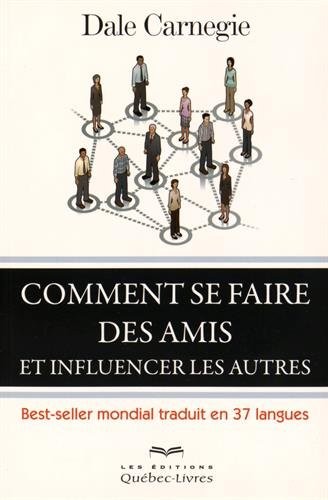
The 1936 Book Cialdini Spent His Career Explaining
Carnegie's six ways to make people like you, twelve ways to win them to your side, nine ways to change them without resentment.
From:How to Win Friends and Influence PeopleAuthor:Dale CarnegieYear:1936Pages:~290
Dale Carnegie was a failed actor, a failed novelist, and a failed truck salesman before he started teaching night classes at the YMCA in 1912 on how to talk to people. He charged $2 a class. The waiting list grew. Two decades later, he distilled the lessons into a book.
Eighty-nine years after publication, How to Win Friends and Influence People has sold over 30 million copies. Warren Buffett carried it for decades. Lyndon B. Johnson called it the most important book he ever read. Cialdini's Influence, the book you opened this year with, is essentially Carnegie repackaged for the experimental-psychology era.
You've spent five weeks here on cognitive science and creative leverage. This week we go all the way back to the substrate beneath all of it: the social mechanics of getting another human to want what you want them to do. Not by manipulating them. Not by tricking them. By honoring their self-interest hard enough that giving you what you want feels like getting what they wanted.
Carnegie is the ancestor of every persuasion book on this shelf. Read this chapter and notice how many "modern" copywriting moves are right here, in 1936, written by a guy who couldn't sell trucks.
Pour yourself something that isn't coffee. We're starting with the fundamentals.
◆ Audio Overview
Prefer to listen?
The chapter as a listen: eager-want, honest appreciation, the we-vs-you audit, the early-yes ladder. Press play, take Carnegie with you.
How to Win Friends · Audio Overview
0:00/20:40
◆ ◆ ◆
The Thesis
Persuasion isn't manipulating people into doing what you want. It's understanding what they want and showing them how doing what you want delivers what they want. The mechanics are mechanical, the principles are universal, and almost all of them have been documented since 1936, most marketers just don't apply them.
Carnegie is the foundational substrate beneath Cialdini, Pre-Suasion, Yes!, and most of the modern persuasion canon. Cite him when copy is too company-centered, when sales scripts feel pushy, when the team is debating "manipulation vs. persuasion", Carnegie's whole book is the answer.
◆ ◆ ◆
02The Architecture
Ten foundational principles. The 1936 substrate beneath every persuasion book on the shelf.
Framework 01
Don't Criticize, Condemn, or Complain
What it is
Carnegie's most counterintuitive principle: criticism is virtually always counterproductive. People defend themselves; they don't update their behavior. "When dealing with people, remember you are not dealing with creatures of logic, but with creatures of emotion."
Marketing use
Audit your copy for "anti-competitor" or "anti-old-way" framing that subtly criticizes the buyer's current choice. They picked it. Criticizing it criticizes them. Frame the alternative as upgrade-from, not escape-from.
"Per Carnegie's first principle, criticism produces defense, not change: frame the alternative as upgrade, not escape from a wrong choice the buyer made."
Framework 02
Give Honest, Sincere Appreciation
What it is
Different from flattery. Flattery is hollow; appreciation is specific and earned. People are starved for genuine acknowledgment: Carnegie observed that the deepest human craving (after food and security) is to feel important and appreciated.
Marketing use
Replace generic onboarding ("Welcome!") with specific appreciation ("You're one of 47 founders who joined this week from solo practice: the cohort with the fastest first-week activation"). Specific acknowledgment > generic warmth.
"Per Carnegie's appreciation principle, specific acknowledgment outperforms generic warmth: the deepest human craving is to feel important."
Framework 03
Arouse in the Other Person an Eager Want
What it is
The seed of every modern marketing principle. The only way to influence anyone is to talk in terms of what they want and show them how to get it. Henry Ford: "If there is any one secret of success, it lies in the ability to get the other person's point of view."
Marketing use
Read every piece of copy and count: how many sentences are about us vs. them. If "we" outnumbers "you," rewrite. Hopkins shouted this in 1923; Carnegie systematized it in 1936; we still routinely fail at it.
"Per Carnegie's eager-want principle, persuasion only works when framed in terms of what the other person wants: count the we's vs. the you's in your copy."
Framework 04
Become Genuinely Interested in Other People
What it is
Carnegie's first rule for being likeable: actual curiosity about the other person. Not performed interest. Salespeople who ask real questions and listen outperform salespeople with better pitches. Brands that genuinely understand their buyers outperform brands with bigger budgets.
Marketing use
Customer research can't be a checkbox. Real curiosity about the buyer's life: not just their pain points: produces messaging that actually resonates. Most brand teams have never spent an hour with a customer in a non-research context.
"Per Carnegie, you make more allies in two months by becoming genuinely interested in others than in two years trying to interest others in you."
Framework 05
Smile / Use Their Name / Be a Good Listener
What it is
Three of Carnegie's six ways to make people like you. The smile communicates intent. The name is "the sweetest sound in any language." Listening is the rarest professional skill.
Marketing use
Personalization beyond merge tags ("Hi {{first_name}}" is not personalization). Real personalization = remembering specifics from prior interactions, naming the customer's situation, listening to their reply emails.
"Per Carnegie's name principle, a person's name is the sweetest sound: and merge tags don't qualify as personalization."
Framework 06
Talk in Terms of the Other Person's Interests
What it is
Theodore Roosevelt's prep before meetings: research what the visitor cared about, study it, then talk about it. Carnegie generalizes: when meeting anyone you want to influence, prepare by knowing what they care about.
Marketing use
Pre-call research for sales conversations. Pre-launch research for campaigns. The brand that knows its buyer's category, jobs-to-be-done, daily friction, and aspirational identity outperforms the one that knows the buyer's "demographics."
"Per Carnegie's interests principle, prepare to influence by studying what the other person cares about: pre-call research is direct persuasion leverage."
Framework 07
Make the Other Person Feel Important
What it is
People crave significance. Genuinely making someone feel important: by remembering their context, asking their opinion, deferring to their expertise where appropriate: produces loyalty no transaction can buy.
Marketing use
B2B is especially leverage-able here. Customer Advisory Boards, "we built this because of feedback from operators like you," public credit for ideas. The buyer who feels their expertise is honored chooses you over a competitor.
"Per Carnegie's importance principle, people crave significance: making the buyer feel their expertise is honored produces loyalty no transaction can buy."
Framework 08
The Only Way to Win an Argument Is to Avoid It
What it is
Arguments make people defensive. Even when you "win," they've now committed (publicly, viscerally) to the opposing position. The salesperson who argues with the prospect's objection has already lost.
Marketing use
Replace "X competitor is wrong because…" framing with "Here's another way to think about it…" Reframe disagreements as expanded perspectives, not corrections. Diss copy reads as desperation.
"Per Carnegie, the only way to win an argument is to avoid it: direct competitor-disparagement reads as desperation, not differentiation."
Framework 09
If You're Wrong, Admit It Quickly
What it is
When you've made an error: in a product, a campaign, a customer interaction: own it fast and over-correct. Defensive corporate-speak invites contempt. Direct admission with a clear remedy disarms.
Marketing use
Service recovery, post-incident comms, product-recall messaging, even pricing changes that hurt customers. The brand that admits "we got this wrong, here's what we're doing" outperforms the brand that doubles down.
"Per Carnegie, admit errors quickly and emphatically: defensive corporate-speak loses; direct admission with remedy disarms."
Framework 10
Begin in a Friendly Way / Get the Early Yes
What it is
Friendly opener disarms. Early yes builds commitment momentum (which Cialdini formalized 50 years later). Letting them talk is the fundamental discovery move that most salespeople and marketers skip.
Marketing use
Sales-call openers, lead-gen quizzes that get small yeses before the offer, content that asks the reader's opinion before delivering the thesis. Carnegie pre-figures every "yes ladder" funnel ever built.
"Per Carnegie's commitment-momentum principle, getting the prospect to say 'yes' early conditions them toward the eventual yes: Cialdini formalized this 50 years later."
◆ ◆ ◆
03Lexicon
Named terms a marketer should recognize on sight.
Eager want
What the other person actually wants. The only persuasion lever that scales.
Honest sincere appreciation
Specific acknowledgment, not flattery. Outperforms generic warmth.
Genuine interest
Real curiosity about the other person. The foundation of every successful sales relationship.
The name
Sweetest sound in any language. Real personalization, not merge tags.
Argument avoidance
Never win arguments; reframe them. Competitor-disparagement reads as desperation.
Quick admission
Own errors fast and over-correct. Service recovery beats defensive corporate-speak.
Friendly opener
Disarming first move. Every cold call/email/funnel starts here.
Early yes
Small commitment before large ask. The original yes-ladder.
Let them talk
Listening as persuasion. The most underused sales/marketing skill.
Their interests
Talk about what they care about. Pre-call research = direct leverage.
◆ ◆ ◆
04Tactical Recipes
Specific moves you can ship by Friday.
The We-vs-You Carnegie Audit. Read your highest-stakes asset. Count "we/our/us" vs. "you/your." If we wins, rewrite from the buyer's perspective. The audit takes 10 minutes.
The Specific-Appreciation Welcome. Replace generic onboarding warmth with specific recognition. "Welcome!" → "You're our 1,247th founder this quarter, joining a cohort that's averaged 38% faster activation than the SaaS benchmark."
The Eager-Want Pre-Brief. Before writing any campaign, write down, in one sentence, what the buyer actually wants. If you can't, you're not ready to write copy.
The Friendly Opener Cold Email. Replace "I'm reaching out to see if…" with something that demonstrates real research about the prospect's recent work. Two-sentence opener about something specific they did, then the ask. Response rates 3-5x.
The Early-Yes Quiz Funnel. Lead-gen quiz that asks 4-7 small-yes questions before the offer. Each yes builds commitment momentum. Conversion lifts 30%+ over non-quiz paths are routine.
The Argument-Avoidance Competitor Page. Comparison pages that honestly describe both sides outperform diss-the-competitor pages. Buyers smell desperation in disparagement.
The Quick-Admission Recovery Email. Service incidents, product bugs, pricing changes, the brand that admits fast and over-corrects beats the brand that defends.
The Real-Personalization Pass. Replace one merge-tag personalization in your highest-volume email with something genuinely specific (recent product behavior, named situation, prior interaction reference).
The Genuine-Interest Customer Research. Schedule one customer call per week, not a research interview, just curiosity. Ask about their day, their job, what's hard.
The Importance-Honoring B2B Move. Public credit for customer ideas. "This feature was built because [customer name] suggested it." The customer becomes an evangelist.
◆ ◆ ◆
05Tensions & Cross-References
Where Carnegie agrees, contradicts, or extends the rest of the shelf.
Foundational for
Cialdini.Influence (Wk 01) is largely Carnegie systematized through Cialdini's experimental research. The seven principles map cleanly: liking (Carnegie's "make people like you"), reciprocation (Carnegie's "begin in a friendly way"), commitment (Carnegie's "get the early yes"), unity (Carnegie's "make them feel important").
Agrees with
Pre-Suasion. Both insist that the moment-before-the-pitch matters more than the pitch itself. Carnegie's "begin in a friendly way" is pre-suasion in 1936 vocabulary.
Agrees with
Hopkins. "Tell what they get, not what's offered" (Hopkins) and "Talk in terms of the other person's interests" (Carnegie) are the same principle in different generations.
Tension with
Greene, 48 Laws of Power. Greene's amoral / strategic framing contrasts with Carnegie's relationship-first ethos. Both are right at different game depths. Carnegie wins for long-term relationships; Greene wins for short-term zero-sum games.
Pairs with
Pink, Drive. Carnegie's "make them feel important" is Pink's purpose principle at the interpersonal level.
Pre-figures
Hormozi. Hormozi's "make offers people feel stupid saying no to" is Carnegie's "arouse an eager want" with a value-equation skin.
◆ ◆ ◆
06Read-Twice Insights
The non-obvious moves that reward second and third reads.
The "we vs. you" audit predates every modern copy framework. Carnegie systematized it in 1936; Hopkins shouted it in 1923; we still routinely write company-centered copy because it's easier than figuring out what the buyer actually wants.
Carnegie's principles work because they're aligned with the buyer's interest, not against it. This is why the book has aged better than any "manipulation" framework. Everything is win-win or it isn't real persuasion.
The "let them do most of the talking" principle is the most underused move in all of marketing. Listening (in surveys, calls, social, support) produces insights that no amount of strategic thinking generates.
Quick admission of error is a brand-trust accelerant. The companies that handle service-recovery well retain better than companies with fewer errors but defensive PR.
"Begin in a friendly way" is the cheapest cold-email lift available. Two sentences of demonstrated research about the prospect, then the ask. Most cold-email writers skip this and pay for it.
Specific acknowledgment outperforms generic warmth at every category and price point. Generic onboarding feels like spam in 2026. Specific (even if templated) feels like attention.
◆ ◆ ◆
07Citation-Grade Quotes
Pull-able lines for output. Click any quote to copy it formatted for social.
"When dealing with people, remember you are not dealing with creatures of logic, but with creatures of emotion."
Dale Carnegie, How to Win Friends · Pt. 1
"The only way to influence other people is to talk about what they want and show them how to get it."
Dale Carnegie, How to Win Friends · Ch. 3
"A person's name is to that person the sweetest and most important sound in any language."
Dale Carnegie, How to Win Friends · Pt. 2
"The only way to win an argument is to avoid it."
Dale Carnegie, How to Win Friends · Pt. 3
"If there is any one secret of success, it lies in the ability to get the other person's point of view and see things from their angle."
Dale Carnegie (quoting Henry Ford) · Ch. 3
◆ Apply This Week
The Carnegie Audit.
Pick the highest-volume marketing email you send, onboarding welcome, product-launch, or weekly newsletter.
Open it and run the Carnegie audit:
The we-vs-you count. Tally every "we / our / us" against every "you / your." If we wins, rewrite from the buyer's perspective.
The specific-appreciation check. Is the warmth in this email generic ("welcome to the family!") or specific (named cohort, named situation, named behavior)? If generic, rewrite one sentence with specifics.
The eager-want pre-brief. In one sentence, what does the recipient actually want? If you can't write that sentence, the email isn't ready.
Pick the worst-scoring of the three. Fix one element. Ship by Friday.
That's week six. The 1936 substrate underneath every persuasion book on the shelf. See you Tuesday.
◆ Going Deeper
The source: How to Win Friends and Influence People
DALE CARNEGIE · 1936 · ~290 PP. · 30M+ COPIES SOLD
The book Buffett carried for decades. The book Cialdini spent his career explaining. The substrate beneath every persuasion principle on this shelf.
Affiliate links. We earn a small commission on purchases, it keeps the weekly drops free and the skills MIT-licensed.
◆ Get The Skill
Want the Carnegie audit done for you?
The People-First Audit (Carnegie) skill scans any marketing asset for company-vs-buyer voice imbalance, missing eager-want framing, generic vs. specific appreciation, and friendly-opener strength on cold outreach. Free. MIT licensed.
Write (the we-vs-you audit, eager-want pre-brief), Position (talk in terms of buyer interest), Audit (Carnegie scorecard for any asset), Diagnose (when copy feels off, run Carnegie before anything else).
Pairs with
Cialdini (the experimental sequel); Pre-Suasion (timing); Hopkins (specificity overlay); Pink (Type-I purpose extension); Greene (the amoral counterweight); Hormozi (the modern value-equation extension).
Output shape
Carnegie-driven output emphasizes the buyer's perspective, named specifics, friendly opener, and eager-want framing. The skill should silently audit any output for "we" vs. "you" balance before shipping.
The Silent DiagnosticDoes this asset talk in terms of what the buyer wants, or what we're offering? Count the we's vs. the you's. If we wins, the asset isn't ready.